Fouzi Lekjaa: Morocco’s football powerbroker tipped for prime minister bid amid political move
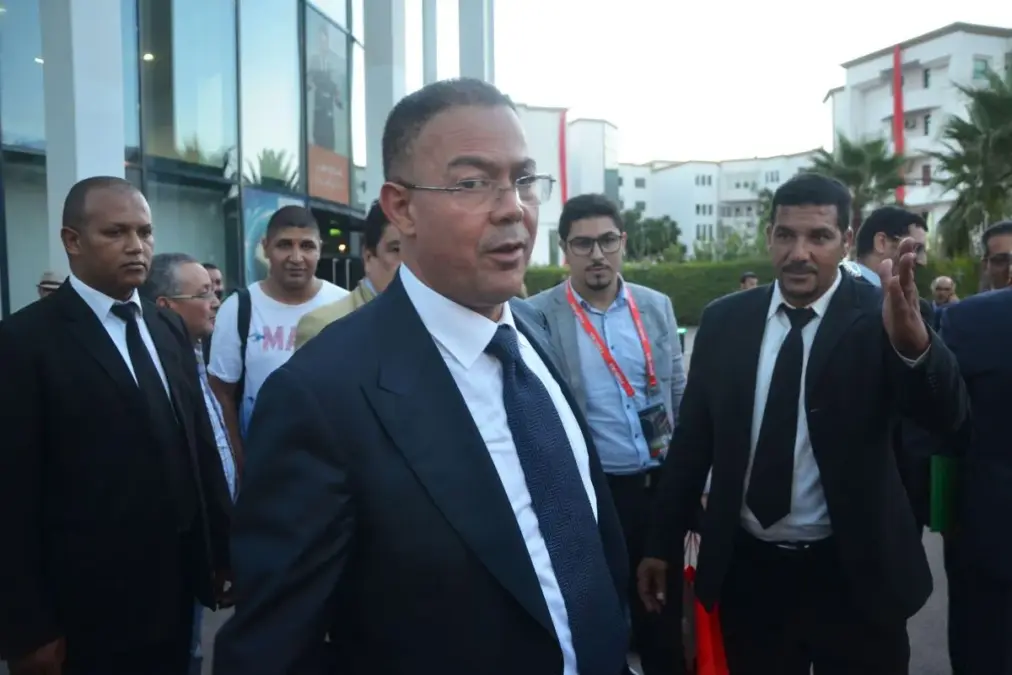
Few in Morocco appear to have anticipated it. After more than 12 years as the dominant figure in Moroccan football, Fouzi Lekjaa is being widely tipped to enter frontline politics – with some local reports even suggesting he will seek the post of prime minister after September’s legislative elections.
The president of the Royal Moroccan Football Federation (FRMF), who is also first vice-president of the Confederation of African Football (CAF) and Morocco’s minister delegate in charge of the budget, is expected to formally join the Party of Authenticity and Modernity (PAM), according to several Moroccan outlets.
His membership could be announced at the party’s National Council meeting scheduled for 25 July, the reports say. Some go further, claiming Lekjaa’s ultimate goal is to lead the government after the parliamentary poll on 23 September.
The growing speculation raises a crucial question for Moroccan sport: can one of Africa’s most influential football administrators realistically combine top-level political responsibilities with continuing at the helm of the FRMF?
No official confirmation of departure
So far, there has been no official statement from Lekjaa or the FRMF confirming that he is preparing to step down as federation president.
However, his current mandate expired in early June and the FRMF’s elective general assembly has been postponed until September – precisely when the legislative elections will take place.
That overlap has fuelled talk that a handover at the top of Moroccan football could follow more than a decade of Lekjaa’s leadership. But specialist football account Soccer212 has urged caution, stressing that any departure from the FRMF “n’a rien d’automatique” – “is in no way automatic”.
Architect of Morocco’s football resurgence
First elected in 2014 and re-elected three times, Lekjaa is widely credited with reshaping Moroccan football.
Under his watch, the country has invested heavily in modern training centres and stadiums, expanded youth development structures, pushed clubs towards greater professionalism and seen its national teams rise in stature on the continental and global stage.
The crowning achievement came with Morocco’s successful joint bid – with Spain and Portugal – to host the 2030 World Cup, marking a historic first for the region.
Lekjaa’s influence extends beyond Morocco. As first vice-president of CAF, he is a key player in African football politics, a role that has earned him both admiration and controversy outside his home country.
Possible successors: Houssine Kharja and Medhi Benatia
If Lekjaa does eventually relinquish his role at the FRMF, attention is already turning to who might succeed him.
One name being floated most prominently is Houssine Kharja, the former midfielder and captain of the Atlas Lions. Kharja ended his playing career in 2016 and now serves as FIFA’s regional director for the Middle East and North Africa.
His position within world football’s governing body, coupled with his understanding of international football structures, is seen by observers as making him a strong candidate to lead the Moroccan federation.
Another figure mentioned, though more tentatively, is Medhi Benatia. The former Juventus and Bayern Munich defender recently left his post as sporting director at Marseille (OM), but continues to carry out assignments for the French club during the current transfer window. His high profile and recent executive experience keep his name in the frame, albeit as a secondary option.
Football role may endure despite political rise
For the moment, there is no clear indication that a transition at the FRMF has been agreed or even formally discussed at federation level.
Lekjaa’s anticipated political engagement with the PAM could simply represent a new phase in his career rather than an immediate break with Moroccan football.
How he might balance a leading role in government, if his political ambitions are realised, with his positions in Rabat and at CAF remains unclear. The coming weeks, as the party council meets and the election campaign gathers pace, are expected to bring far greater clarity about the future of both Morocco’s most powerful football official and the game he has helped transform.
-
 Enzo Maresca backs Marc Guehi for future Manchester City captaincy Oct 20, 2026
 -
Mohamed Salah takes swipe at Besiktas president with cryptic ‘35%’ post Oct 20, 2026
-
Leipzig coach challenges Yan Diomande to fulfil his potential at Real Madrid Oct 20, 2026
-
Liverpool and Manchester United consider moves for Dortmund midfielder Felix Nmecha Oct 20, 2026


-
AFCON 2025: Fixtures, Results, Scores and Standings Jan 18, 2026
-
Match hero Taiwo Awoniyi reflects on team effort after Chelsea triumph May 5, 2026
-
Leadership and long-term vision key to rescuing Zamalek and inspiring Egyptian football – Hany Abou Rida Nov 5, 2025
-
South African giants Orlando Pirates set to lose influential forward Monnapule Saleng Mar 19, 2025




-
PSG v Barcelona: fiery attacks set up Champions League classic at Parc des Princes Oct 18, 2026
-
Real Betis v Barcelona: kick-off time, TV details and match preview Oct 16, 2026
-
Porto v PSV: predicted line-ups for Champions League league-phase clash Oct 19, 2026
-
Bayern Munich host Arsenal in heavyweight Champions League clash Oct 19, 2026