FIFA presidential candidate Philippe Diallo faces backlash over alleged stance on smaller federations
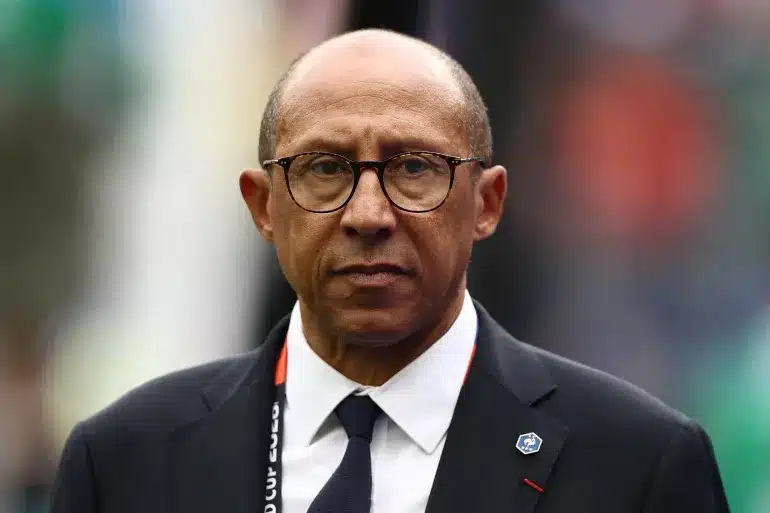
French Football Federation president Philippe Diallo has come under scrutiny following claims that he believes major footballing nations such as France and England should have greater influence in FIFA elections than smaller member associations.
The allegation was made by French broadcaster Gilbert Brisbois, where he reportedly claimed that Diallo had consistently expressed the view that leading football nations should carry more weight in voting decisions than smaller federations.
The comments have sparked debate over the representation of smaller footballing nations, particularly in Africa, where several countries rely on FIFA’s one-member-association, one-vote system to have an equal voice in the election of the world football governing body’s leadership.
FIFA has 211 member associations, with each entitled to one vote in the presidential election. This arrangement gives smaller nations the same voting power as major footballing countries, regardless of their footballing or financial influence.
Diallo, who confirmed his intention to challenge incumbent Gianni Infantino in the March 2027 FIFA presidential election, has secured the backing of UEFA and is seeking support beyond Europe.
The 63-year-old has also spoken publicly about the need for more transparent and inclusive governance at FIFA, insisting that major decisions should involve the organisation’s different bodies and member associations.
He has further indicated that he has received encouraging signs of support from football federations in Africa and Asia, although no African or Asian association had publicly endorsed his candidacy at the time of his announcement.
However, the reported comments attributed to him by Brisbois have raised questions about his position on the voting structure and the influence of smaller nations in global football governance.
Diallo is expected to face Infantino in a contest that will require support from FIFA’s 211 member associations, making the votes of African nations and other smaller federations potentially significant.
-
 FIFA presidential candidate Philippe Diallo faces backlash over alleged stance on smaller federations Nov 22, 2026
-
Racing Santander coach Alberto López provides injury update on Yassir Zabiri Nov 22, 2026
-
Morocco star Achraf Hakimi inspires PSG to crucial win over Nice Nov 22, 2026
-
Ismaila Sarr opens up on failed Liverpool move, confirms contract talks with Crystal Palace Nov 22, 2026


-
AFCON 2025: Fixtures, Results, Scores and Standings Jan 18, 2026
-
Match hero Taiwo Awoniyi reflects on team effort after Chelsea triumph May 5, 2026
-
Leadership and long-term vision key to rescuing Zamalek and inspiring Egyptian football – Hany Abou Rida Nov 5, 2025
-
South African giants Orlando Pirates set to lose influential forward Monnapule Saleng Mar 19, 2025




-
AFCON 2027 qualifiers matchday 3 & 4: All fixtures and results Nov 17, 2026
-
Cameroon can seal AFCON 2027 place with victory over Namibia Nov 15, 2026
-
Cote d’Ivoire close in on AFCON 2027 qualification against Gambia Nov 16, 2026
-
AFCON 2027 Qualifiers: South Africa bounce back with win over Kenya Nov 17, 2026