FEATURE: Why did AFCON 2025 final referees escape sanctions?
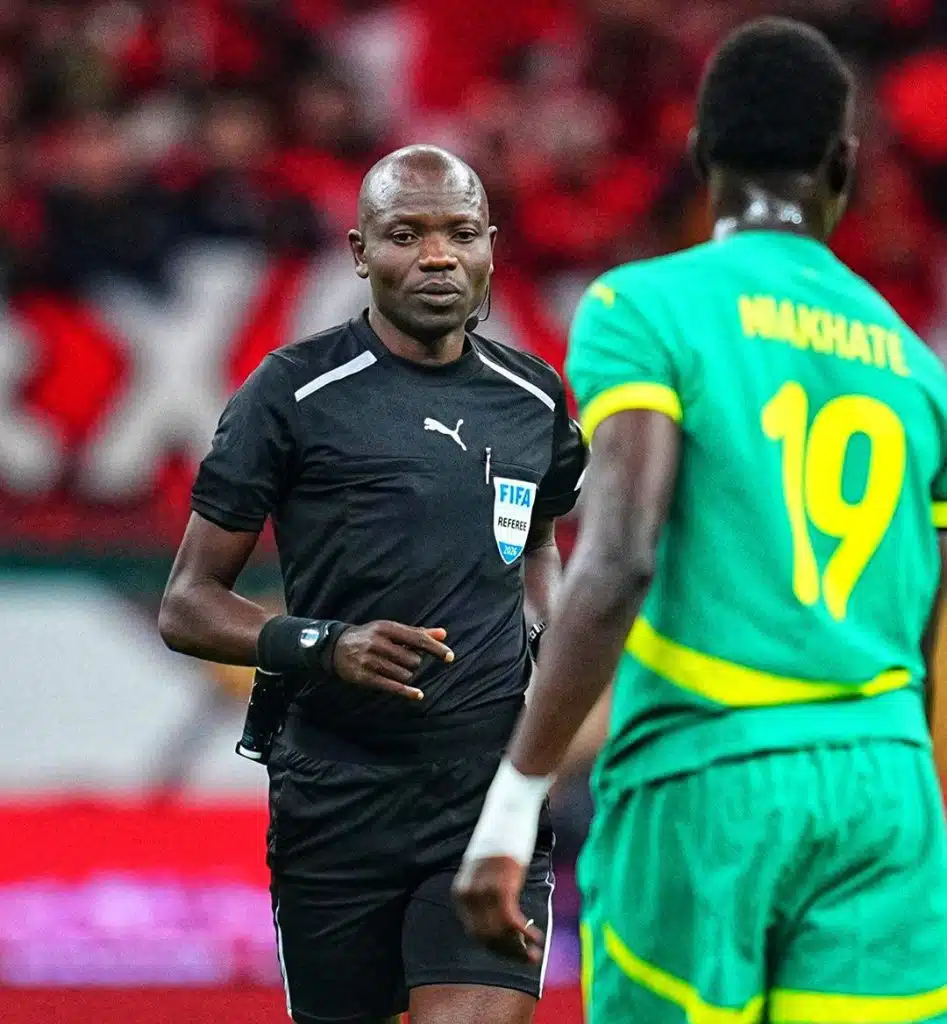
In the aftermath of the 2025 Africa Cup of Nations final, which was followed by widespread controversy and a wave of sanctions from the Confederation of African Football against federations, players and coaches, one pressing question continued to dominate football discussions across the continent.
How did the refereeing team emerge without any disciplinary action despite being at the centre of the storm?
The final, which saw Senegal defeat Morocco 1-0 to lift the continental title, was marred by dramatic scenes in the closing moments of stoppage time. Tensions escalated when Senegalese players left the pitch in protest after Congolese referee Jean-Jacques Ndala awarded a late penalty to the Atlas Lions.
The situation was further inflamed by an earlier decision to disallow a Senegalese goal that several refereeing experts later described as legitimate. Despite the gravity of these incidents, CAF’s disciplinary communiqué made no reference to the referee or his assistants.
🚨 𝗢𝗙𝗙𝗜𝗖𝗜𝗔𝗟: CAF has completely cleared Jean-Jacques Ndala, the referee of the Senegal–Morocco AFCON final. ✅🇨🇩
After reviewing the case, no fault or irregularity was found. ❌
CAF confirms the seriousness and high level of professionalism of the Congolese referee.
He… pic.twitter.com/edLc6QMadn
— Transfer News Live (@DeadlineDayLive) January 30, 2026
Al Jazeera shed light on the legal reasoning behind this outcome, quoting Tarek El-Deeb, a sports governance consultant and former head of CAF’s information sector. According to El-Deeb, the absence of sanctions against the officiating team does not equate to their acquittal, but rather reflects strict adherence to the legal framework governing refereeing decisions on the continent.
In his remarks to Al Jazeera, El-Deeb explained that refereeing laws, particularly Article 5 of the International Football Association Board regulations, grant referees discretionary authority that renders their on-field technical decisions final and immune from appeal before disciplinary bodies. This provision, he noted, effectively offers legal protection in cases of discretionary errors.
El-Deeb further clarified that the referee’s decision to blow the whistle for a foul before the ball crossed the line in one decisive moment created a legal loophole. That action, he said, stripped the Video Assistant Referee of the right to intervene, turning the situation into a purely technical call for which the referee could not be subjected to disciplinary punishment.
He also highlighted the institutional separation within CAF, noting that the Disciplinary Committee deals strictly with behavioural issues such as riots and misconduct, while technical decisions fall under the exclusive remit of the Referees Committee. This body operates through internal and confidential evaluations, with referees’ names rarely appearing in public reports unless in extreme cases such as match manipulation.
THE AFCON FINAL WAS INSANE 🤯🇸🇳🇲🇦
let’s breakdown what just happened ⬇️ pic.twitter.com/w5B12EiGnG
— MattyFC (@MattyFC__) January 19, 2026
In further comments to Al Jazeera, El-Deeb pointed to what he described as a “silent suspension,” an internal administrative measure within CAF that keeps referees away from high-profile matches without issuing a public sanction. He explained that the confidential report submitted by the referees’ assessor often represents the true form of punishment and can be sufficient to derail a referee’s prospects of officiating at major tournaments, including the 2026 World Cup. According to El-Deeb, such consequences are not always tied to a single technical mistake but may stem from perceived weaknesses in personality or match control.
Senegalese journalist Bala Anthony echoed this interpretation in his own statements to Al Jazeera, arguing that the referee did not breach any explicit clause of the disciplinary code, making formal punishment legally impossible. However, he stressed that the controversy extended beyond one decision and reflected a deeper inconsistency in applying standards. He noted that disallowing Senegal’s goal logically conflicted with awarding a penalty to Morocco, a contradiction that unsettled players and fuelled the protests.
🚨 THIS IS CRAZY! The AFCON final is delivering a DRAMATIC ending we’ve never seen before in international football. 😱😱❌
⏱️ 92’: Goal disallowed for Senegal for a soft foul, with no VAR check
⏱️ 96’: Penalty awarded to Morocco after a VAR review
⏱️ 112’: Senegal players head… pic.twitter.com/7JShne6eyu— Football Tweet ⚽ (@Footballtweet) January 18, 2026
Anthony further criticised CAF’s shift towards what he termed “educational arbitration” rather than strict enforcement of the law, arguing that it has created confusion among African referees and intensified disputes in high-stakes matches.
He also agreed with El-Deeb that the limited use of video technology in many African leagues leaves referees underprepared for handling VAR in major finals. Combined with administrative instability within the CAF Referees Committee, which has seen frequent leadership changes in a short period, this has undermined consistency and clarity in refereeing standards.
As Al Jazeera’s report makes clear, the absence of visible sanctions does not necessarily mean accountability was avoided. Instead, it reflects a complex legal and institutional framework that continues to shape how African football handles its most controversial moments.
Popular News




-

AFCON 2025: Fixtures, Results, Scores and Standings
Jan 18, 2026 -

Leadership and long-term vision key to rescuing Zamalek and inspiring Egyptian football – Hany Abou Rida
Nov 5, 2025 -

South African giants Orlando Pirates set to lose influential forward Monnapule Saleng
Mar 19, 2025 -

Full schedule for 2025 Africa Cup of Nations in Morocco confirmed
Feb 12, 2025