
‘Disrespectful’ – Super Falcons stars react angrily to 2026 WAFCON postponement
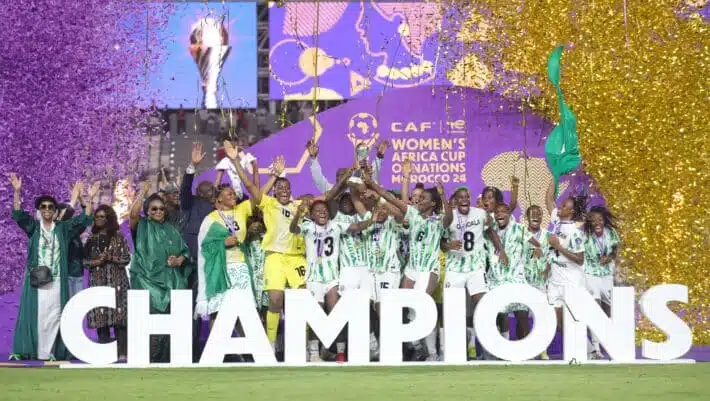
Super Falcons captain Rasheedat Ajibade and midfielder Christy Ucheibe have launched a blistering critique of the Confederation of African Football (CAF) following the 11th-hour postponement of the 2026 Women’s Africa Cup of Nations (WAFCON).
The continental governing body announced on Thursday, March 5, that the tournament—originally scheduled to kick off in Morocco on March 17—would be pushed back by more than four months to a new window of July 25 to August 16, 2026.
The decision, delivered just 12 days before the opening match, cited unspecified “unforeseen circumstances,” a justification that has been met with significant backlash from the athletes.
Ajibade, who currently plays for PSG, took to social media to express her frustration with the lack of stability in the women’s game. “African women football deserves better,” the captain wrote, reflecting a broader sentiment that female athletes are being treated as an afterthought in continental planning.
Her comments come at a time when the Super Falcons were already in camp in Cameroon, having recently completed a double-header friendly series against the Lionesses to sharpen their form for the now-delayed finals.
Midfielder Christy Ucheibe, a key figure in the Nigerian squad, was even more direct in her assessment of CAF’s leadership. “It’s actually disrespectful to what we represent! We deserve respect,” Ucheibe stated.
The Benfica star highlighted the immense logistical and physical toll such late changes take on professional players, many of whom must coordinate their release from European clubs and manage peak fitness levels.
The postponement is particularly stinging as the 2026 WAFCON serves as the primary qualification route for the 2027 FIFA Women’s World Cup in Brazil.
This marks the second consecutive edition of the tournament to face major scheduling issues; the 2024 edition was similarly pushed into early 2025 before this latest shift.
While CAF maintains the delay is to “ensure the success” of the competition, critics and players alike argue that such “vacuous platitudes” fail to address the damage done to the professional standards of the African women’s game.
Popular News




-

AFCON 2025: Fixtures, Results, Scores and Standings
Jan 18, 2026 -

Leadership and long-term vision key to rescuing Zamalek and inspiring Egyptian football – Hany Abou Rida
Nov 5, 2025 -

South African giants Orlando Pirates set to lose influential forward Monnapule Saleng
Mar 19, 2025 -

Full schedule for 2025 Africa Cup of Nations in Morocco confirmed
Feb 12, 2025

-

Morocco vs Ecuador Friendly: Where and How to Watch
Mar 26, 2026 -

Morocco vs. Ecuador: Match details, key talking points and where to watch
Mar 27, 2026 -

Chile overturn deficit to defeat Cape Verde in FIFA Series clash
Mar 27, 2026 -

Where and how to watch Saudi Arabia vs Egypt friendly ahead of 2026 World Cup
Mar 26, 2026


