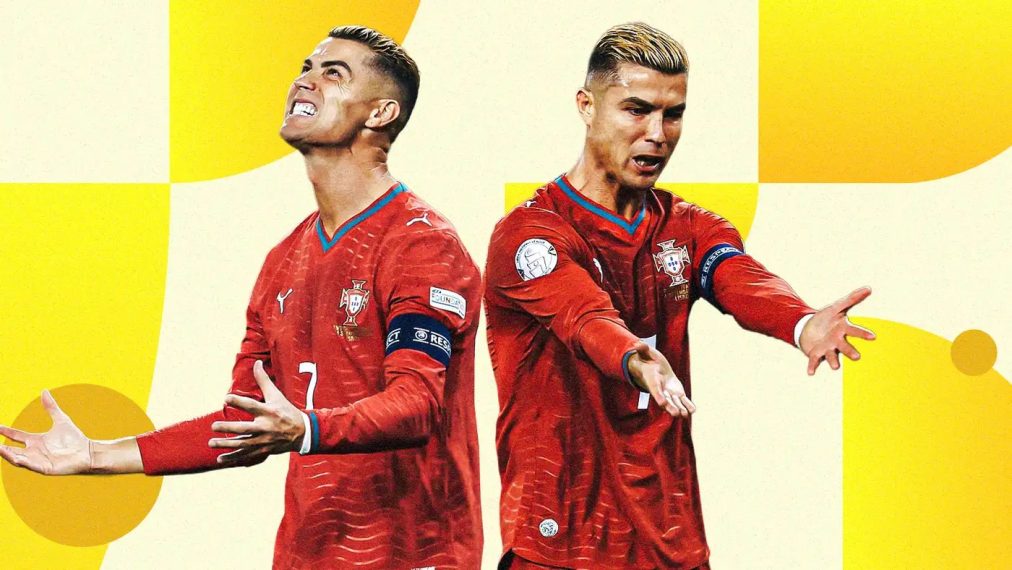
For years, Cristiano Ronaldo was blamed whenever one of his teams faltered, as though his presence was the simplest explanation for every crisis and his departure the quickest route to a solution.
He was criticised for being selfish, while his goals were sometimes presented as evidence that the wider team was not functioning properly. Yet a review of his major career moves offers a more complex picture. The clubs he left did not all collapse, but each went through periods of rebuilding, decline or inconsistency. His influence was not limited to scoring goals: Ronaldo gave every side he represented an exceptional attacking threat that was difficult to replace.
Real Madrid was the brightest chapter of his club career. Signed from Manchester United for a record fee, Ronaldo became the Spanish club’s all-time leading scorer. Across nine seasons, he played 438 official matches, scored 450 goals and helped Real Madrid win 16 trophies.
That haul included four Champions League titles, two La Liga titles, two Copa del Rey trophies, three UEFA Super Cups, three FIFA Club World Cups and two Spanish Super Cups.
When he moved to Juventus in the summer of 2018, Real Madrid struggled to immediately replace his goals. The club ended the 2018-2019 season without a major trophy and were eliminated from the Champions League by Ajax after a 4-1 defeat at Santiago Bernabeu.
Real Madrid later returned to winning major honours, but Ronaldo’s former team-mate Karim Benzema acknowledged the scale of the adjustment. He said Ronaldo had scored 50 goals every season, meaning Benzema had to adapt to playing alongside him. His departure gave Benzema a different role and forced him to take greater responsibility for deciding matches.
Marcelo, Ronaldo’s close friend and former Real Madrid team-mate, was even more direct, saying any club would miss the best player in the world when he left. He added that everyone would want Cristiano in their team.
Ronaldo scored 101 goals in 134 official matches for Juventus during three seasons in Turin, winning five trophies: two Serie A titles, one Coppa Italia and two Italian Super Cups. However, the club’s failure to win the Champions League led to criticism, particularly because ending that wait had been a central reason for his arrival.
Gianluigi Buffon said Juventus lost part of its collective identity during that period, but later clarified that this was not Ronaldo’s fault. The Portuguese had delivered what was expected of him, Buffon argued, while some members of the squad had not been ready to adapt to a player of his stature.
Former Juventus captain Giorgio Chiellini also said Ronaldo was decisive when a team played to his strengths and that his continued presence would have been a major benefit. Chiellini described Ronaldo’s departure in August 2021 as a shock, saying Juventus had not had enough time to prepare for his absence.
Juventus subsequently lost the Serie A title after retaining it for nine successive seasons, entering a period of inconsistency before winning it again in 2023-2024.
Ronaldo returned to Manchester United in the summer of 2021 to a huge reception at Old Trafford. He scored 24 goals in all competitions in his first season back and finished as the club’s leading scorer, despite poor results and problems within the squad.
His relationship with the club changed after Erik ten Hag became manager. Ronaldo’s role in the starting line-up diminished and disagreements over his treatment and status intensified, culminating in his interview with Piers Morgan and the mutual termination of his contract in November 2022.
Across his two Manchester United spells, Ronaldo scored 145 goals in 346 matches and won eight trophies, including three Premier League titles, the Champions League, the FIFA Club World Cup, the FA Cup and two League Cups.
Rio Ferdinand, his former team-mate and a United great, questioned how the club would replace the 24 goals Ronaldo had scored in his final season if it allowed him to leave. Ronaldo later argued that Manchester United required a complete rebuild involving the management, infrastructure and overall structure, rather than simply changing players or managers. The club’s decline after his departure and its continued managerial changes suggested the problems were not caused by one player alone.
With Portugal, Ronaldo became central to the biggest achievements of the current generation. Before his era, the country had won neither the UEFA European Championship nor the UEFA Nations League. The team he led won Euro 2016 and the UEFA Nations League in 2019 and 2025.
He ended his international career with 234 appearances and 146 goals, making him the most-capped and highest-scoring player in international football. His Portugal career lasted 23 years, from his debut in 2003 until his retirement was announced on 5 November 2026.
His influence extended beyond those figures, helping create a competitive identity for a national team expected to challenge for major honours.
Now Jorge Jesus and Portugal’s current generation face a different test. Ronaldo’s departure does not guarantee success, just as his presence did not make him solely responsible for every failure. The next phase will show whether Portugal can maintain its standing without its historic captain.
-
 Issoufou Dayo returns as Amir Abdou names Burkina Faso squad for AFCON qualifiers Nov 6, 2026
-
Cameroon call up Ryan Fosso after Carlos Baleba withdraws Nov 6, 2026
-
Algeria’s U17 World Cup squad features several notable omissions Nov 6, 2026
-
PSG seek seventh straight Ligue 1 win as Troyes visit Parc des Princes Nov 6, 2026



-
AFCON 2025: Fixtures, Results, Scores and Standings Jan 18, 2026
-
Match hero Taiwo Awoniyi reflects on team effort after Chelsea triumph May 5, 2026
-
Leadership and long-term vision key to rescuing Zamalek and inspiring Egyptian football – Hany Abou Rida Nov 5, 2025
-
South African giants Orlando Pirates set to lose influential forward Monnapule Saleng Mar 19, 2025




-
Barcelona host Aston Villa in Champions League meeting at Spotify Camp Nou Nov 2, 2026
-
AEK Athens v Real Madrid: Champions League date, kick-off time and viewing details Nov 2, 2026
-
Villarreal host unbeaten PSG in first European meeting Nov 2, 2026
-
Real Sociedad and Lyon name probable line-ups for Europa League meeting Nov 3, 2026