CAS verdict: What Senegal’s AFCON triumph could mean for Morocco’s FIFA ranking
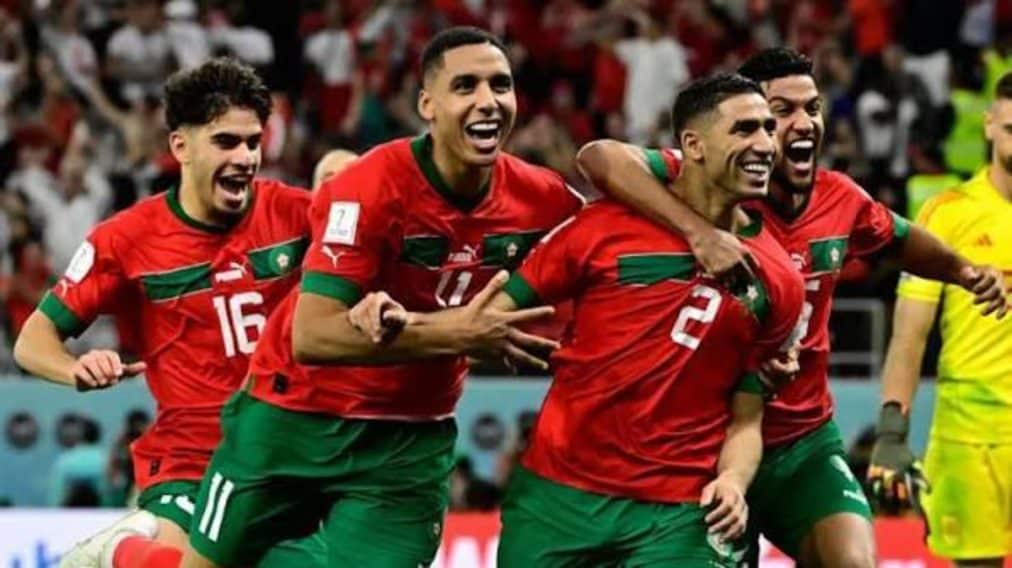
Morocco’s historic rise to fifth place in the FIFA Men’s World Rankings has taken on a new dimension following the Court of Arbitration for Sport’s (CAS) decision to reinstate Senegal as 2025 Africa Cup of Nations (AFCON) champions.
While the Atlas Lions have secured their highest-ever position since the rankings were introduced in 1993, the latest legal development raises questions about whether the reversal of the AFCON final result could have implications for their ranking points.
The short answer is that an adjustment is possible, but it is not automatic.
Morocco climbed two places to fifth in FIFA’s November 18 ranking, moving ahead of Portugal and Brazil after recording two victories over Niger in their AFCON 2027 qualifying campaign. The achievement marked a new milestone for African football and placed the Atlas Lions among the world’s top five national teams.
However, six days later, CAS overturned CAF’s Appeal Board decision to declare Senegal forfeited and award Morocco a 3-0 victory in the AFCON 2025 final.
Instead, the Lausanne-based tribunal reinstated the original result, confirming Senegal’s 1-0 victory after extra time in the January 18 final in Rabat.
The decision followed a dispute over Senegal’s temporary departure from the pitch in protest at a late penalty awarded to Morocco. The Senegalese players eventually returned, Brahim Diaz missed the penalty and Pape Gueye scored the decisive goal in extra time.
Could Morocco lose ranking points?
FIFA’s ranking system uses an Elo-based model, adding or subtracting points after international matches.
The calculation takes into account factors including the teams’ relative strength, the importance of the fixture, the match result and the expected outcome.
This means that a change to the officially recognised result of an international match could potentially affect the points awarded to the participating teams.
If FIFA revises the result used for its ranking calculations following the CAS ruling, Morocco could lose points previously associated with a victory, while Senegal’s points could be recalculated to reflect the restored result.
However, the key issue is whether FIFA will make such an adjustment.
The CAS ruling settles the dispute over the AFCON final under the applicable sporting regulations, but it does not automatically confirm that FIFA will amend its ranking calculations.
FIFA and CAF have separate responsibilities, and the implications for the world rankings will depend on how FIFA treats the final following the arbitration decision.
December ranking becomes significant
The timing of the ruling makes FIFA’s next ranking update particularly important.
Scheduled for December 16, 2026, it will be the first official release following CAS’s November 24 decision.
However, there has been no confirmed announcement that FIFA intends to recalculate the AFCON final’s ranking points.
Morocco’s fifth-place position therefore remains its official standing in the November rankings. Whether the CAS verdict will have any effect on the next update remains to be established.
The Atlas Lions’ achievement was built on years of progress and strong international performances, rather than the outcome of a single fixture.
Their rise to fifth represents a historic moment for Moroccan football and a significant milestone for African football as a whole.
For Senegal, the CAS decision restores the continental title and the result achieved on the pitch. For Morocco, the immediate disappointment of losing the trophy is now accompanied by uncertainty over a possible ranking consequence.
The December update may provide further clarity, but until FIFA confirms how it intends to treat the restored result, any suggestion that Morocco will lose its historic position remains speculation.
-
 CAS verdict: What Senegal’s AFCON triumph could mean for Morocco’s FIFA ranking Nov 24, 2026
-
PSG renew interest in Nico Williams as Desire Doue injury forces January transfer plans Nov 24, 2026
-
Al Ahly consider Marcel Koller return as club search for new head coach Nov 24, 2026
-
Zambia lodge official CAF protest over Burundi’s controversial AFCON qualifier goal Nov 24, 2026




-
AFCON 2025: Fixtures, Results, Scores and Standings Jan 18, 2026
-
Match hero Taiwo Awoniyi reflects on team effort after Chelsea triumph May 5, 2026
-
Leadership and long-term vision key to rescuing Zamalek and inspiring Egyptian football – Hany Abou Rida Nov 5, 2025
-
South African giants Orlando Pirates set to lose influential forward Monnapule Saleng Mar 19, 2025




-
AFCON 2027 qualifiers matchday 3 & 4: All fixtures and results Nov 17, 2026
-
U17 World Cup 2026: Full schedule for Morocco and where to watch Nov 19, 2026
-
AFCON 2027 Qualifiers: South Africa bounce back with win over Kenya Nov 17, 2026
-
AFCON 2027 qualifiers: Morocco edge Niger in 1-0 victory to secure qualification Nov 17, 2026