Does CAS ruling on AFCON 2025 final raise questions over football justice?

The Court of Arbitration for Sport (CAS) has once again found itself at the centre of a major football controversy after overturning the Confederation of African Football’s (CAF) decision to award Morocco the 2025 Africa Cup of Nations title.
The ruling, which reinstated Senegal as African champions following their original 1-0 victory in January’s final in Rabat, has reignited debate about the interpretation of football regulations, the authority of match officials and the extent to which arbitration bodies can overturn decisions made by football’s governing institutions.
For Morocco, the decision represents a significant setback after months of legal proceedings that had briefly appeared to settle the ownership of the continental trophy.
But beyond the disappointment of losing the title, the controversy raises a much bigger question: how consistently is football justice applied, and who ultimately holds the authority to determine what is right when sporting regulations and decisions made on the pitch come into conflict?
The case has also brought renewed attention to CAS, an institution whose decisions can determine the outcomes of major competitions, the eligibility of players and the sporting futures of clubs and national associations.
Allegations of contact raise questions about arbitration procedures
Hours before the verdict was announced on Tuesday, 24 November, the Royal Moroccan Football Federation (FRMF) reportedly approached CAS seeking clarification over an alleged telephone conversation involving one of the arbitrators hearing Senegal’s appeal.
According to reports by French broadcaster RMC Sport, the Moroccan federation’s legal representatives raised concerns about an alleged conversation between German legal expert Ulrich Haas, one of the three members of the CAS panel, and Senegalese Football Federation (FSF) president Abdoulaye Fall.
The alleged conversation reportedly took place on Sunday, 22 November.
The FRMF reportedly wanted the court to establish the circumstances surrounding the alleged contact and determine whether it raised questions about the independence and impartiality of the proceedings.
However, the allegation remains unproven. The Senegalese federation denied that the conversation had taken place, while Reuters reported that it could not independently verify whether the call occurred or establish what may have been discussed.
The reported development added another layer of controversy to an already sensitive case, particularly given the responsibility placed on CAS to deliver an impartial decision.
There is an important distinction between reporting an allegation and establishing misconduct. Without verified evidence of the alleged conversation or its contents, there is no basis to conclude that the arbitration panel was compromised.
Nevertheless, allegations involving possible contact between an arbitrator and a party to an ongoing dispute require appropriate scrutiny because confidence in the independence of arbitration is central to the credibility of its decisions.
The referee’s authority versus CAF’s regulations
At the heart of the Senegal–Morocco dispute was a disagreement over the consequences of Senegal’s temporary departure from the pitch during the January final.
The incident occurred after referee Jean-Jacques Ngambo Ndala awarded Morocco a late penalty, prompting Senegal’s players to leave the field in protest.
The interruption lasted approximately 15 minutes before the players returned to continue the match. Morocco’s Brahim Diaz missed the penalty, and Senegal eventually secured a 1-0 victory through Pape Gueye’s extra-time goal.
CAF’s Appeal Board subsequently overturned the result, declaring Senegal to have forfeited the final and awarding Morocco a 3-0 victory.
Senegal challenged that decision at CAS, arguing that the referee’s decision to resume the match and allow it to reach a sporting conclusion was protected by football’s field of play doctrine.
Morocco, on the other hand, maintained that Senegal’s conduct breached Articles 82 and 84 of the AFCON regulations and should have resulted in a forfeiture.
CAS ultimately sided with Senegal.
In its decision, the panel concluded that the referee’s authority to resume or stop the match fell within his exclusive jurisdiction.
The court reasoned that when play restarted, both teams had returned to the pitch and indicated their willingness to continue.
It also determined that Articles 82 and 84 were intended to address situations in which a team’s conduct leads the referee to permanently abandon a match.
CAS therefore concluded that the provisions did not apply to the circumstances of the Rabat final.
CAS Secretary General Matthieu Reeb explained the reasoning behind the decision, saying, “As long as both teams resumed playing, with the referee’s authorization, the situation was regular. Had the opposite happened, the situation would have taken a different course.”
The decision was unanimous.
The ruling reinforces the importance of the referee’s authority in determining whether a match can continue. However, it also raises questions about how competition regulations should distinguish between temporary withdrawals, refusals to play and permanent abandonment.
For Morocco, the central concern is whether the regulations were applied in a manner that adequately addressed Senegal’s initial conduct.
For Senegal, the argument was that the referee had exercised his authority, allowed the match to continue and produced a result that should not subsequently have been overturned.
The distinction between those positions is central to understanding the CAS verdict.
Wydad Casablanca and Espérance: Another African football controversy
The latest dispute is not the first time CAS has intervened in a major African football controversy involving a Moroccan club.
In 2019, the court became involved in the dispute surrounding the CAF Champions League final between Morocco’s Wydad Casablanca and Tunisia’s Espérance Sportive de Tunis.
The second leg in Rades was interrupted after Wydad players protested a disallowed goal amid confusion surrounding the malfunctioning Video Assistant Referee (VAR) system.
Wydad refused to resume play, and the referee eventually brought the match to an end, with Espérance initially declared winners.
CAF’s Executive Committee subsequently ordered the match to be replayed at a neutral venue, prompting both clubs to challenge the decision before CAS.
On 31 July 2019, CAS ruled that CAF’s Executive Committee did not have the authority to order a replay. The court annulled the decision and referred the matter back to CAF’s competent disciplinary bodies.
Following further disciplinary proceedings, Wydad were declared to have forfeited the match.
In September 2020, CAS dismissed Wydad’s appeal against that disciplinary decision, confirming Espérance as Champions League winners.
The distinction between the Wydad and Senegal cases is particularly important.
In the Wydad controversy, the team’s refusal to resume play ultimately resulted in a forfeiture under CAF’s regulations.
In the Senegal–Morocco final, however, CAS considered the referee’s decision to restart the match decisive, particularly because both teams returned and completed the fixture.
Although the circumstances were different, the two cases demonstrate how the interpretation of a match’s interruption and resumption can determine the ownership of major African football trophies.
They also highlight the importance of clearly drafted regulations that leave little room for conflicting interpretations.
Manchester City: When CAS overturned a major football sanction
CAS has also faced scrutiny over decisions involving some of Europe’s biggest football institutions.
In February 2020, UEFA imposed a two-season ban from European competitions on Manchester City after finding serious breaches of its Financial Fair Play regulations. The club was also fined €30 million.
Manchester City appealed the decision to CAS.
In July 2020, the court overturned the European competition ban and reduced the fine to €10 million.
The panel found that most of the alleged breaches were either not established or time-barred under the applicable regulations. However, it maintained that Manchester City had failed to cooperate with UEFA’s investigation.
The ruling attracted widespread attention because it overturned one of the most significant sanctions imposed by UEFA against a major European club.
UEFA acknowledged the decision, noting that the court had found insufficient conclusive evidence to uphold all its conclusions and that several allegations were time-barred.
The case demonstrated how CAS can substantially alter the consequences of disciplinary proceedings conducted by football’s governing institutions.
It also highlighted the importance of evidence, procedural fairness and the correct interpretation of sporting regulations.
However, the Manchester City case should not be treated as identical to the Senegal–Morocco dispute. One concerned financial regulations and the sufficiency of evidence, while the other centred on the referee’s authority and the consequences of a team’s temporary departure from the pitch.
What connects them is the power of an independent arbitration body to review and overturn decisions made by football authorities.
How independent is CAS?
Beyond individual decisions, questions surrounding the institutional independence of CAS have attracted legal scrutiny for several years.
Established in Lausanne in 1984, CAS was initially created under the influence of the International Olympic Committee (IOC) to provide a specialised forum for resolving sporting disputes.
Its structure changed significantly in 1994 with the establishment of the International Council of Arbitration for Sport (ICAS), which assumed responsibility for its administration and financing.
CAS now operates as an independent arbitration institution, handling disputes involving athletes, clubs, national associations and international sporting federations.
Its authority is particularly significant in international football because its decisions can determine the outcome of disciplinary appeals and disputes involving major competitions.
However, its institutional arrangements have not escaped criticism.
In 2018, the European Court of Human Rights examined the independence and procedures of CAS in the case of Mutu and Pechstein v. Switzerland.
The case involved complaints by professional athletes concerning the independence and impartiality of the arbitration body, as well as the absence of a public hearing.
The European court’s majority found no violation of the right to a fair trial concerning CAS’s alleged lack of independence and impartiality.
However, it found a violation of Article 6 of the European Convention on Human Rights in Claudia Pechstein’s case because she had not been granted a public hearing.
The judgment was significant because it recognised the safeguards provided by CAS proceedings while also establishing that certain procedural rights must be respected.
Two judges also issued a dissenting opinion, questioning aspects of the court’s institutional independence.
The judgment did not establish that CAS was institutionally biased. Rather, it demonstrated that the structure and procedures of an institution exercising such significant sporting authority remain legitimate subjects of legal examination.
Who holds CAS accountable?
CAS occupies an unusual position in international sport.
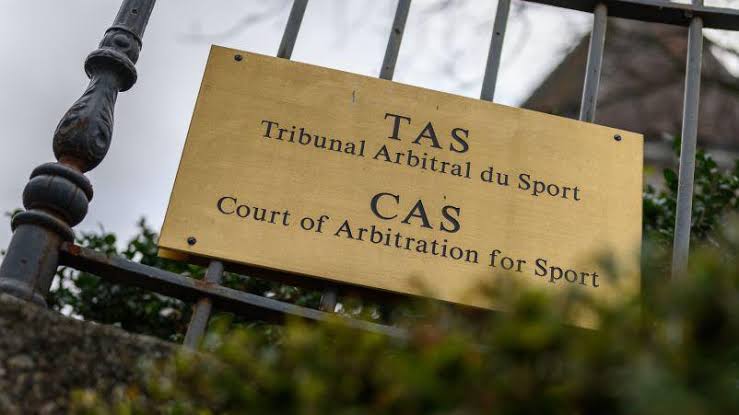
It is neither a national court nor a football governing body. Instead, it operates as an arbitration institution whose jurisdiction is recognised through the applicable sporting rules and agreements between the parties.
Its decisions carry considerable authority because international federations, clubs and athletes rely on it to settle disputes that could otherwise remain unresolved across different legal systems.
However, CAS is not beyond scrutiny.
Its arbitrators are required to act independently and impartially, and its procedural rules provide mechanisms for challenging an arbitrator when circumstances give rise to legitimate doubts about their independence.
Its awards may also be challenged before Switzerland’s Federal Supreme Court, although the grounds for setting aside an international arbitration award are limited.
These safeguards are important because the legitimacy of arbitration depends not only on the correctness of the final decision but also on the fairness of the process through which it is reached.
In the Senegal–Morocco case, the reported allegation involving an arbitrator therefore deserves to be treated with appropriate seriousness, without assuming that misconduct occurred.
If credible evidence of improper contact were established, the circumstances would require examination under the applicable arbitration rules.
Equally, an unverified allegation should not be used to discredit an entire judicial process simply because one party is dissatisfied with the outcome.
The responsibility rests with CAS to maintain transparency and protect confidence in its proceedings.
Football justice must go beyond winning or losing
The reinstatement of Senegal as 2025 AFCON champions has settled the immediate sporting dispute, but the wider debate about football justice is unlikely to disappear.
For Senegal, the ruling confirms a victory originally secured on the pitch. For Morocco, it represents another disappointment in a tournament that offered the opportunity to end a 50-year wait for another continental title.
For CAF, the case raises important questions about the clarity of its regulations, the consistency of disciplinary decisions and the relationship between its governing bodies and independent arbitration.
The governing body must ensure that its competition rules are sufficiently clear to prevent similar disputes from escalating into lengthy legal battles.
It must also maintain confidence in its disciplinary structures by ensuring that decisions are supported by consistent interpretations of the regulations.
For CAS, the challenge is to demonstrate that its authority is matched by transparency, independence and procedural fairness.
Ultimately, football justice cannot be measured solely by whether a decision favours Senegal or Morocco, or whether a powerful club wins or loses an appeal.
It must be measured by whether the same principles, standards of evidence and procedural safeguards apply to every party.
The Senegal–Morocco controversy has exposed the complicated relationship between decisions made on the pitch and the legal processes that govern international football.
The most important question is therefore not simply who won the AFCON trophy, but whether African football and the wider sporting world can trust the institutions responsible for deciding such disputes.
-
 Does CAS ruling on AFCON 2025 final raise questions over football justice? Nov 24, 2026
-
AFCON 2025: Sadio Mane urges Morocco and Senegal to preserve brotherhood after CAS ruling Nov 24, 2026
-
AFCON 2025: Sadio Mane celebrates as CAS restores Senegal’s African crown Nov 24, 2026
-
Morocco to challenge CAS decision awarding 2025 AFCON trophy to Senegal Nov 24, 2026


-
AFCON 2025: Fixtures, Results, Scores and Standings Jan 18, 2026
-
Match hero Taiwo Awoniyi reflects on team effort after Chelsea triumph May 5, 2026
-
Leadership and long-term vision key to rescuing Zamalek and inspiring Egyptian football – Hany Abou Rida Nov 5, 2025
-
South African giants Orlando Pirates set to lose influential forward Monnapule Saleng Mar 19, 2025




-
AFCON 2027 qualifiers matchday 3 & 4: All fixtures and results Nov 17, 2026
-
U17 World Cup 2026: Full schedule for Morocco and where to watch Nov 19, 2026
-
AFCON 2027 Qualifiers: South Africa bounce back with win over Kenya Nov 17, 2026
-
AFCON 2027 qualifiers: Morocco edge Niger in 1-0 victory to secure qualification Nov 17, 2026