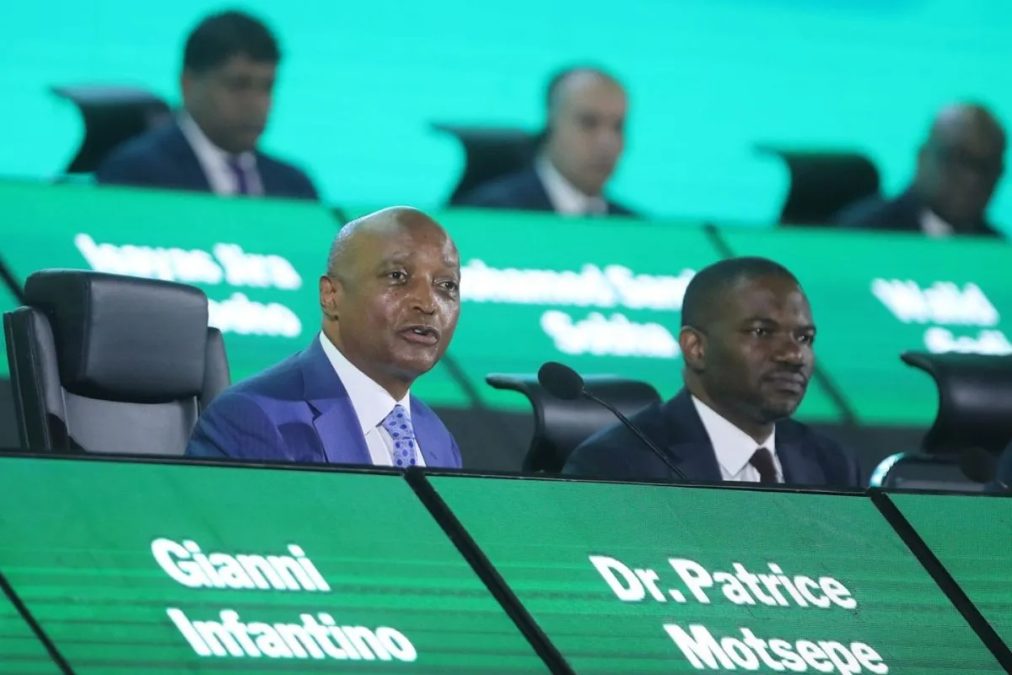
The Confederation of African Football (CAF) has approved Swahili as its fifth official language, alongside French, English, Arabic and Portuguese.
The decision was announced after the 48th Ordinary General Assembly, held on Saturday in Abuja, Nigeria, where CAF passed several resolutions, including the formal recognition of a new language for the organisation.
In a statement, CAF described the move as a significant step towards strengthening the role of African languages within football administration across the continent.
> “The 48th Ordinary General Assembly of CAF adopted several important resolutions, including a historic decision to recognise Kiswahili as one of the organisation’s official languages. (…) This decision demonstrates the organisation’s determination to promote the continent’s linguistic and cultural diversity and to strengthen the place of African languages in football administration across Africa.”
Swahili becomes the fifth official language used by CAF after French, English, Arabic and Portuguese.
The language has more than 200 million speakers, according to United Nations estimates, making it the most widely spoken language in sub-Saharan Africa. It is also spoken by a majority of people in southern Africa and is the main national language of Kenya, Tanzania and Uganda.
The decision is understood to have followed a joint campaign by the three countries due to host the 2027 Africa Cup of Nations. The initiative was presented to the CAF executive committee, with the Tanzania Football Federation (TFF) leading the campaign, according to Leopardsfoot.
Swahili is also one of the four national languages of the Democratic Republic of the Congo, where it is particularly widespread in the north, east and south-east of the country.
The adoption represents a greater formal recognition of one of Africa’s most widely used languages within the continent’s governing body for football.
-
 CAF adopts Swahili as fifth official language Nov 22, 2026
-
Morocco’s amputee football team captures hearts on historic World Cup run Nov 22, 2026
-
Gianni Infantino wins unanimous backing from African football ahead of FIFA election Nov 22, 2026
-
Arsenal host Dortmund as unbeaten Champions League runs go head to head Nov 22, 2026




-
AFCON 2025: Fixtures, Results, Scores and Standings Jan 18, 2026
-
Match hero Taiwo Awoniyi reflects on team effort after Chelsea triumph May 5, 2026
-
Leadership and long-term vision key to rescuing Zamalek and inspiring Egyptian football – Hany Abou Rida Nov 5, 2025
-
South African giants Orlando Pirates set to lose influential forward Monnapule Saleng Mar 19, 2025




-
AFCON 2027 qualifiers matchday 3 & 4: All fixtures and results Nov 17, 2026
-
Cote d’Ivoire close in on AFCON 2027 qualification against Gambia Nov 16, 2026
-
AFCON 2027 Qualifiers: South Africa bounce back with win over Kenya Nov 17, 2026
-
AFCON 2027 Qualifiers: Benni McCarthy promises attacking Kenya display against South Africa Nov 17, 2026