Brahim Diaz and the missed Panenka: How one penalty became central to the AFCON title saga
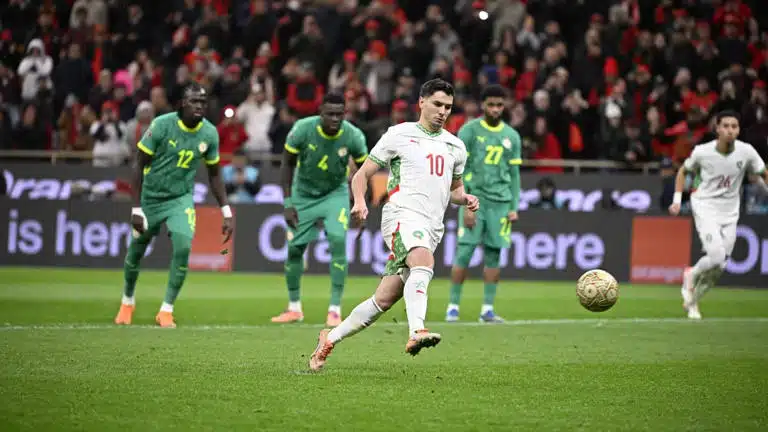
A decisive ruling from the Court of Arbitration for Sport overturning the Confederation of African Football’s forfeit verdict has reinstated Senegal as the 2025 Africa Cup of Nations champions, cementing Brahim Diaz’s missed Panenka as the pivotal turning point of the tournament.
By ruling in favor of the Senegalese Football Federation, the Lausanne panel has restored the on-field result of the January 18 final in Rabat, where Senegal defeated host nation Morocco 1-0 in extra time.
The legal battle traced back to a chaotic sequence late in regulation time in Rabat. Furious over a disallowed Ismaila Sarr goal and a subsequent VAR decision awarding Morocco a stoppage-time penalty, Senegal coach Pape Thiaw led several players and staff down the tunnel in protest, suspending play for roughly 17 minutes.
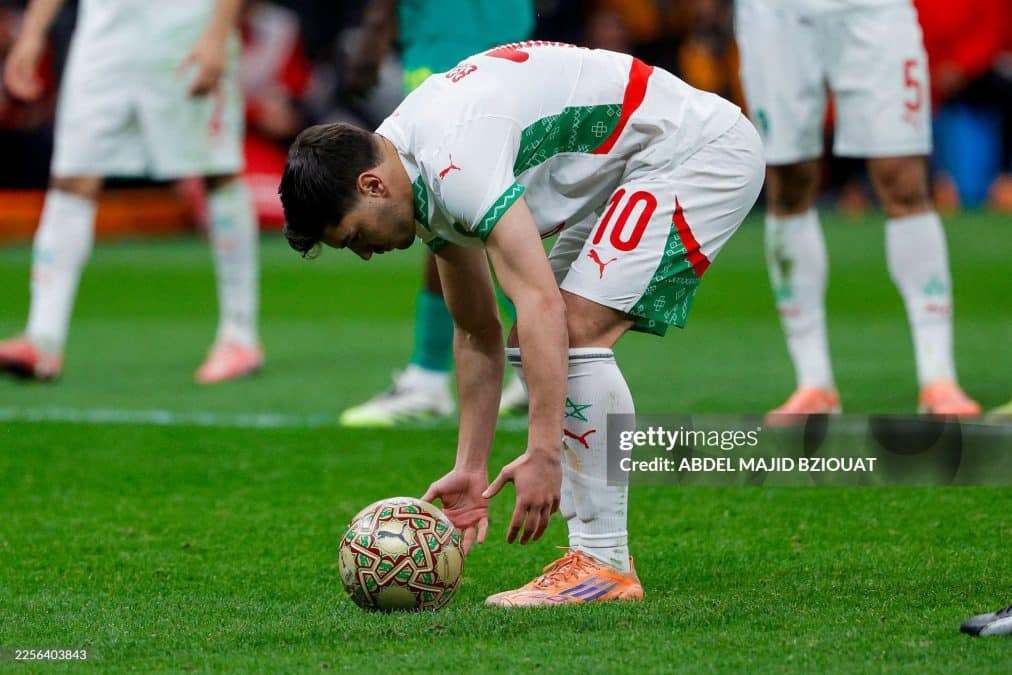
When order was restored and the match resumed, Real Madrid star Brahim Diaz stepped up with a chance to secure Morocco’s first continental title in 50 years. His chipped Panenka attempt, however, floated softly into the grasp of Senegal goalkeeper Edouard Mendy, setting the stage for Pape Gueye’s extra-time winner and a months-long boardroom dispute.
Anatomy of a Costly Gamble
Analysing the mechanics of the spot-kick without claiming insight into Diaz’s private motivations highlights the extreme tactical risk inherent in the choice.
A Panenka depends on exploiting a goalkeeper’s momentum, requiring the keeper to dive early in anticipation of a hard shot to either corner.
Attempting such a low-margin technique immediately following a 17-minute stoppage defied conventional penalty strategy.

The extended interruption eliminated the natural rhythm of the game, allowing Mendy to recover physically and mentally while reading the shooter’s body language without the pressure of rapid match tempo.
Mendy’s decision to remain upright turned an audacious gamble into a routine save, triggering an immediate psychological swing across the stadium. Morocco, visibly stunned by the sudden loss of a seemingly certain victory, struggled to regroup mentally before the start of extra time.
Senegal, galvanized by surviving the late scare, harnessed the emotional intensity of the walk-off to lock down defensively and capitalize on their second life through Gueye’s decisive strike.
When CAF’s Appeal Board stripped Senegal of the trophy on March 17 – awarding Morocco a 3-0 forfeit victory under Articles 82 and 84 – it temporarily erased the sporting consequences of that missed kick.
Sporting Merit and Referee Jurisdiction Prevail
Following a five-hour hearing on October 8, the three-man CAS panel sided with Senegal’s core legal argument regarding match jurisdiction and proportionality.
Senegal’s representatives contended that the final was never officially abandoned, pointing out that the match referee exercised his authority under the Laws of the Game to resume play and oversee the completion of both regulation and extra time. By accepting that a temporary walk-off should not invalidate a completed match months after the final whistle, CAS reaffirmed the primacy of results settled on the pitch.
The verdict restores the original sporting narrative of the Rabat final in full, placing Diaz’s penalty back at the center of football history. With Senegal’s second AFCON crown officially reinstated, Mendy’s composure in reading the chip and Gueye’s extra-time goal reclaim their status as the legitimate championship-deciding moments.
Conversely, Diaz’s failure to convert from 12 yards is permanently sealed as one of the most consequential penalty misses in international tournament history, standing as the exact moment a 50-year title drought slipped through Morocco’s grasp.
-
 Brahim Diaz and the missed Panenka: How one penalty became central to the AFCON title saga Nov 24, 2026
-
 Pape Thiaw’s walk-off decision: How the Senegal coach sparked an unprecedented AFCON title battle Nov 24, 2026
-
Sadio Mane: The man who brought Senegal back onto the pitch – and the AFCON legacy now at stake Nov 24, 2026
-
Wilfried Zaha: Thomas Frank given green light to decide on Crystal Palace return for former captain Nov 24, 2026



-
AFCON 2025: Fixtures, Results, Scores and Standings Jan 18, 2026
-
Match hero Taiwo Awoniyi reflects on team effort after Chelsea triumph May 5, 2026
-
Leadership and long-term vision key to rescuing Zamalek and inspiring Egyptian football – Hany Abou Rida Nov 5, 2025
-
South African giants Orlando Pirates set to lose influential forward Monnapule Saleng Mar 19, 2025




-
AFCON 2027 qualifiers matchday 3 & 4: All fixtures and results Nov 17, 2026
-
U17 World Cup 2026: Full schedule for Morocco and where to watch Nov 19, 2026
-
AFCON 2027 Qualifiers: South Africa bounce back with win over Kenya Nov 17, 2026
-
AFCON 2027 qualifiers: Morocco edge Niger in 1-0 victory to secure qualification Nov 17, 2026