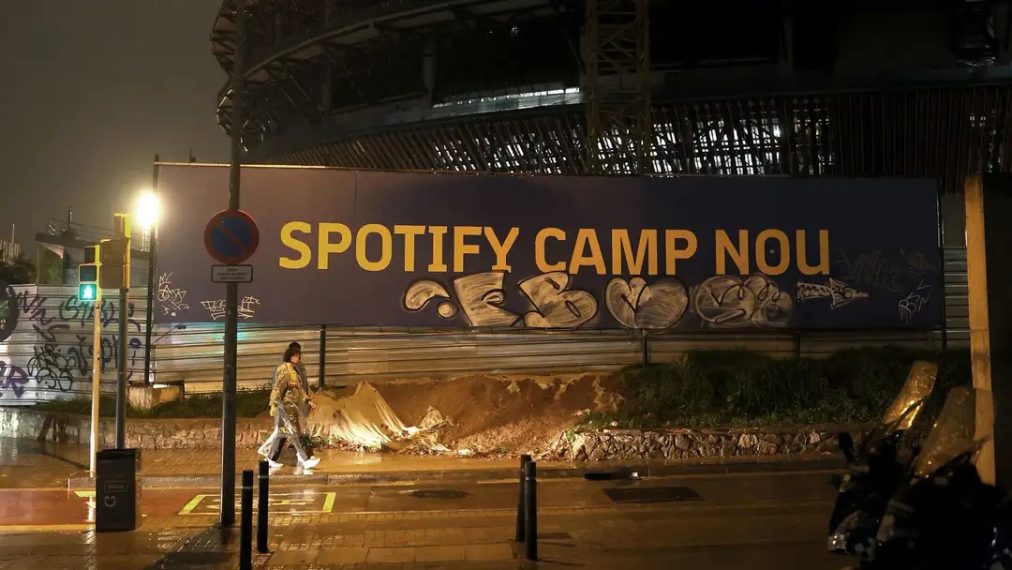
Barcelona continued operating on Wednesday, 11 November, despite a general strike that left much of Spain’s transport network suspended and streets unusually quiet.
The club allowed employees to exercise their right to strike without pressure or restrictions, while also making remote working available to those who faced difficulties reaching their workplaces because of disruption to public transport, according to Mundo Deportivo.
That approach enabled Barcelona to respect its staff’s rights while maintaining essential services for members and supporters.
The impact of the strike was evident from the early morning. Traffic around the club and stadium was significantly lighter than usual, and fewer people were present than on a normal day as many chose to remain at home.
However, the club’s Botiga store and museum attracted a sizeable number of visitors despite the reduced attendance elsewhere. Supporters and tourists of different ages and nationalities used the quieter conditions to visit Barcelona’s home, take photographs and buy shirts and other merchandise without the usual matchday crowds.
Some employees at the store, the supporters’ office and the members and users’ service office took part in the strike. Barcelona had nevertheless prepared an alternative plan, ensuring enough staff remained available to provide the essential assistance required by visitors and members.
The club’s popular stadium tour also continued as normal. Visitor numbers were lower than usual, partly because the season is currently paused and partly because fewer people were travelling during the exceptional circumstances created by the strike.
Camp Nou construction continues
Work on the new Camp Nou project was also largely unaffected. Sources consulted by Mundo Deportivo said participation in the strike among construction workers was almost non-existent, with the workforce continuing its duties and the pace of the major development remaining broadly unchanged.
The area immediately around the stadium was quieter, however, with little activity visible. Preparations for Barcelona Women’s UEFA Women’s Champions League match against Arsenal on Thursday, 12 November 2026, meant the external areas had to be ready to receive supporters.
Organisation, security and logistics teams were working to complete the preparations for the European fixture. Activity around the stadium is expected to return to full strength after the relative calm imposed by the general strike.
Barcelona’s response produced a mixed picture: some employees stopped work, while others worked remotely or continued their duties at the club. Even so, the organisation maintained access to its key services and kept its stadium facilities available to supporters and visitors.
On a day when large parts of Spain were brought to a standstill, Barcelona remained open and continued preparing for its next major event.
-
 DR Congo host Sierra Leone with 2027 Africa Cup of Nations qualification in sight Nov 12, 2026
-
Senegal leave out Souleymane Commissaire Faye as agent questions World Cup decision Nov 12, 2026
-
Real Madrid, Arsenal and Paris Saint-Germain tracking Borussia Dortmund defender Joane Gadou Nov 12, 2026
-
Kalipha Jawla set to leave Djurgarden during winter transfer window Nov 12, 2026




-
AFCON 2025: Fixtures, Results, Scores and Standings Jan 18, 2026
-
Match hero Taiwo Awoniyi reflects on team effort after Chelsea triumph May 5, 2026
-
Leadership and long-term vision key to rescuing Zamalek and inspiring Egyptian football – Hany Abou Rida Nov 5, 2025
-
South African giants Orlando Pirates set to lose influential forward Monnapule Saleng Mar 19, 2025




-
Manchester United host Aston Villa as both sides seek a Premier League lift Nov 6, 2026
-
Ali Maher names first Egypt squad for 2027 Africa Cup of Nations qualifiers Nov 9, 2026
-
Atletico Madrid host Barcelona in Liga summit clash with history at stake Nov 6, 2026
-
Nottingham Forest v Manchester City: City Ground hosts clash at opposite ends of the table Nov 6, 2026