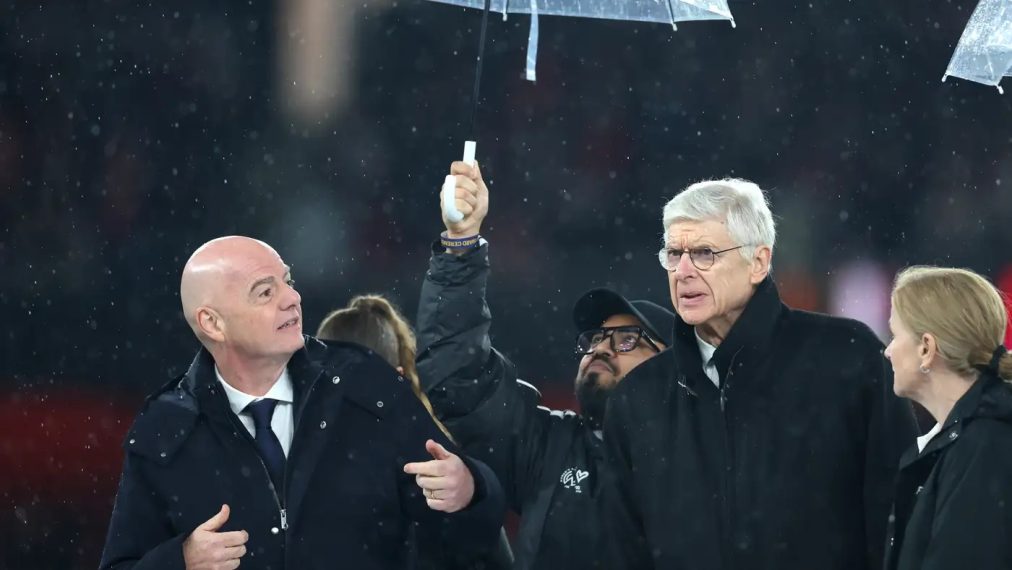
Arsene Wenger is seriously considering standing against Gianni Infantino in next year’s FIFA presidential election, in a move that could reshape the battle for football’s global leadership.
The former Arsenal manager has been encouraged for several weeks by leading figures in European football to put himself forward. He is now weighing the possibility after Infantino faced intense criticism over an abandoned plan to sell commercial stakes in the World Cup to private investors.
Wenger, who is 77, has not yet made a final decision. His age has prompted questions over whether he could lead the game for the long term, although some of his supporters have told BBC Sport they would welcome him winning the election before stepping down ahead of completing a full four-year term. That scenario could create a new transitional period at FIFA.
Infantino continues to enjoy significant backing in South America, Africa and Asia. He recently said he had the support of the “vast majority” of the football world. However, that support would be tested if Wenger entered the contest.
As FIFA’s chief of global development, Wenger would be expected to receive backing from UEFA, which has led opposition to Infantino. He also has broad credibility across football and a strong international profile, particularly in Africa, where his support for expanding the World Cup to 48 teams was widely welcomed.
Sources close to Wenger say he still believes Infantino remains the favourite to win a fourth and final term, despite considering whether to challenge him.
Candidates emerge before 18 November deadline
The deadline for candidates to confirm they will stand against Infantino in the March election is 18 November, and the contest has already begun to take shape.
Former Tottenham defender Ramon Vega became the first declared candidate in October. Kozo Tashima, honorary president of the Japan Football Association, has also announced his intention to run.
FIFA said this month that it would make “key documents” concerning Infantino’s plan to sell World Cup stakes available to members of its council. However, they will have to travel to FIFA’s headquarters in Zurich to consult them, with access subject to “strict protocols”.
Last month, UEFA gave football’s world governing body until 2 November to disclose details of the controversial “FIFA Forwards project” (FFE) proposal and answer questions about how it was developed and approved.
The demand followed a council meeting at which Infantino apologised for the abandoned plan, but did not explain how the proposal had been created and asked for questions to be submitted in writing.
Wenger, who has been regarded as loyal to Infantino, distanced himself from the scheme during the fallout.
“I was not involved in this strategic plan and first learned about the project through media reports,” he said.
“The decision to withdraw the project was absolutely necessary and beyond dispute, because I firmly believe in an independent FIFA that serves our sport with commitment, transparency and integrity.”
Wenger has attracted controversy during his time at FIFA, including through proposals for a biennial World Cup and a “clear” offside law. But his global influence, and his long-standing support for African players during his Arsenal career, could make him a serious challenger in a continent where Infantino has built considerable support.
Infantino recently secured the backing of all 54 African national associations for his re-election after promising increased funding.
-
 Court of Arbitration for Sport rejects Hafia appeal in AS Douanes dispute Nov 10, 2026
-
CAF approves 18,000 fans for DR Congo’s AFCON 2027 qualifier against Sierra Leone Nov 10, 2026
-
Mohamed Amoura’s Nice form gives Algeria hope of ending scoring drought Nov 10, 2026
-
Morocco and Algeria meet in UNAF U17 opener with AFCON places at stake Nov 10, 2026



-
AFCON 2025: Fixtures, Results, Scores and Standings Jan 18, 2026
-
Match hero Taiwo Awoniyi reflects on team effort after Chelsea triumph May 5, 2026
-
Leadership and long-term vision key to rescuing Zamalek and inspiring Egyptian football – Hany Abou Rida Nov 5, 2025
-
South African giants Orlando Pirates set to lose influential forward Monnapule Saleng Mar 19, 2025




-
Manchester United host Aston Villa as both sides seek a Premier League lift Nov 6, 2026
-
Real Sociedad and Lyon name probable line-ups for Europa League meeting Nov 3, 2026
-
Atletico Madrid host Barcelona in Liga summit clash with history at stake Nov 6, 2026
-
Nottingham Forest v Manchester City: City Ground hosts clash at opposite ends of the table Nov 6, 2026