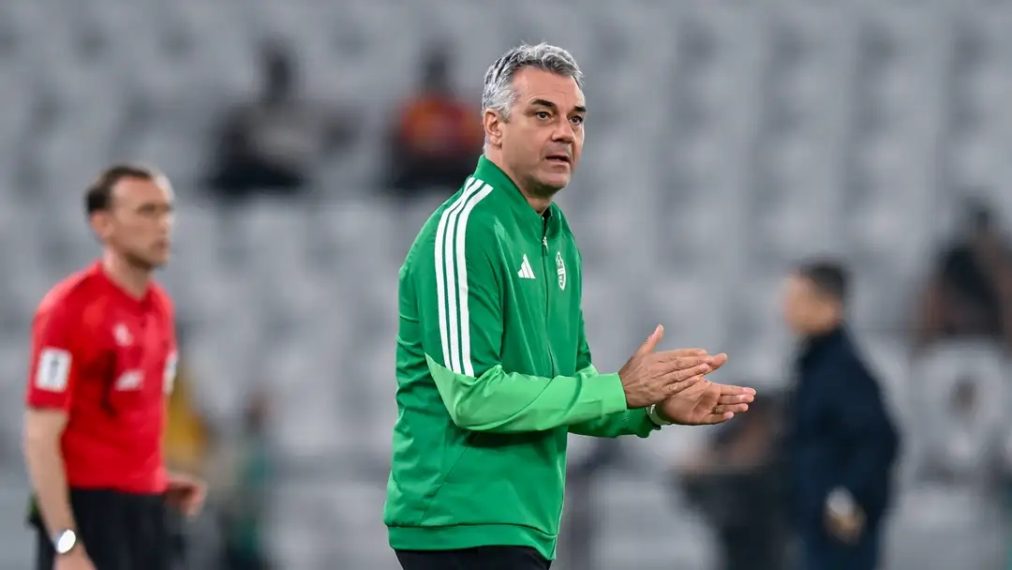
Al Ahli’s 3-2 defeat by Al Shamal, after they had established a two-goal lead, has renewed criticism of the club’s management and increased scrutiny of head coach Marino Pusic.
The loss was discussed on the Rotana Sport with Waleed programme, where presenter Waleed Al-Farraj and guest Faisal Zaid examined the manner of the defeat and the uncertainty surrounding the coach’s position.
Zaid criticised Al Ahli’s handling of the managerial situation, arguing that hesitation over major decisions had become part of the club’s wider problems.
“If we were to give this match a headline, it would be: Pusic says to the Al Ahli board, ‘Sack me’,” Zaid said.
Al-Farraj responded sarcastically, suggesting that no decisive action was likely to be taken despite the team’s declining performances and results.
“They will not sack him unless he loses to Al Ittihad by five goals,” Al-Farraj said.
Al Ahli are scheduled to face Al Ittihad on 11 December in round 15 of the Roshn Saudi League.
Al-Farraj added that some club administrations delayed taking decisions expected by supporters “until the roof falls on them”, arguing that the failure to act when problems become difficult to ignore further damages their standing with fans.
Zaid said the consequences of indecision were straightforward.
“When there is no decision, the administration becomes weaker… You are sitting there burning yourself,” he said.
He believes Al Ahli’s continued uncertainty is harming the club because important issues are not being resolved at the appropriate time. Instead, he said, the administration appears unable to deal directly with crises or accept responsibility for the choices required.
Al-Farraj also questioned the way clubs are run, saying modern administrations had moved away from the traditional model of sports institutions. He described them as being “more like cement factories”, referring to the number of decision-making levels and the complicated procedures that can prevent officials from responding quickly during a crisis.
He acknowledged that the club’s management might not always have complete freedom to act independently. Some decisions, he said, require approval and instructions from higher administrative levels, which could explain the waiting period at Al Ahli, although it did not remove the consequences of the current situation.
Zaid returned to the issue of authority, saying that whoever holds responsibility at Al Ahli, regardless of their name or position, ultimately finds themselves waiting for instructions rather than operating with clearly defined powers.
That situation, he argued, leaves the official acting more like a supporter waiting to see what happens, without the ability to influence the decision.
He concluded that the uncertainty made it difficult for Al Ahli supporters to know which person or department they should contact or hold accountable, with responsibilities unclear and powers overlapping.
-
 Mahrez calls on Algeria to ‘raise their level’ after Togo defeat Nov 24, 2026
-
Joseph Peter signs first professional contract with Rennes Nov 24, 2026
-
Hicham Boudaoui emerges as transfer option for Monaco and Olympiacos Nov 24, 2026
-
Barca keen to sign Morocco’s latest football sensation Yassir Zabiri Nov 24, 2026




-
AFCON 2025: Fixtures, Results, Scores and Standings Jan 18, 2026
-
Match hero Taiwo Awoniyi reflects on team effort after Chelsea triumph May 5, 2026
-
Leadership and long-term vision key to rescuing Zamalek and inspiring Egyptian football – Hany Abou Rida Nov 5, 2025
-
South African giants Orlando Pirates set to lose influential forward Monnapule Saleng Mar 19, 2025




-
AFCON 2027 qualifiers matchday 3 & 4: All fixtures and results Nov 17, 2026
-
U17 World Cup 2026: Full schedule for Morocco and where to watch Nov 19, 2026
-
AFCON 2027 Qualifiers: South Africa bounce back with win over Kenya Nov 17, 2026
-
AFCON 2027 Qualifiers: Benni McCarthy promises attacking Kenya display against South Africa Nov 17, 2026