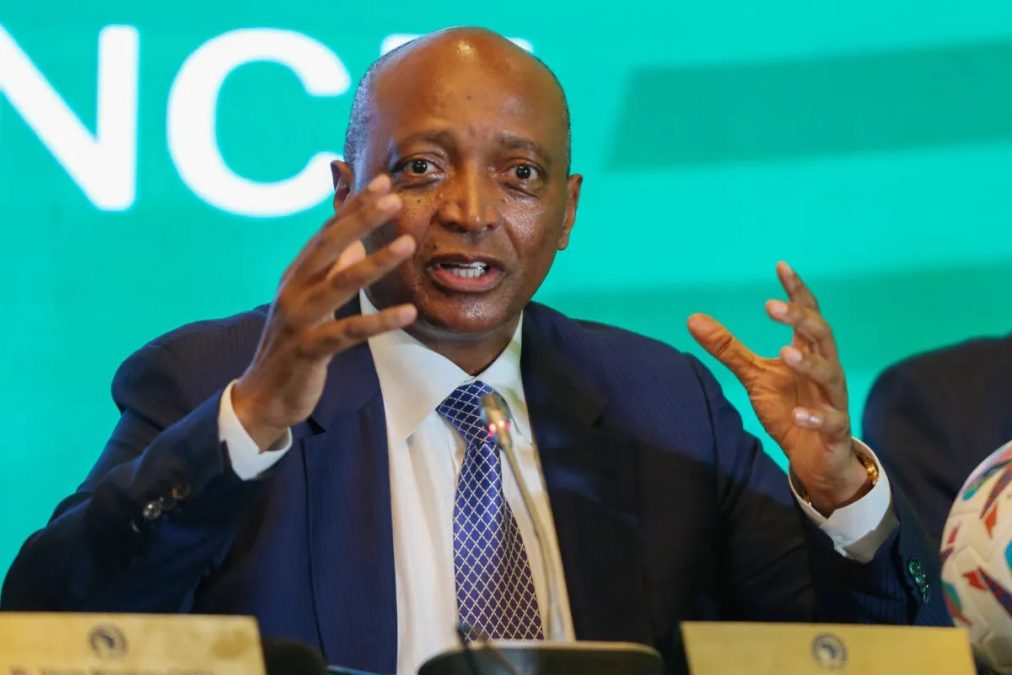
The Africa Cup of Nations will once again be held every two years after the Confederation of African Football (CAF) executive committee unanimously approved the change on Thursday.
The decision reverses a reform announced less than a year ago, when CAF said its flagship tournament would move to a four-year cycle. CAF president Patrice Motsepe said the decision to restore the traditional schedule was driven largely by economic considerations.
The original reform, announced in December 2025, triggered strong criticism across Africa, particularly because of the perceived influence of FIFA behind the change. Following a promise to review the decision at a strategic conference held in Cape Verde in early October, CAF has opted to retain the biennial format that had historically defined the competition.
The central issue was the financing of African football. With fewer editions of the Africa Cup of Nations, CAF had considered introducing an African Nations League every two years. However, the new competition would have needed several years before it could produce revenues on a similar scale.
That exposed the importance of the Africa Cup of Nations to CAF’s finances. The tournament remains the organisation’s main source of income and helps fund its other continental competitions.
The decision to stage the Africa Cup of Nations every four years had also been viewed as a concession to FIFA and European clubs. The latest reversal is thought to be linked to the dispute between FIFA and UEFA, with FIFA no longer seeking to accommodate its European counterpart, which favoured holding the African tournament less frequently.
CAF also clarified the schedule for future editions of the competition.
There will be an exceptional three-year gap between the 2028 and 2031 tournaments. That arrangement is intended to avoid staging an Africa Cup of Nations in the same year as the 2030 World Cup, in line with FIFA’s established practice.
CAF had attempted to overhaul the competition’s calendar, but its latest decision acknowledges that a tournament held every two years remains essential to the financial stability and international profile of African football.
-
Chelsea v Manchester United: Carrick’s side face another test as crisis deepens Oct 30, 2026
-
 Africa Cup of Nations to return to biennial schedule, CAF confirms Oct 30, 2026
-
Manchester City face Brighton again as Haaland and Cherki target another statement Oct 30, 2026
-
Amine Adli delighted with goal in Bournemouth’s Cup victory over Aston Villa Oct 30, 2026



-
AFCON 2025: Fixtures, Results, Scores and Standings Jan 18, 2026
-
Match hero Taiwo Awoniyi reflects on team effort after Chelsea triumph May 5, 2026
-
Leadership and long-term vision key to rescuing Zamalek and inspiring Egyptian football – Hany Abou Rida Nov 5, 2025
-
South African giants Orlando Pirates set to lose influential forward Monnapule Saleng Mar 19, 2025




-
Sevilla FC v Osasuna: probable line-ups for Monday’s La Liga meeting Oct 25, 2026
-
Inter Milan v Fiorentina: probable line-ups for San Siro clash Oct 24, 2026
-
2026/27 CAF Confederation Cup second preliminary round: Fixtures and results Oct 25, 2026
-
2026/27 CAF Champions League second preliminary round: Fixtures and results Oct 25, 2026