Morocco did not protest referee decision during AFCON final, reports reveal
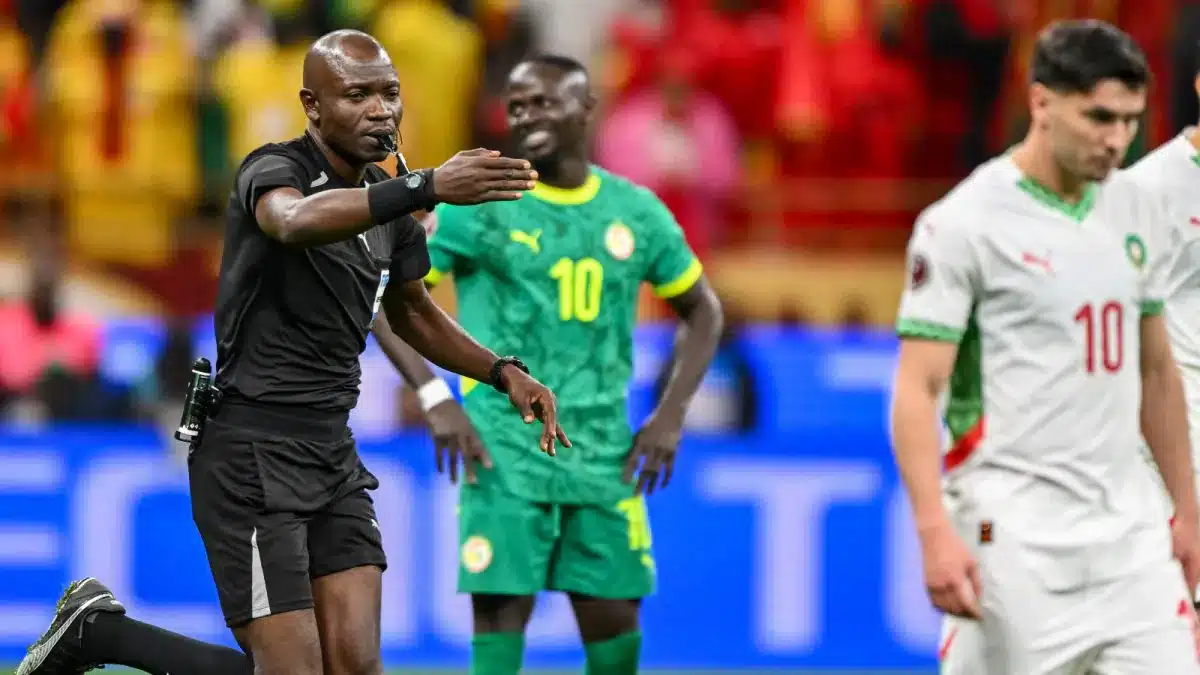
Morocco did not challenge the referee’s decision during the 2025 Africa Cup of Nations final against Senegal before returning to the pitch, according to newly revealed official reports.
The detail has emerged as part of an ongoing legal dispute between the two federations, with both sides awaiting a final ruling from the Court of Arbitration for Sport (CAS).
The case follows the Confederation of African Football’s (CAF) decision to award Morocco a 3-0 victory after declaring Senegal to have forfeited the final.
Less than three weeks after Senegal formally appealed to CAS, further insight into the events surrounding the match has been made public.
According to information reported by Le Monde, five official documents relating to the final have been examined.
These include reports from the referee, the match commissioner, the general coordinator responsible for logistics, and two additional reports covering incidents and security.
The findings indicate that when the match resumed after Senegal’s players had left the pitch and returned to the dressing room, Morocco “made no protest against the referee’s decision”.
This detail provides additional context to the sequence of events that led to the controversial outcome.
The final itself has remained at the centre of debate, with differing interpretations of the rules and the referee’s authority forming the basis of the dispute.
The CAF Disciplinary Committee has defended the actions of the match official, Jean-Jacques Ngambo Ndala, in its assessment of the case.
According to the committee, the referee applied a “literal reading and interpretation” of Article 82, which does not “expressly state that a match must be definitively abandoned following the departure of a team from the field for a forfeit to apply.”
The committee further stated that “as the supreme authority and master of this match, the referee therefore exercised his authority based on his judgment and competence .” It concluded that “it cannot be asserted that the referee committed a fundamental error in allowing the match to proceed to its final conclusion.”
These justifications formed part of the reasoning behind CAF’s decision to validate the result in favour of Morocco.
However, the ruling has not resolved the matter, as both federations have continued to pursue legal avenues.
Morocco lodged an appeal on 19 February, raising concerns about the implications of the decision.
In a report submitted as part of the appeal, the secretary general of the Moroccan Football Federation, Tarik Najem, warned of broader consequences for the sport.
He argued that the ruling could create “an extremely dangerous and unfortunate precedent for the integrity of African and international football,” suggesting that teams might use similar situations “temporarily leaving the field to disrupt an opponent’s rhythm” or as “a means of putting pressure on the referee .”
Despite these concerns, CAF confirmed its decision on 17 March, officially declaring Morocco the winners of the 2025 Africa Cup of Nations later that same evening.
Senegal responded within hours by filing an appeal with the Court of Arbitration for Sport, ensuring that the dispute would move beyond the continental governing body.
The case now rests with CAS, which will determine the final outcome based on the submissions from both parties.
The sequence of appeals highlights the complexity of the situation, with legal, regulatory and sporting considerations all playing a role.
At the centre of the case remains the interpretation of the events during the final and the application of the rules governing such scenarios.
For now, both Morocco and Senegal remain in a holding position as they await the decision from CAS.
The ruling is expected to provide clarity on the matter and bring an end to a dispute that has extended beyond the pitch.
The outcome will not only determine the official status of the final but may also influence how similar situations are handled in the future.
As such, the case continues to draw attention within African football and beyond.
Popular News




-

AFCON 2025: Fixtures, Results, Scores and Standings
Jan 18, 2026 -

Leadership and long-term vision key to rescuing Zamalek and inspiring Egyptian football – Hany Abou Rida
Nov 5, 2025 -

South African giants Orlando Pirates set to lose influential forward Monnapule Saleng
Mar 19, 2025 -

Full schedule for 2025 Africa Cup of Nations in Morocco confirmed
Feb 12, 2025

-

LIVE UPDATES: D.R Congo 1-0 Jamaica – 2026 FIFA World Cup Playoffs
Mar 31, 2026 -
Cameroon defeat China 2-0 in FIFA Series clash
Mar 31, 2026 -

Africa’s 2026 World Cup Teams: Fixtures and Results for March friendly games
Apr 1, 2026 -

Zimbabwe defender Teenage Hadebe dropped after code of conduct breach
Mar 30, 2026