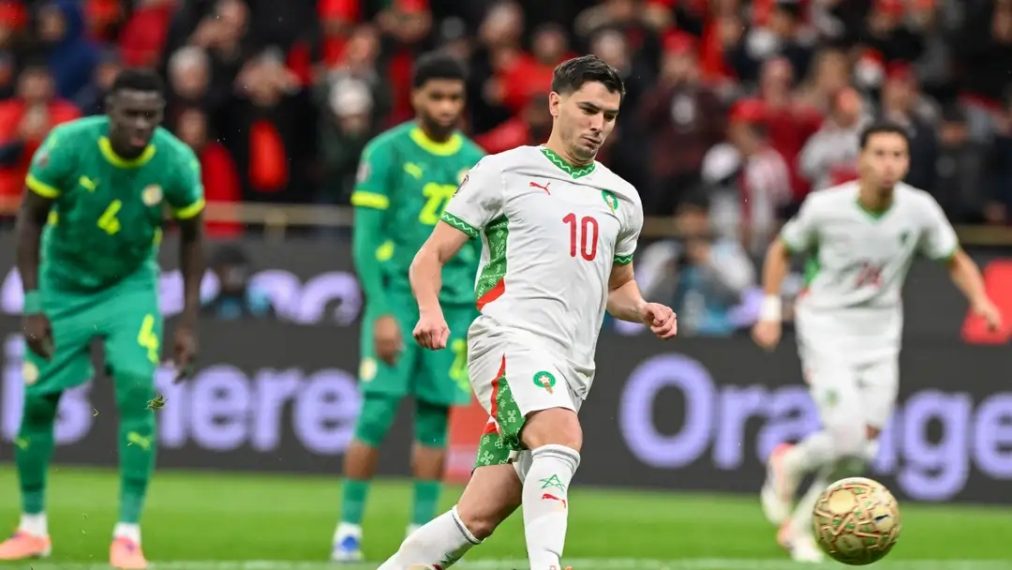
International sports lawyer Ralph Sharbl has defended the Court of Arbitration for Sport’s (CAS) ruling in the 2025 Africa Cup of Nations final between Morocco and Senegal, saying it correctly applied the “field of play” principle.
CAS announced on Tuesday that it had upheld the appeal submitted by the Senegalese Football Federation and overturned a decision by the Confederation of African Football (CAF) Appeals Committee, which had awarded the title to Morocco after Senegal’s players left the pitch during the match.
Speaking to Kooora on Thursday, Sharbl said CAS based its judgment on the decision of Congolese referee Jean-Jacques Ndala to restart the match in the 109th minute and allow it to finish with Senegal leading 1-0.
The lawyer said the tribunal had applied the legal principle that sporting bodies should not interfere with decisions made by officials during a match.
“The field of play principle is a legal rule established by the Swiss Federal Court,” Sharbl said. “It prevents sports judicial bodies from reviewing or cancelling technical decisions taken by referees during a match, unless it is proven that the laws of the game were applied arbitrarily or in bad faith.”
He added that the authority to decide whether a match should resume rests solely with the referee, rather than with any association, committee or court.
“Accordingly, the Congolese referee’s decision was enforceable and could not be challenged or reviewed,” he said.
Why the ruling did not favour Morocco
Sharbl rejected the suggestion that the CAS judgment had been unfair to Morocco, arguing that it was consistent with established sports arbitration practice.
“In my view, the ruling was fair and in line with the settled and consistent jurisprudence of the Court of Arbitration for Sport concerning the application of the field of play principle,” he said.
He cited a CAS decision from 6 March 2009, when the court rejected an appeal by the Netherlands Antilles Olympic Committee against World Athletics and the United States Olympic Committee on the same grounds.
Sharbl, a Lebanese lawyer, said there was no indication that Ndala’s decision had been arbitrary or made in bad faith. He therefore considered the 2025 Africa Cup of Nations final to be no exception to the principle.
CAS said in its reasoning that Articles 82 and 84 of the Africa Cup of Nations regulations did not apply to the case. The provisions are intended to determine the result of a match only when the conduct of one team causes the referee to end it permanently.
The tribunal concluded that the referee had committed no legal error by restarting the match. That removed the basis for the earlier decision that had awarded Morocco victory in the final.
CAS acknowledged that Ndala had been forced to make his decision in an atmosphere of “extreme tension”. However, it said those circumstances were not enough to classify his action as arbitrary, as there was no evidence that his assessment had been influenced by factors outside the match.
The court also rejected the argument submitted by the Moroccan Football Federation that the referee’s decision had been arbitrary.
The Moroccan Football Federation has announced its intention to challenge the CAS ruling and is expected to take the case to the Swiss Federal Court.
-
 Soccer Laduma issue 1502 highlights contract decisions and transfer uncertainty Nov 26, 2026
-
Orlando Pirates set PSL record as Abdeslam Ouaddou reaches 50 wins Nov 26, 2026
-
Old School finance demands apology over ‘up to 70% off’ Black Friday sale Nov 26, 2026
-
Al Ahly target Orlando Pirates defender Lebone Seema ahead of January transfer window Nov 26, 2026



-
AFCON 2025: Fixtures, Results, Scores and Standings Jan 18, 2026
-
Match hero Taiwo Awoniyi reflects on team effort after Chelsea triumph May 5, 2026
-
Leadership and long-term vision key to rescuing Zamalek and inspiring Egyptian football – Hany Abou Rida Nov 5, 2025
-
South African giants Orlando Pirates set to lose influential forward Monnapule Saleng Mar 19, 2025




-
U17 World Cup 2026: Full schedule for Morocco and where to watch Nov 19, 2026
-
Nice v Paris Saint-Germain: injury-hit champions face confident hosts in Ligue 1 Nov 19, 2026
-
Nice face formidable PSG as leaders chase eighth straight Ligue 1 win Nov 20, 2026
-
Chelsea v Leeds: Blues backed to edge tight Premier League contest at Stamford Bridge Nov 20, 2026