Motsepe explains CAF’s decision to restore AFCON’s two-year cycle

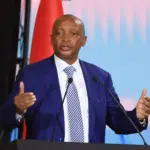
Confederation of African Football (CAF) President Dr Patrice Motsepe has explained the reasons behind the decision to return the Africa Cup of Nations (AFCON) to its traditional two-year cycle, insisting the move is in the best interests of African football.
The CAF Executive Committee (EXCO) unanimously approved the decision to reverse its previous plan to stage the continental showpiece every four years, with Motsepe citing the need to protect the interests of African football, its 54 member associations and players competing outside the continent.
Motsepe said the decision was also influenced by concerns over the proposed Africa Nations League, which was initially expected to become a major continental competition held every two years.
He explained that CAF was worried about the number of years it would take for the proposed competition to make a meaningful financial and football development contribution to the continent.
“We were also concerned by the several years required before the proposed new Africa Nations League Pan-African competition, which was supposed to be identical to the current AFCON and take place every two years, could make substantial financial and football development contributions to African football and make CAF competitions globally competitive and self-supporting,” Motsepe said.
The CAF president stressed that the decision was taken to ensure the continent’s flagship national team competition continues to serve as a major platform for football development and financial growth.
Under the revised calendar, the next AFCON will be staged in 2027 across Kenya, Tanzania and Uganda, with Motsepe expressing confidence that the three East African nations will successfully host the tournament.
The subsequent editions are scheduled for 2028, 2031 and 2033, with the 2030 tournament cycle adjusted to avoid a clash with the FIFA World Cup.
Motsepe explained that the scheduling arrangement was necessary because the 2030 FIFA World Cup will be held in the same year, adding that, in keeping with FIFA tradition, the final tournaments of continental national team competitions may not take place during a World Cup year.
Beyond the sporting and financial considerations, Motsepe said AFCON remained an important celebration of Africa’s identity, bringing together people from across the continent and beyond.
He described the competition as an opportunity to showcase Africa’s diverse cultures, customs and traditions while strengthening the connection between the continent and its diaspora.
“The AFCON competition is also about celebrating African football and Africa’s rich and diverse cultures, customs and traditions, and bringing people together from Africa’s 54 countries, the African Diaspora and throughout the world,” he added.
Motsepe maintained that restoring the two-year cycle would strengthen CAF’s competitions, support the development of its member associations and contribute to the long-term growth of football across Africa.
The decision marks a significant shift in CAF’s competition calendar and reaffirms the importance of AFCON as the centrepiece of African international football.
-
 Motsepe explains CAF’s decision to restore AFCON’s two-year cycle Oct 30, 2026
-
DR Congo midfielder Samuel Moutoussamy suffers injury setback ahead of November AFCON qualifiers Oct 30, 2026
-
Cagliari tie down Senegalese forward Paul Mendy until 2032 Oct 30, 2026
-
CAF scraps four-year AFCON cycle plan, restores biennial format Oct 30, 2026



-
AFCON 2025: Fixtures, Results, Scores and Standings Jan 18, 2026
-
Match hero Taiwo Awoniyi reflects on team effort after Chelsea triumph May 5, 2026
-
Leadership and long-term vision key to rescuing Zamalek and inspiring Egyptian football – Hany Abou Rida Nov 5, 2025
-
South African giants Orlando Pirates set to lose influential forward Monnapule Saleng Mar 19, 2025




-
Barcelona v Real Madrid: Catalans backed at 1.65 to win October Clasico Oct 23, 2026
-
Barcelona and Real Madrid meet in pivotal 265th Clasico Oct 23, 2026
-
Sevilla FC v Osasuna: probable line-ups for Monday’s La Liga meeting Oct 25, 2026
-
Inter Milan v Fiorentina: probable line-ups for San Siro clash Oct 24, 2026