Jose Mourinho answered claims that his methods belong to the past by guiding Real Madrid to a 2-1 victory over Barcelona at Camp Nou.
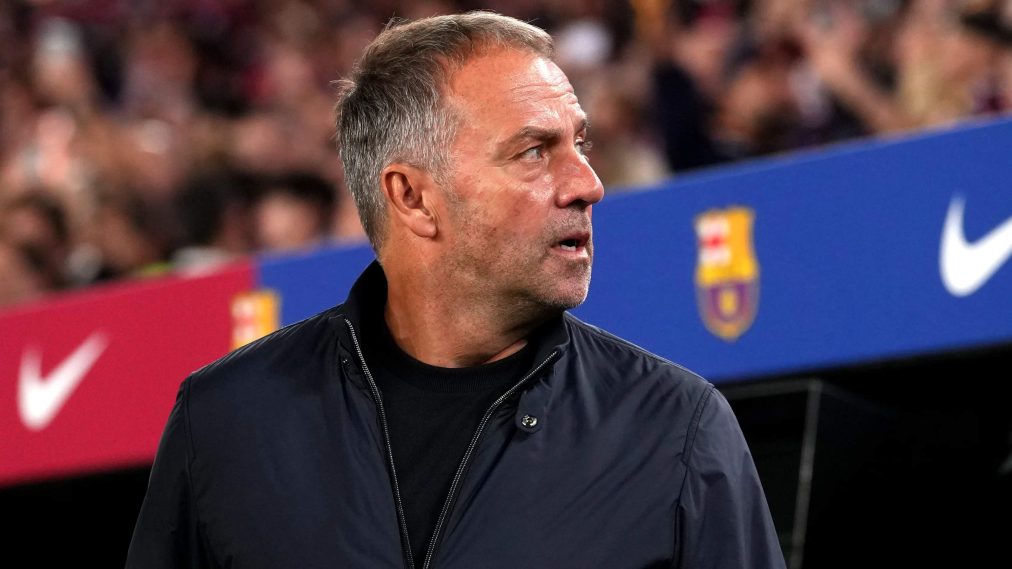
The result came only days after Barcelona had lost 4-2 to Paris Saint-Germain in the Champions League, with both defeats raising similar questions about the risks in Hansi Flick’s aggressive approach.
Before the Clasico, Barcelona’s victory had appeared inevitable to some, while Mourinho was written off by others as a coach whose ideas belonged to another era. Flick was presented as the face of modern football, built on high pressing, counter-pressing and playing out from the back, while Mourinho was associated with a more defensive past.
The match challenged that assumption. Football’s methods have evolved, but its basic objective has not: prevent the opposition scoring, create chances and score more goals than the other team.
A side can win through a high press, a compact defence or a set-piece. Possession, passing numbers and fashionable tactical language do not guarantee success. As the late Egyptian commentator Captain Latif famously put it: “Football is goals.”
Barcelona’s attacking identity exposed
Barcelona under Flick remain entertaining, bold and quick, with a clear desire to dominate possession, regain the ball high up the pitch and attack again. But admiration for that style should not prevent scrutiny of its weaknesses.
The issue is not necessarily the high press itself, but the insistence on using it in the same way when circumstances demand a change. Nor is an advanced defensive line automatically a problem, provided the space behind it is properly protected.
Barcelona overwhelmed opponents unable to cope with their pressure. Against Paris Saint-Germain and Real Madrid, however, they faced teams with the quality and pace to exploit those spaces. The defeats do not prove Flick’s football is flawed, but they show it is not immune to punishment when opponents bypass the press.
The challenge for a top coach is knowing when to continue attacking and when to protect the areas that have become vulnerable.
Mourinho finds the decisive answer
Mourinho did not arrive at the Clasico surrounded by unquestioned success. Real Madrid had faced technical questions and pressure over the performances of several players, including Vinicius Junior.
But he did not try to prove his modernity by copying Flick. His task was simply to beat Barcelona. Real Madrid prepared for the press, used transitions and targeted the openings created when Barcelona’s players advanced.
That was not merely a defensive retreat and an appeal to luck. It was a tactical choice suited to an opponent who left room behind the defensive line. An idea does not become ineffective simply because it is old, just as a new idea is not guaranteed to work.
The contrast was also visible in the substitutions. Eduardo Camavinga came on for Bernardo Silva in the closing stages and immediately attacked space on the right, creating the opportunity from which Kylian Mbappe scored the winner. Frenkie de Jong replaced Fermin Lopez for Barcelona, but the change did not provide the decisive response required.
That does not make De Jong a lesser player, nor does every substitution that fails to produce a goal become a mistake. However, Mourinho found a way for one change to influence the crucial moment, while Flick did not find the adjustment to prevent the late setback or produce a winning goal.
Flick is not a poor coach because he lost the Clasico, and Mourinho is not perfect because he won it. But the match showed that the coach labelled outdated read his opponent better in decisive areas.
Football does not award points for appearing modern, having more possession or offering the most attractive style. It rewards the team that scores more goals. Mourinho understood that clearly.
-
 Ismaila Sarr attracts Galatasaray and Manchester United interest as Crystal Palace exit looms Oct 26, 2026
-
Strasbourg midfielder Pape Demba Diop in line for Senegal call-up Oct 26, 2026
-
Red Arrows coach Chisi Mbewe rewarded with Toyota Mark X after Kaizer Chiefs upset Oct 26, 2026
-
Evidence Makgopa earns Abdeslam Ouaddou praise after Orlando Pirates brace Oct 26, 2026




-
AFCON 2025: Fixtures, Results, Scores and Standings Jan 18, 2026
-
Match hero Taiwo Awoniyi reflects on team effort after Chelsea triumph May 5, 2026
-
Leadership and long-term vision key to rescuing Zamalek and inspiring Egyptian football – Hany Abou Rida Nov 5, 2025
-
South African giants Orlando Pirates set to lose influential forward Monnapule Saleng Mar 19, 2025




-
Barcelona v Real Madrid: Catalans backed at 1.65 to win October Clasico Oct 23, 2026
-
Barcelona and Real Madrid meet in pivotal 265th Clasico Oct 23, 2026
-
Champions League: PSG beat Barcelona as Liverpool complete comeback against Villarreal Oct 20, 2026
-
Inter Milan v Fiorentina: probable line-ups for San Siro clash Oct 24, 2026