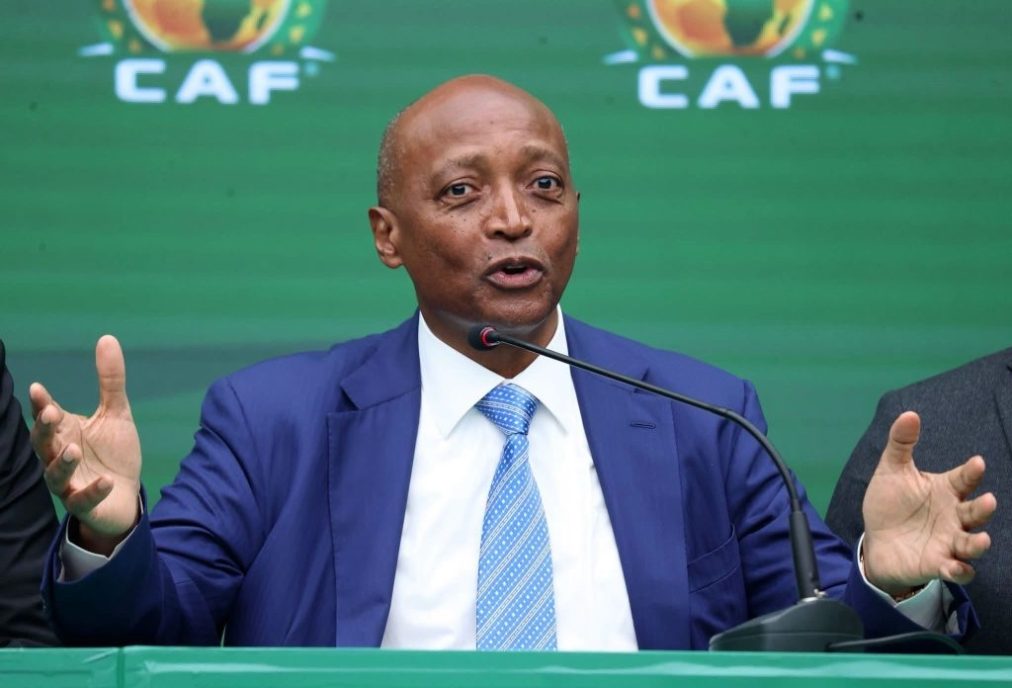
The Confederation of African Football (CAF) is reviewing its decision to stage the Africa Cup of Nations every four years, with president Patrice Motsepe confirming the possibility of a return to a biennial tournament.
Motsepe made the announcement on 9 October after a strategic conference in Cape Verde. The review comes less than a year after CAF said the competition would move to a four-year cycle from 2028.
The change was intended to allow CAF to reorganise its continental calendar around a new African Nations League. However, questions have emerged over whether holding the continent’s leading international tournament less frequently could reduce its commercial value.
In August 2026, The Guardian reported that the decision to abandon the two-year cycle had contributed to the collapse of a commercial agreement which would have generated more than one billion dollars in revenue over eight years.
Financial considerations are not the only factor behind CAF’s renewed assessment, but the economic importance of the competition is a significant part of the debate. A biennial Africa Cup of Nations also gives national teams regular opportunities to develop their squads, introduce new generations of players and maintain public interest.
The tournament provides an important platform for footballers, particularly those playing in African leagues. Strong performances can increase their visibility and help attract interest from clubs abroad.
A move to a four-year schedule would reduce how often players receive that exposure. On the other hand, longer gaps between editions could give host nations more time to prepare, improve infrastructure and build greater value around each tournament.
The central issue for CAF is therefore which structure would best serve African football over the long term: a more frequent competition or an event with greater time and resources behind each edition.
The debate also affects clubs in Europe, which must release their African internationals for major tournaments and international windows. Players are regularly called up by their national teams, and a more frequent Africa Cup of Nations could add to existing fixture pressures.
However, staging the tournament once every four years would not automatically resolve those problems. Clubs would still be required to release players for international duty, while the wider calendar would continue to need careful management.
CAF’s proposed African Nations League is another unresolved part of the issue. If the organisation restores the biennial Africa Cup of Nations, it will have to explain how that competition fits into the schedule and what format it would take.
Reversing a reform announced only months earlier would also raise questions about governance. CAF would need to set out the reasons for the change, detail the consultations held with its 54 member associations and explain the implications for commercial partners and host countries.
Motsepe has confirmed that the proposal is being reconsidered, but no final decision has been made. The challenge for CAF is not simply to choose between a two-year and four-year cycle, but to create a consistent, financially sustainable calendar that benefits African football as a whole.
-
 CAF reconsiders Africa Cup of Nations cycle amid commercial and fixture concerns Oct 9, 2026
 -
Cheikhou Kouyate retires from football after 92 Senegal caps Oct 9, 2026
-
Academie Basga Jo appoint Darko Janackovic to lead sporting operations Oct 9, 2026
-
Five African players set to attract attention across Europe this weekend Oct 9, 2026




-
AFCON 2025: Fixtures, Results, Scores and Standings Jan 18, 2026
-
Match hero Taiwo Awoniyi reflects on team effort after Chelsea triumph May 5, 2026
-
Leadership and long-term vision key to rescuing Zamalek and inspiring Egyptian football – Hany Abou Rida Nov 5, 2025
-
South African giants Orlando Pirates set to lose influential forward Monnapule Saleng Mar 19, 2025




-
Croatia face Spain with Nations League hopes on the line in Split Oct 5, 2026
-
France v Belgium: Probable line-ups for Nations League clash Oct 3, 2026
-
Morocco coach Mohamed Ouahbi refuses to single out player after Mali draw Oct 4, 2026
-
Manchester United host winless Tottenham in Premier League clash Oct 7, 2026