Messi’s Argentina retirement threatens to cut into football association’s commercial fortune
Lionel Messi’s international retirement could cost the Argentina Football Association far more than a sporting leader, with sponsorship, ticket sales, broadcasting, merchandising and global commercial interest all facing a potential decline.
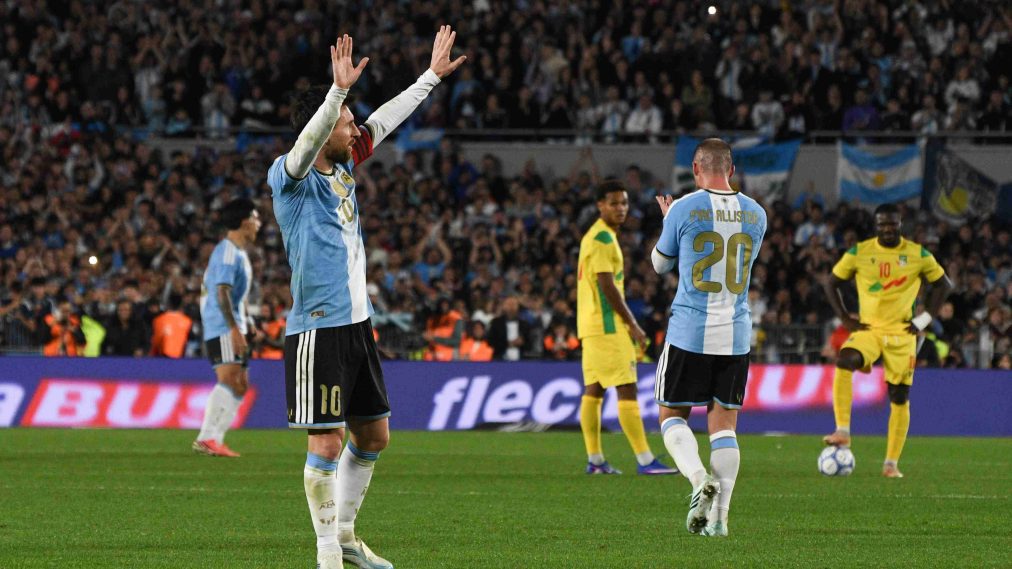
Messi formally said goodbye to Argentina after the team’s victory over Benin in his final appearance. His departure leaves a significant sporting void for the Albiceleste, but also removes the country’s most powerful economic attraction.
The scale of his commercial influence was clear at the farewell match at Estadio Monumental. All 85,000 tickets sold rapidly despite exceptionally high prices in the Argentine market, with some seats reaching 480,000 pesos – more than 280 euros. Forbes Argentina estimated before the game that the occasion could generate almost $13m (£9.7m) in ticket revenue.
Demand was so strong that a large secondary market developed around the tickets, while Argentine television recorded unusually high viewing figures. Even a friendly against Benin, with limited sporting significance, became a major media and commercial event because Messi was playing.
The Argentina Football Association’s commercial growth has been substantial. In 2017, it had agreements with only six brands. It now has more than 100 commercial partners across the United States, Europe, Asia and the Middle East.
The Times reported that the association has 120 sponsors and estimated revenues of about $150m. That represents a dramatic turnaround from the period when it was close to bankruptcy, before Leandro Petersen took responsibility for developing its commercial operations.
Argentine outlet iProfessional said advertising and marketing now account for more than 50% of the association’s income, with about 120 sponsors worldwide. Messi is not solely responsible for that expansion: Argentina’s trophies, its international strategy and the development of its brand have also been central.
However, Petersen recently described Messi as an “exceptional catalyst” for the growth of the Argentina Football Association brand. He said the player had helped it enter markets where Argentina previously had only a limited presence.
The consequences extend beyond the association’s finances. Argentine broadcasters will lose a major audience draw, while sponsors will have to continue paying for coverage without the world’s most prominent Argentine player on the pitch. Ticketing, hospitality, shirts and other merchandise, advertising campaigns, digital content, social media, commercial rights and overseas match organisation have all benefited from Messi’s appeal.
Inter Miami offers an indirect illustration of that impact. Since Messi joined the club, its value has risen from around $585m in 2022 to $1.45bn in 2026, while revenue reached about $200m in the most recent financial year. The Wall Street Journal has also reported effects on tourism, hospitality, retail and property in the state.
Argentina has at least built substantial financial reserves during Messi’s era. AS reported that the team collected almost $121m in competition prize money since 2019: $8m for third place at Copa America 2019, $10m from Copa America 2021, $52m for winning the 2022 World Cup, $16m from Copa America 2024 and a further $33m for finishing runners-up at the 2026 World Cup. The 2022 total included $42m from FIFA and $10m from CONMEBOL.
Those earnings came from the team’s achievements rather than Messi alone. The challenge now is preserving that commercial strength without its leading ambassador. The loss is likely to emerge gradually, as Messi’s distinctive value fades across future matches, tournaments and decades of accumulated commercial activity.
-
 Equatorial Guinea target victory against Burkina Faso in Los Angeles 2028 Olympic qualifiers Oct 7, 2026
 -
JCA d’Agoe-Nyive and SARA FC win promotion to Togo’s first division Oct 7, 2026
-
UFOA B U17 tournament: Burkina Faso face Benin in opening match Oct 7, 2026
-
Morocco women prepare for Uzbekistan friendly as new coach Eric Blahic begins first camp Oct 7, 2026



-
AFCON 2025: Fixtures, Results, Scores and Standings Jan 18, 2026
-
Match hero Taiwo Awoniyi reflects on team effort after Chelsea triumph May 5, 2026
-
Leadership and long-term vision key to rescuing Zamalek and inspiring Egyptian football – Hany Abou Rida Nov 5, 2025
-
South African giants Orlando Pirates set to lose influential forward Monnapule Saleng Mar 19, 2025




-
Croatia face Spain with Nations League hopes on the line in Split Oct 5, 2026
-
France v Belgium: Probable line-ups for Nations League clash Oct 3, 2026
-
Morocco coach Mohamed Ouahbi refuses to single out player after Mali draw Oct 4, 2026
-
Noussair Mazraoui leaves Morocco squad early after injury Oct 2, 2026