Nigeria consider FIFA compensation over DR Congo World Cup eligibility row
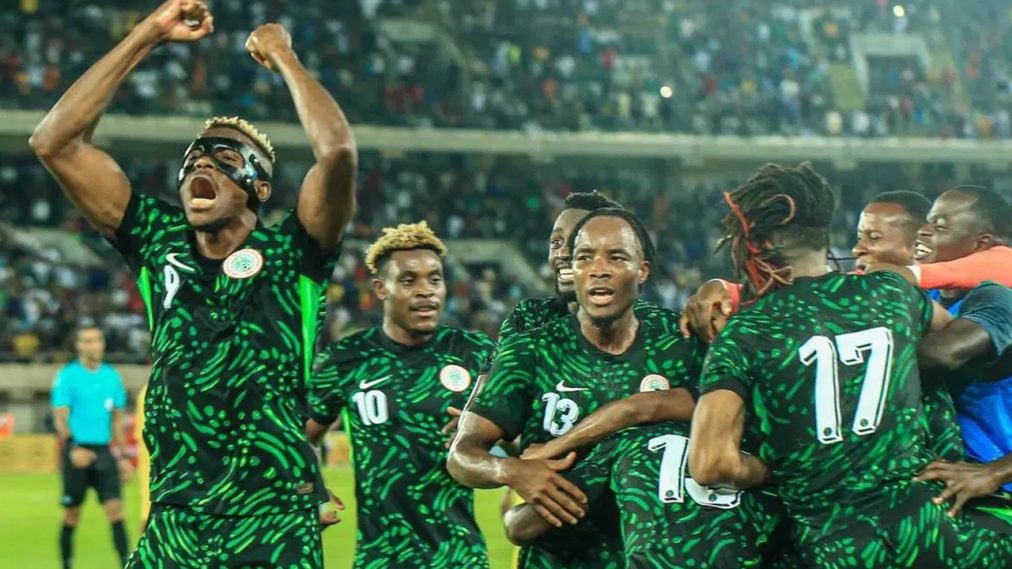
Nigeria are considering seeking compensation from FIFA after fresh allegations that DR Congo fielded an ineligible player during their 2026 World Cup qualifying campaign.
A senior official of Nigeria’s National Sports Commission (NSC) says the country has been “vindicated” by reports that FIFA’s own legal officials had identified an eligibility issue involving DR Congo goalkeeper Lionel Mpasi.
The New York Times and Le Monde reported that FIFA lawyers concluded in March that Mpasi had not completed his change of international association from France to DR Congo.
According to the reports, FIFA officials discovered the issue before DR Congo’s intercontinental play-off against Jamaica, but no disciplinary action was taken.
DR Congo subsequently qualified for the 2026 World Cup.
“Nothing has been decided yet, but we will seriously consider seeking compensation from FIFA for all of the economic losses this has cost Nigeria,” the NSC official told ESPN.
“The revenue that the Super Eagles and the NFF would have received from participating at the World Cup, the exposure that players would have got, transfers, the sponsorship fees, even the boost to the Nigerian economy.
“We are exploring all our options as a country, and nothing is off the table.”
Nigeria want DR Congo case reopened
Nigeria’s Football Federation (NFF) initially raised concerns about DR Congo’s player eligibility after the Super Eagles were eliminated by the Central African nation in the African play-offs in November.
The teams drew 1-1 after extra time before DR Congo won 4-3 on penalties.
The NFF’s original complaint went beyond Mpasi and questioned the eligibility of several DR Congo players, citing concerns about their nationality status under Congolese law.
Former NFF president Ibrahim Gusau argued that FIFA may have been misled when it approved the players.
“The Congolese rules say you cannot have dual nationality,” Gusau said at the time.
“FIFA regulations say once you have the passport of your country, you are eligible. As far as we are concerned, they are eligible; that is why they are cleared by FIFA. But our contention is that FIFA was deceived into clearing them.”
The NSC official now says the allegations concerning Mpasi strengthen Nigeria’s case that FIFA should have investigated the matter.
“Nigeria has been vindicated,” the official said.
“When we said we had written a petition to FIFA, people accused us of all sorts of things. I think this has proven that we were correct that DRC fielded ineligible players.”
The official also argued that Nigeria’s complaint should not have been dismissed on procedural grounds.
“We did not need to file a protest. So the issue of filing late did not arise,” the official said.
“We only sent in a petition to remind them to apply the rules, the same way they did when South Africa fielded an ineligible player, and when we fielded an ineligible player during the 2018 World Cup qualifiers.”
Jamaica also calls for review
The Jamaican Football Federation (JFF), whose national team faced DR Congo in the intercontinental play-off, has also called for player eligibility matters to be handled properly.
“CONCACAF takes player eligibility matters very seriously and expects the applicable regulations and procedures to be applied consistently and fairly in all competitions,” the JFF said.
“Any concerns regarding player eligibility, particularly those that may affect the integrity of a competition or the interests of one of our member associations, should be thoroughly reviewed and addressed through FIFA’s appropriate governance and disciplinary bodies, in accordance with established regulations and due process.”
There is precedent for FIFA making payments to a national association following a disputed World Cup elimination, although the circumstances were different.
FIFA paid the Football Association of Ireland €5m after Ireland threatened legal action following their controversial elimination by France in qualifying for the 2010 World Cup.
France progressed after Thierry Henry handled the ball before setting up William Gallas to score.
FIFA later described the payment as a one-off arrangement.
Nigeria’s potential claim would be based instead on allegations that FIFA failed to properly enforce its own eligibility regulations.
Previous cases of ineligible players
FIFA has previously imposed sanctions when teams fielded players who were later found to be ineligible.
Bolivia forfeited two 2018 World Cup qualifiers after fielding Nelson Cabrera, while the Court of Arbitration for Sport later confirmed FIFA’s authority to open disciplinary proceedings on its own initiative.
Greece were also sanctioned in 2016 after Apostolos Giannou played without completing his change of association from Australia.
More recently, South Africa forfeited a 2026 World Cup qualifier against Lesotho after fielding suspended midfielder Teboho Mokoena.
Nigeria now wants FIFA to reopen the DR Congo case.
The NSC official described the matter as one of potential fraud and said it should therefore not be considered closed.
“Nigeria will be seeking for FIFA to review the case because the case is about fraud and fraud does not have a time limit for punishment,” the official said.
“DRC should be made to face consequences for what they have done, to serve as a lesson to others who may want to try the same thing in future.”
-
 Nigeria consider FIFA compensation over DR Congo World Cup eligibility row Oct 7, 2026
 -
Algeria’s victory over Niger leaves Brahim Hemdani with more questions than answers Oct 7, 2026
-
Aliou Cisse celebrates first competitive win as Angola beat Malawi 3-1 Oct 7, 2026
-
Sidiki Madou Traore joins Al Sadaqa as Rahim Ibrahim extends Slovan Bratislava deal Oct 7, 2026


-
AFCON 2025: Fixtures, Results, Scores and Standings Jan 18, 2026
-
Match hero Taiwo Awoniyi reflects on team effort after Chelsea triumph May 5, 2026
-
Leadership and long-term vision key to rescuing Zamalek and inspiring Egyptian football – Hany Abou Rida Nov 5, 2025
-
South African giants Orlando Pirates set to lose influential forward Monnapule Saleng Mar 19, 2025




-
Croatia face Spain with Nations League hopes on the line in Split Oct 5, 2026
-
France v Belgium: Probable line-ups for Nations League clash Oct 3, 2026
-
Morocco coach Mohamed Ouahbi refuses to single out player after Mali draw Oct 4, 2026
-
Noussair Mazraoui leaves Morocco squad early after injury Oct 2, 2026