South Africa’s U-23 side has begun to show the quality of a golden generation, but SAFA must provide greater support for head coach Raymond Mdaka if the country is to establish a sustainable route from youth football to Bafana Bafana.
The team assembled for the first time in four years and produced an impressive performance to recover from a goal down and beat Tanzania 3-1 in an international friendly at Dr Petrus Molemela Stadium on Thursday afternoon.
Their display was marked by composure, precision and attacking personality, as well as a clear sense of togetherness. That progress was not simply the result of assistant coach Kabelo Mogudi’s tactics, but reflected the work and sacrifice of a group that has spent recent months developing together.
Several members of the U-23 squad previously played for Amajita, who have enjoyed a remarkable period under Mdaka. They have dominated the COSAFA region, won the Africa Youth Championship for the first time and established themselves among the world’s leading youth sides.
The success came despite difficult circumstances. During their preparations for AFCON, Amajita struggled to secure basic requirements including suitable accommodation and running water. They also travelled to the finals with limited resources.
Yet the players achieved their objective, lifting the Africa Youth Championship and securing qualification for the World Cup. Their success also created opportunities for members of the squad to move into senior football, either through promotion or lucrative transfers in South Africa and abroad.
The next target for the U-23s is to finish in the top two at AFCON in Egypt next year. That would secure qualification for the 2028 Los Angeles Olympics and end South Africa’s absence from the competition since the 2020 Tokyo edition.
SAFA must now match that ambition with proper investment.
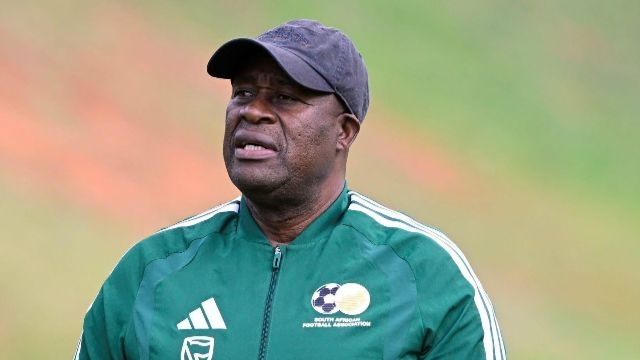
The players should receive treatment comparable with the senior team, but the technical staff also require greater recognition, particularly Mdaka. He is currently working in two roles, continuing as Amajita coach while taking charge of the U-23s, and has performed strongly in both positions.
Before joining the current U-23 camp, Mdaka guided Amajita to a successful COSAFA title defence and qualification for AFCON in Mozambique. He acknowledged that the gap between the two camps was short for him and Mogudi, but said they had enough resources to succeed. Their progress will be tested again when they face Algeria in their final friendly at the same Bloemfontein venue on Sunday.
However, despite Mdaka’s willingness to serve South African football, his reported remuneration has not reflected his achievements. After leading the U20s to the AFCON title last year, it emerged that SAFA was paying him less than R50 000 a month on a month-to-month contract.
That figure compares starkly with Bafana Bafana coach Hugo Broos’s reported monthly salary of R1.4 million, while Pitso Mosimane has reportedly earned seven-figure sums.
Mdaka does not need to be paid at the level of Bafana’s highest earners. But if he is expected to connect the national teams and oversee the progression of young players towards Bafana, SAFA should establish a fairer level of pay.
This is not only about Mdaka. It is about whether South Africa is serious about creating a lasting pathway from Amajita to the U-23s and eventually Bafana Bafana.
Reserved, soft-spoken and down to earth, Mdaka may not seek attention. But he is central to the future of South African football and must be treated accordingly.
-
 Morocco and Mali set for friendly as probable line-ups emerge Oct 3, 2026
 -
Morocco v Mali: kick-off time, TV channels and match preview Oct 3, 2026
-
Cote d’Ivoire v Cameroon: How to watch this African football classic Oct 3, 2026
-
Benabou heroics deny Ittihad Tanger as Moghreb Tetouan miss late penalty Oct 3, 2026
-
AFCON 2025: Fixtures, Results, Scores and Standings Jan 18, 2026
-
Match hero Taiwo Awoniyi reflects on team effort after Chelsea triumph May 5, 2026
-
Leadership and long-term vision key to rescuing Zamalek and inspiring Egyptian football – Hany Abou Rida Nov 5, 2025
-
South African giants Orlando Pirates set to lose influential forward Monnapule Saleng Mar 19, 2025




-
AFCON 2027 Qualifiers: McCarthy warns South Africa to expect tough test against Eritrea Sep 29, 2026
-
AFCON 2027 qualifiers: Algeria, Morocco and Nigeria among winners on opening matchday Sep 26, 2026
-
Denmark v Portugal: Nations League kick-off time, TV channel and match prediction Sep 29, 2026
-
South Sudan vs Egypt: Where to watch AFCON 2027 qualifier Sep 29, 2026