The reaction to Raphinha’s injury has become more contentious than the injury itself, with some readers focusing on the writer’s supposed club allegiance rather than the evidence in the article.
Comments included “the writer is a Real Madrid fan”, “he belongs to the Madrid herd” and “why did you not write about Mbappe’s injury?”. The debate then moved to Carlo Ancelotti, Raphinha’s travel, his playing time and injury history, before some concluded that the Brazil manager had deliberately exposed the player because he might have acted differently had Raphinha played for Real Madrid.
That speculation came before anyone knew exactly what had happened to Raphinha. Yet responsibility and motive had already been assigned.
The answer to why one article covered Raphinha rather than Mbappe is straightforward: a journalist is not required to write about both players every time something happens to either of them.
Kooora is a large media organisation with journalists, editors and different departments covering numerous events, competitions and sports at the same time. It has published dozens of reports and articles about Mbappe, Real Madrid, Barcelona and other clubs and national teams.
One journalist cannot write every story on the site, every article about Real Madrid or Barcelona, or cover every injury, statement, match and player. Judging an article by the writer’s alleged allegiance also produces contradictory conclusions: writing about Raphinha makes someone a Real Madrid supporter, while writing about Mbappe makes them a Barcelona supporter. Criticising a player means opposing his club; defending him means belonging to a “herd”.
That reduces journalism to one question – who does the writer support? What was written, what evidence supports it and whether the argument is valid become secondary.
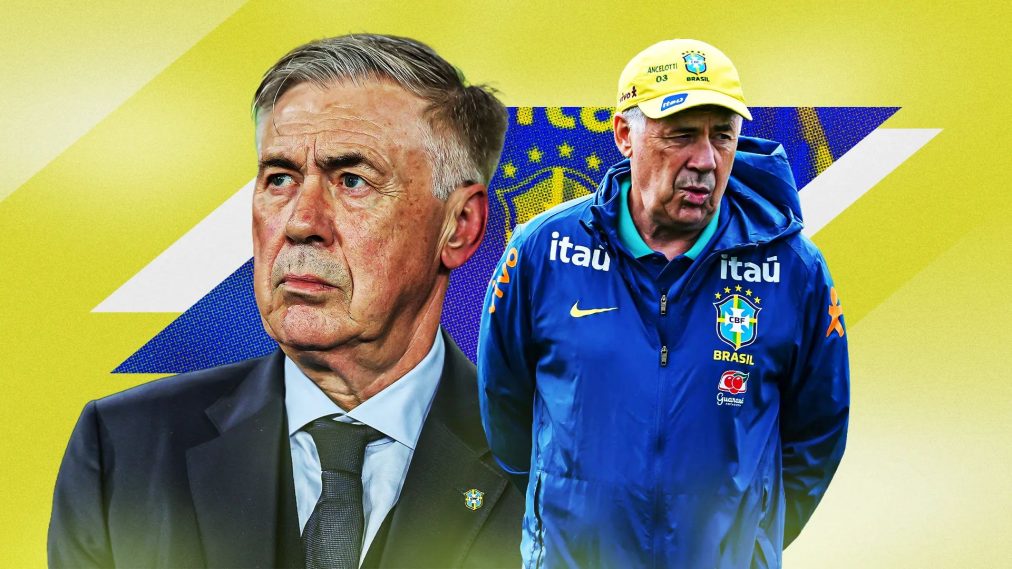
Ancelotti’s responsibility
It is reasonable to ask why Ancelotti selected Raphinha in friendlies despite the long travel involved and the player’s injury history. But concluding immediately that Ancelotti was negligent, or that “he would not have done it if the player was at Real Madrid”, ignores many unknowns.
Ancelotti is Brazil manager. His job is to prepare the national team for its competitions, not to manage the workloads of Barcelona or Real Madrid players on behalf of their club coaches.
International windows are almost the only opportunity for national-team players to train together. Managers naturally want to see their best players, test ideas, prepare their line-up and improve understanding. Should Ancelotti have told Raphinha, “Go and rest, son, because Barcelona need you after the international break”? Should Luis de la Fuente have told Lamine Yamal not to play because Barcelona had matches later? Should Zinedine Zidane have protected Mbappe, Dembele and Olise from playing for France?
Applied consistently, that logic would make national teams impossible. It would require every international manager to prioritise a player’s club schedule, league position, upcoming fixtures and need for rest.
It also assumes players want to avoid representing their countries. Many regard international football as an honour and a source of pride, with major tournaments central to their careers.
Thomas Tuchel, England manager, rejected the idea of routinely resting players for their clubs. He said he did not receive calls from Premier League managers telling him how to use their players, and that, when he managed clubs, he saw no reason to call national-team coaches. Asking players to ease off, play only one half or take a rest was, he said, “madness”. England want to win, just as clubs do.
Injuries are an unfortunate part of football. A club may receive a player back safely from international duty, only for him to get injured in a domestic match days later; that does not automatically prove the club manager was negligent.
Where the facts are unknown, the responsible response is to wait, discuss possibilities rather than invent conclusions, and avoid speaking for the player or assigning motives to the coach. Journalism is not about confirming the story supporters prefer, but reporting what can be established.
Raphinha may have been injured, or he may not have been. Ancelotti may have misjudged the situation, or not. Hansi Flick may be blamed unfairly. A journalist may be labelled a Real Madrid supporter for writing about Raphinha and a Barcelona supporter for writing about Mbappe.
Not every injury is a conspiracy, not every unfortunate timing shows bad faith, and saying “we do not know yet” is not weakness. Treating “we do not know” as certainty is simply emotion getting ahead of reason.
-
 Mohamed Amine Katiba abandons Al Nasr move and heads for Villarreal Sep 30, 2026
 -
Somalia held by Cote d’Ivoire before late physical test in 2027 AFCON qualifying Sep 30, 2026
-
Morocco cancel planned Ghana friendly in Tangier Sep 30, 2026
-
Ghana FA president Kurt Okraku targeted by angry fans after Gambia defeat Sep 30, 2026




-
AFCON 2025: Fixtures, Results, Scores and Standings Jan 18, 2026
-
Leadership and long-term vision key to rescuing Zamalek and inspiring Egyptian football – Hany Abou Rida Nov 5, 2025
-
Match hero Taiwo Awoniyi reflects on team effort after Chelsea triumph May 5, 2026
-
South African giants Orlando Pirates set to lose influential forward Monnapule Saleng Mar 19, 2025




-
AFCON 2027 Qualifiers: McCarthy warns South Africa to expect tough test against Eritrea Sep 29, 2026
-
AFCON 2027 qualifiers: Algeria, Morocco and Nigeria among winners on opening matchday Sep 26, 2026
-
AFCON 2027 qualifiers: Burkina Faso held by Benin in Group F Sep 25, 2026
-
South Sudan vs Egypt: Where to watch AFCON 2027 qualifier Sep 29, 2026