FIFA ethics inquiry details reveal Infantino’s controversial first months as president
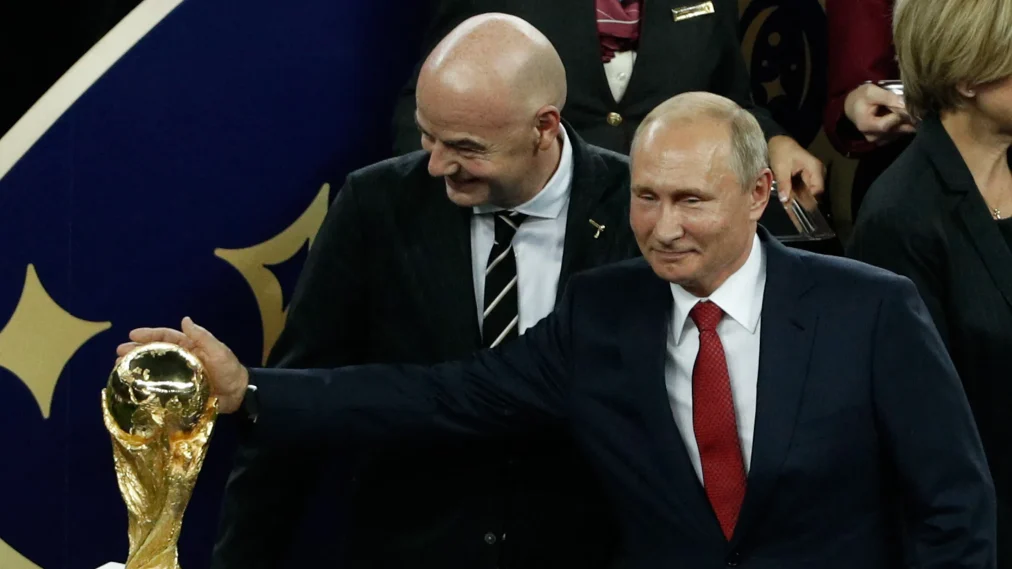
A previously unpublished account of a 2016 FIFA ethics inquiry has shown that Gianni Infantino accepted seats on private aircraft linked to the governments of Vladimir Putin and the Emir of Qatar, while also using a papal invitation to arrange a personal trip for his elderly mother.
The investigation, reported by The Telegraph and written by journalist Sam Wallace, examined seven formal complaints made by senior FIFA officials only months after Infantino was elected president on 26 February 2016.
By June of that year, concerns had been raised about his conduct, including his use of FIFA resources for personal expenses, the way he appointed members of his inner circle and his refusal to sign a proposed employment contract.
Vanessa Allard, then FIFA’s chief investigator and now a judge in the Cayman Islands, led the inquiry. After several weeks, she cleared Infantino of all seven allegations, concluding that “no ethical violations had been committed” by him.
Four of the seven complaints concerned five private-jet journeys, including two flights provided by UEFA. The FIFA ethics code prohibited the organisation’s president from accepting gifts worth more than a “trivial value” and required him to refuse them “in case of doubt”.
People familiar with the investigation told The Telegraph that FIFA officials believed, less than a year after Sepp Blatter had been suspended, that the organisation could not withstand further instability at the top. They said there was no indication that Allard’s decision had been influenced by any outside party.
The inquiry also examined claims that Infantino had spent FIFA money on personal items. Those purchases included six pairs of football boots costing £942 and a dinner suit priced at 1,415 Swiss francs for an event involving the International Football Association Board (IFAB).
He also received a monthly allowance of 2,000 Swiss francs, which was available to senior FIFA officials for incidental expenses.
Infantino rejected a proposed annual salary equivalent to £1.5m in 2016, describing it as “insulting”, and did not respond to messages from the organisation’s head of remuneration about the contract. He knew that Blatter had been paid 3.6m Swiss francs – around £2.7m at the time.
When the investigation report was published in August 2016, Infantino had still not formally signed an employment contract with FIFA. He is reportedly paid £4.4m a year now.
The report also raised questions about Infantino’s appointments. He bypassed FIFA procedures when selecting members of his inner circle, including secretary general Mattias Grafstrom, Zvonimir Boban and Luca Piazza, a friend from his Swiss village of Trelex.
No job descriptions for the three men were submitted to FIFA’s human resources department. Officials told Infantino that the proposed salaries were “higher than was usually paid” and fell outside the organisation’s recruitment plan.
However, the ethics committee placed responsibility on the human resources department for failing to explain the relevant procedures and policies to Infantino. It described the issue as “a compliance matter, not an ethical matter”.
Private flights and meeting with the Pope
In April 2016, Infantino’s staff were instructed to cancel commercial flights to Moscow. Instead, Infantino, Grafstrom and Boban accepted seats on a private aircraft carrying Vitaly Mutko, then president of the Russian Football Union, who was arranging Infantino’s schedule of meetings with Putin.
When a meeting with the Russian president was delayed, Infantino missed his scheduled commercial flight to Doha. The Russian side arranged another private aircraft, owned by a subsidiary of Gazprom, which was a FIFA sponsor at the time.
A further delay to a meeting with the Emir of Qatar led to the Qatari authorities providing another private jet so that Infantino could return to Geneva in time for an important meeting.
Allard cleared Infantino of wrongdoing over those three flights, as well as return journeys between Geneva and Ljubljana on a UEFA private aircraft in May 2016.
After the 2016 UEFA Champions League final in Milan, Infantino travelled on another private aircraft, owned by Russian businessman Leon Seminenko, to Rome with his wife, Lina Al-Ashqar, and his mother, Maria.
He told investigators that the flight had been a gift for his Italian mother, who had emigrated to Switzerland and had run a newsstand for many years.
During the visit, Infantino gave Pope Francis a specially designed Adidas shirt and a Champions League winners’ medal. Although he had been invited in his capacity as FIFA president, he told the inquiry that the visit was “purely private in nature”.
Allard cleared him of potential violations, but noted that he “could be considered not to have acted with complete integrity” because he had mixed official and private matters and attempted to alter the nature of the visit.
The complaints also revealed tensions between Infantino and Domenico Scala, who was chair of FIFA’s Audit and Compliance Committee at the time. Scala resigned in May 2016 after the FIFA Council – effectively Infantino – was given the power to remove and appoint committee chairs.
Allard concluded that FIFA’s rules did not cover a situation in which the president refused to sign a contract and that Infantino therefore could not be held responsible. FIFA’s governance regulations, however, stated that the compensation subcommittee was responsible for setting the president’s salary.
Speaking to the FIFA Council in May 2016, Infantino said: “I did not sign a contract proposed to me by the chairman of the Audit and Compliance Committee. I did not accept this proposal. It was a proposal that I found insulting.”
Most of the FIFA officials who filed complaints or gave evidence later left the organisation.
According to The Telegraph, those officials were among the first witnesses to Infantino’s management style. The report said that his survival of the 2016 investigation, together with Scala’s departure, represented an important step in consolidating the authority he continues to exercise.
-
 Sunderland’s Jules Ahoka scores first Europa League goal on debut start Oct 16, 2026
 -
PSG interest appeals to Crystal Palace defender Jaydee Canvot Oct 16, 2026
-
Europa League: AC Milan thrash RB Salzburg as Lyon edge Crystal Palace Oct 16, 2026
-
Bournemouth beat Sturm Graz 3-0 to make it two Europa League wins Oct 16, 2026



-
AFCON 2025: Fixtures, Results, Scores and Standings Jan 18, 2026
-
Match hero Taiwo Awoniyi reflects on team effort after Chelsea triumph May 5, 2026
-
Leadership and long-term vision key to rescuing Zamalek and inspiring Egyptian football – Hany Abou Rida Nov 5, 2025
-
South African giants Orlando Pirates set to lose influential forward Monnapule Saleng Mar 19, 2025




-
Roma v Real Madrid: home side tipped to score first in Champions League clash Oct 12, 2026
-
Atletico Madrid v Manchester United: probable line-ups for Champions League clash Oct 12, 2026
-
Celta Vigo v Juventus: Probable line-ups for Europa League encounter Oct 14, 2026
-
Arsenal backed to edge out Lille in Champions League clash Oct 11, 2026