The Confederation of African Football (Caf) has unanimously backed Fifa president Gianni Infantino, giving him a significant political boost ahead of his bid for a fourth term despite mounting opposition in Europe and elsewhere.
Caf’s 54 member associations represent more than a quarter of Fifa’s 211 members. Its endorsement came as Infantino faced growing criticism over a failed proposal to involve private equity in the commercial future of the World Cup.
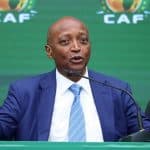
“We are committed to continue working together with Fifa, its member associations, other football confederations and stakeholders to safeguard and adhere to governance, due process, and transparency,” Caf president Patrice Motsepe said in a statement.
The backing from Africa contrasted sharply with the wider response to Infantino’s leadership. Uefa reaffirmed on Thursday that it would continue to boycott Fifa competitions, while further national associations withdrew their support for his candidacy.
The European governing body said its conditions for returning to Fifa events had not been met.
“First, the proposals to sell off the major competitions had to be withdrawn, and secondly, assurances have to be made that such attempts to disfigure the game in this way will never be made again,” Uefa said in a statement.
“These conditions have not been met. In addition, Uefa made it abundantly clear in its statement on Saturday that it has lost confidence in Gianni Infantino’s presidency. That position holds.”
Uefa said the fact that some Fifa employees had backed Infantino did not change its stance, arguing that their careers “depend on his favour”.
It did not confirm whether teams would boycott the next Fifa event, the Women’s Under-20 World Cup in Poland next month. The Polish FA has been contacted for comment.
Fifa apologised to its 211 members on Wednesday for mistakes linked to the abandoned plan to sell part of the World Cup’s commercial future. It also promised to review the procedures that led to the controversy.
The proposal triggered the most serious revolt of Infantino’s presidency, after national associations complained they had been excluded from the decision-making process. A review will be carried out before a report is submitted to the Fifa Council at its next meeting.
The conciliatory tone from Fifa has contrasted with increasingly public criticism from confederations, leagues and national associations. The governing body has now been forced to answer wider questions about how major strategic decisions are made.
South America’s governing body, Conmebol, criticised what it called “repeated unilateral actions taken without resorting to dialogue”. It also stressed the importance of institutional reforms introduced by Fifa more than a decade ago to improve transparency.
“Conmebol will not support any action or procedure that ignores or deviates from these institutional mechanisms,” it said.
“The Conmebol council calls for the preservation of unity within the football family, for acting with institutional responsibility, for strengthening dialogue and for fully respecting governance mechanisms.”
The global players’ union Fifpro described Infantino’s plan as having been “negotiated behind closed doors” and said it represented more than a failure of governance, calling it a “profound abuse of presidential power”.
Fifa has maintained that the proposal complied with its regulations, saying the mistakes concerned process and communication rather than breaches of governance rules.
“If true, that is not a defence. It is an indictment of Fifa’s current governance framework,” Fifpro said.
Fifa has attempted to present a united front and warned that, with the project abandoned, it would “no longer tolerate any attacks on its integrity, good governance and due process”.
A New York Times report said senior Fifa directors were unaware of the private equity proposal until the day before last month’s World Cup final in New York. The report said they were then pressured to approve it at short notice, highlighting the secrecy surrounding the plan. Fifa was not immediately available to comment.
Infantino’s immediate priority is to contain the political consequences before March’s presidential election in Morocco, where he will seek to remain in office until 2031.
Fifa’s management board and secretary general Mattias Grafstrom publicly endorsed him at a meeting on Wednesday. However, Prince Ali bin Hussein, president of the Jordan FA, said he would not support Infantino, despite eventually receiving prize money owed for Jordan’s participation in the 2025 Arab Cup.
The FA also confirmed that England had withdrawn its support for Infantino, while the Albanian FA has done the same.
Infantino still has strong backing among many smaller associations, particularly in Africa and Asia, where Fifa development funding remains central to national football programmes. With no credible challenger currently emerging, he remains well placed politically ahead of the election.
-
 CFFEB and Majestic SC secure 1-0 wins in Fasofoot Ligue 1 Oct 9, 2026
 -
CAF reconsiders Africa Cup of Nations cycle amid commercial and fixture concerns Oct 9, 2026
-
Cheikhou Kouyate retires from football after 92 Senegal caps Oct 9, 2026
-
Academie Basga Jo appoint Darko Janackovic to lead sporting operations Oct 9, 2026



-
AFCON 2025: Fixtures, Results, Scores and Standings Jan 18, 2026
-
Match hero Taiwo Awoniyi reflects on team effort after Chelsea triumph May 5, 2026
-
Leadership and long-term vision key to rescuing Zamalek and inspiring Egyptian football – Hany Abou Rida Nov 5, 2025
-
South African giants Orlando Pirates set to lose influential forward Monnapule Saleng Mar 19, 2025




-
Croatia face Spain with Nations League hopes on the line in Split Oct 5, 2026
-
France v Belgium: Probable line-ups for Nations League clash Oct 3, 2026
-
Morocco coach Mohamed Ouahbi refuses to single out player after Mali draw Oct 4, 2026
-
Manchester United host winless Tottenham in Premier League clash Oct 7, 2026