World Cup 2026: White House official Andrew Giuliani defends US decision to bar Somalia referee Omar Artan
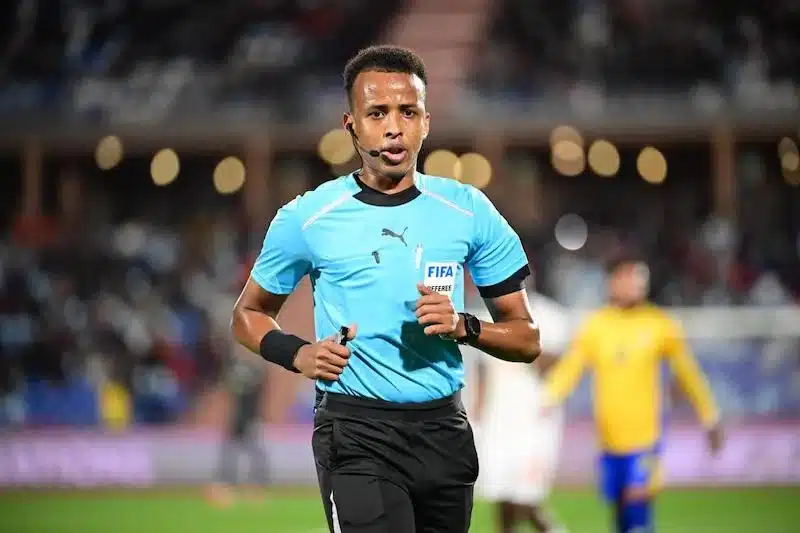
A senior United States official Andrew Giuliani has publicly defended the decision to deny Somalia top referee Omar Artan entry into the country for the 2026 FIFA World Cup.
Artan was prevented from entering the United States despite reportedly holding a valid visa, with authorities citing security-related concerns. The decision sparked widespread debate within football circles, particularly given his role as an international match official selected to participate in football’s biggest tournament.
Now, Andrew Giuliani, executive director of the White House World Cup Task Force, has offered the strongest public justification yet for the controversial move.
Speaking to USA Today, Giuliani suggested that the decision was based on information uncovered during security screening procedures, although he declined to provide specific details.
“There are some things we can’t talk about regarding the referee you’re referring to,” Giuliani said.
“He had contact with some very bad people before he came to the United States.”
While stopping short of elaborating on the nature of those alleged contacts, Giuliani insisted that American authorities had a responsibility to protect the integrity and safety of the tournament.
“I’ll leave it at that, but what I can say is that we’re not going to allow football tournament officials to bring bad people into the United States.
“It’s our job to ensure everyone has a memorable experience, and that means making sure we can vet the people who come into the United States.”
The case has attracted significant attention because Artan had reportedly already been granted a valid visa before being stopped from entering the country.
According to reports, the referee’s entry was ultimately blocked due to unspecified security concerns linked to an alleged connection involving an individual associated with the National Security Council.
However, authorities have not publicly disclosed detailed evidence supporting the claims, leaving many questions unanswered.
The lack of transparency surrounding the decision has fuelled debate among football stakeholders, particularly regarding how officials selected for a FIFA tournament can be denied access after apparently satisfying visa requirements.
Artan’s exclusion has become one of the most talked-about off-field stories of the tournament, raising concerns about the challenges faced by some officials and participants travelling to the United States for the World Cup.
With the competition being jointly hosted by the United States, Canada and Mexico, organisers have repeatedly stressed their commitment to ensuring smooth travel and accreditation procedures for players, officials and support staff.
The case involving Artan, however, has highlighted the extent to which national security considerations can still override sporting arrangements.
Despite Giuliani’s comments, no official documentation outlining the exact reasons behind Artan’s exclusion has been made public.
As a result, the incident continues to generate discussion across the football world, with observers seeking greater clarity on the circumstances that led to the decision.
For now, United States authorities appear determined to stand by their position, maintaining that the move was necessary to safeguard the tournament and those attending it.
Whether further details emerge in the coming days remains to be seen, but the controversy has already become one of the most sensitive administrative issues surrounding the 2026 FIFA World Cup.
-
 Ali Maher questions refereeing decisions after Ceramica Cleopatra’s Super Cup defeat by Al-Ahly Oct 15, 2026
 -
McDonald Mariga claims he has been sidelined in Football Kenya Federation Oct 15, 2026
-
Desire Doue admits PSG were not fully satisfied despite Man City victory Oct 15, 2026
-
CAS schedules December hearing in Riveiro’s compensation dispute with Al Ahly Oct 15, 2026


-
AFCON 2025: Fixtures, Results, Scores and Standings Jan 18, 2026
-
Match hero Taiwo Awoniyi reflects on team effort after Chelsea triumph May 5, 2026
-
Leadership and long-term vision key to rescuing Zamalek and inspiring Egyptian football – Hany Abou Rida Nov 5, 2025
-
South African giants Orlando Pirates set to lose influential forward Monnapule Saleng Mar 19, 2025




-
Roma v Real Madrid: home side tipped to score first in Champions League clash Oct 12, 2026
-
Atletico Madrid v Manchester United: probable line-ups for Champions League clash Oct 12, 2026
-
Real Madrid fitness update: Valverde a doubt for Villarreal as Kylian Mbappe returns Oct 8, 2026
-
Arsenal backed to edge out Lille in Champions League clash Oct 11, 2026