World Cup 2026: Can Emerse Faé’s Cote d’Ivoire achieve what Drogba’s golden generation never could?
Hamburg, June 10, 2006. Didier Drogba walks off the pitch at the AOL Arena, jaw clenched, eyes hollow. His Ivory Coast have just pushed Argentina and the Netherlands to the brink in the World Cup’s most brutal group. They’ve earned respect, admiration, even fear. But they haven’t earned progress.
That night, nobody imagined the same scene would replay itself eight years later, twice over, with the same protagonists and an even crueller ending.
Now fast-forward to 2026. The glitz is gone. The glamour has faded. In their place stands something far more dangerous: a rebuilt, balanced, quietly confident Ivory Coast, returning to football’s grandest stage after a dozen years in the wilderness. And this time, history whispers a different prophecy.
Why Drogba’s dream team never boarded the plane
The question has haunted African football for two decades. How did the most gifted generation the continent has ever produced—two-time African Player of the Year Drogba, four-time winner Yaya Touré, plus Kolo, Zokora, Eboué, Kalou, Gervinho—crash out of three World Cups without winning a single knockout match?
2006 offered the group of death excuse. Argentina and Netherlands were simply heavier giants. 2010 served the same cruel draw: Brazil, Portugal, North Korea. Two campaigns, zero progress, but heads held high.
Then came 2014. The deepest wound. The one that still bleeds.
Colombia, Greece, Japan—a group practically gift-wrapped for Ivorian glory. Beat Japan 2-1. Lost to Colombia. Then the maths grew simple: avoid defeat against Greece, and history arrives. For ninety-three minutes, they held. Then Samaras tumbled. Penalty. Ninety-third minute. Silence.
Drogba left that pitch in Brazil with his head bowed, carrying a generation’s worth of unfulfilled prophecy on his shoulders. The Elephants hadn’t lacked talent. They’d drowned in it—too many stars, too many egos, too few collective lungs willing to breathe together when it mattered most.
The silent revolution beneath the surface
While the world forgot about Ivory Coast, Ivorian football never stopped working.
The Mimosifcom Academy—that remarkable breeding ground founded in 1993 by Roger Ouegnin and French legend Jean-Marc Guillou—kept producing. Free training. Open doors. No social barriers. By 2012, FIFA named it the world’s finest youth academy, ahead of Boca Juniors and Flamengo. Twelve of its graduates played in Europe’s top leagues that year.
From those concrete pitches in Abidjan came Odilon Kossounou, Evan Ndicka, and a diaspora now scattered across Belgium, France, England, Italy, Germany, and Spain. The supply line never stopped flowing. Only the headlines did.
Twelve years away from the World Cup became twelve years of quiet structural transformation. No parades. No golden generation labels. Just foundations, laid brick by brick.
Emerse Faé’s new breed: Fewer headlines, more heart
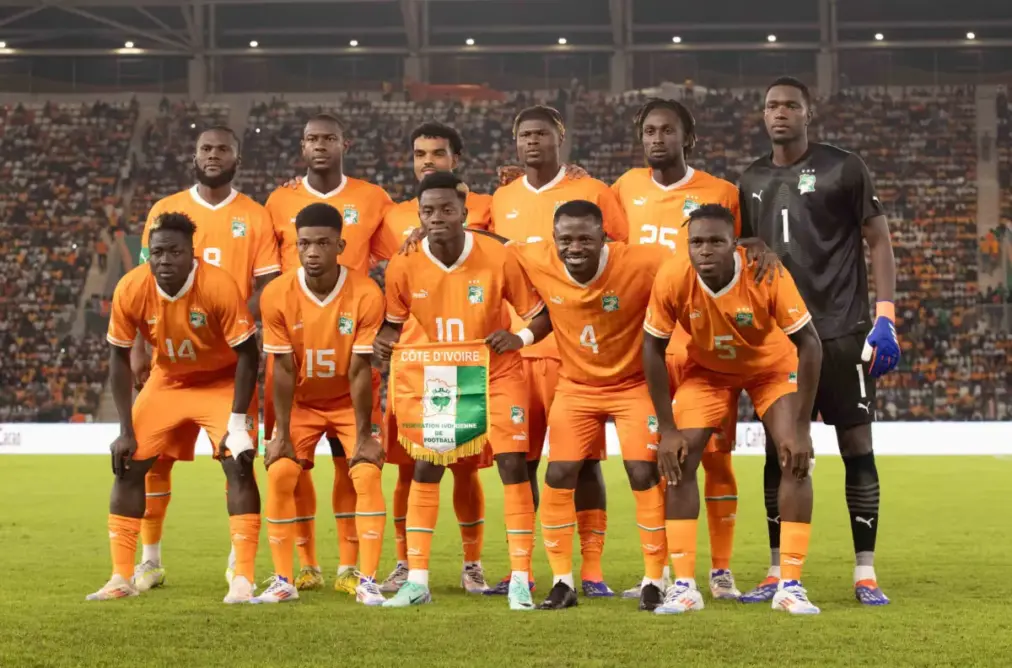
Enter Emerse Faé. A coach steeped in Ivorian football culture. A man who took charge in the chaotic cauldron of AFCON 2024—and walked out holding the trophy.
His 2026 squad won’t make anyone’s poster. Nicolas Pépé is not Drogba. Franck Kessié is not Yaya Touré. Elye Wahi and Simon Adingra don’t command the same fear as peak Gervinho. But that’s precisely the point.
Faé has built a spine designed for tournaments, not highlight reels. Kossounou, Ndicka, and Wilfried Singo anchor a defence accustomed to Europe’s sharpest attacks. Kessié, Seko Fofana, and Ibrahim Sangaré provide engine-room grit. Adingra, Amad Diallo, and a recalled Pépé offer varied attacking threats. Even Ange-Yoan Bonny—the Inter Milan youngster—earned his first call-up on merit, not reputation.
There is no single talisman carrying this project. No bonuses to dispute. No internal factions battling for supremacy. Just a collective identity forged in defensive solidity and rapid transitions—the kind of football that survives group stages.
The group that could break the cycle
Group E: Germany, Ecuador, Curaçao.
Nobody calls it a group of death. Nobody calls it a free pass either. But compared to Argentina-Netherlands (2006), Brazil-Portugal (2010), or the heartbreak of Greece (2014), this is an invitation the old Ivorian sides never received.
The expanded 48-team format sweetens the deal further. With the best third-placed teams advancing, the margin for error has widened. One win. Two draws. Smart game management. That’s all it takes to write a different ending.
Faé’s elephants arrive in North America without the crushing weight that buried Drogba’s generation. No “golden generation” headlines. No expectation of semifinals. Just a balanced, well-coached, quietly ruthless outfit that knows exactly who it is.
And sometimes, that’s far more dangerous than being who everyone wants you to be.
Can history finally be written?
The honest answer? Nobody knows. World Cups devour logic. They feast on favourites and spit out underdogs without warning.
But the structural conditions have shifted. The team no longer rises and falls on one man’s shoulders. The coach has already proven he can navigate tournament pressure—and win. The academy pipeline keeps delivering. And the draw, for once, hasn’t slammed the door before kickoff.
Twelve years ago, Ivory Coast left the World Cup stage wondering what might have been. In 2026, they return asking what still could be.
This time, the curse isn’t laughing. It’s watching nervously.
-
 Morocco book place at 2026 Beach Soccer Africa Cup of Nations in Senegal Oct 19, 2026
 -
Yan Diomande shines again as Real Madrid starlet sets Liga record Oct 19, 2026
-
Stuttgart and Atletico Madrid set for Champions League showdown: predicted line-ups Oct 19, 2026
-
Stuttgart v Atletico Madrid: Champions League date, kick-off time and how to watch Oct 19, 2026


-
AFCON 2025: Fixtures, Results, Scores and Standings Jan 18, 2026
-
Match hero Taiwo Awoniyi reflects on team effort after Chelsea triumph May 5, 2026
-
Leadership and long-term vision key to rescuing Zamalek and inspiring Egyptian football – Hany Abou Rida Nov 5, 2025
-
South African giants Orlando Pirates set to lose influential forward Monnapule Saleng Mar 19, 2025




-
Real Betis v Barcelona: kick-off time, TV details and match preview Oct 16, 2026
-
Morocco to face New Zealand as FIFA U-17 Women’s World Cup kicks off in Rabat Oct 16, 2026
-
Roma v Real Madrid: home side tipped to score first in Champions League clash Oct 12, 2026
-
Atletico Madrid v Manchester United: probable line-ups for Champions League clash Oct 12, 2026