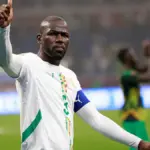
World Cup 2026: Senegal target another milestone

Senegal will arrive at the 2026 World Cup carrying the ambition of reproducing one of the greatest achievements in African football history, with the Teranga Lions hoping to match the quarter-final run that stunned the world during their tournament debut in 2002.
Qualification for football’s biggest stage has become increasingly familiar for Senegal.
The West African nation has now secured a third consecutive World Cup appearance, underlining its status as one of the continent’s most consistent football powers.
As preparations continue for the tournament in North America, hopes remain high that Senegal can once again challenge the world’s leading teams.
Yet the road to the competition has been shaped not only by strong performances on the pitch but also by controversy and uncertainty following events at the Africa Cup of Nations earlier this year.
The aftermath of AFCON 2025 remains a major talking point around the national team.
Senegal believed they had secured victory in the final against hosts Morocco after winning 1-0 on the field.
However, the match ended in controversy when the team was later handed a 3-0 defeat after leaving the pitch in protest against the referee.
The decision resulted in Senegal losing the continental title and created significant repercussions for the squad ahead of the World Cup.
For many observers, the episode represented a major setback both emotionally and professionally.
The circumstances surrounding the final have left frustration within the camp and raised questions about the impact the incident could have on the team’s mindset heading into one of the most important tournaments in world football.
The controversy has also placed attention on head coach Pape Thiaw.
Reports suggest Thiaw, who allegedly encouraged players to leave the field during the AFCON final, could face disciplinary action from the Confederation of African Football.
There is concern that any lengthy suspension could affect his involvement with the team during the World Cup.
The Senegalese Football Federation continues to pursue an appeal before the Court of Arbitration for Sport.
However, the legal process is expected to take time, creating another issue that could divert attention from preparations for the tournament.
Despite the off-field uncertainty, Senegal’s performances have remained strong.
The Teranga Lions completed their African qualifying campaign unbeaten and secured their place at the World Cup in convincing fashion.
Their final group-stage match ended in a comprehensive 4-0 victory over Mauritania, with Sadio Mane scoring twice to help seal the result.
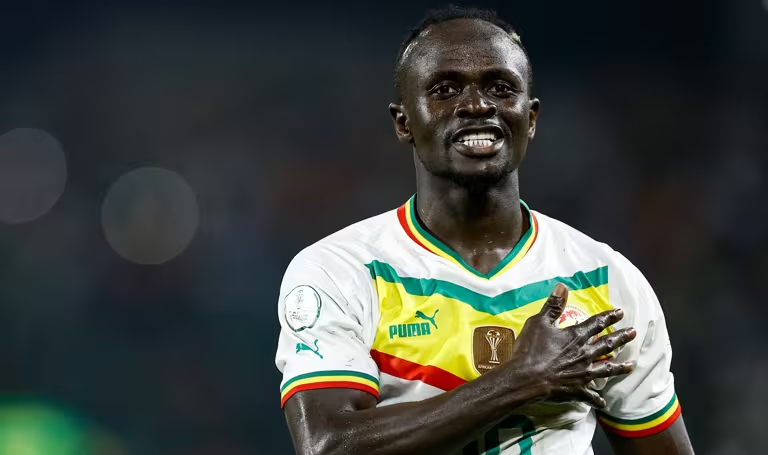
That win enabled Senegal to move above the Democratic Republic of Congo and finish first in Group B.
A crucial 3-2 away victory against the Leopards during the qualification campaign proved decisive in the race for top spot.
The numbers from qualifying reflected the team’s consistency.
Senegal scored 22 goals while conceding only three throughout the campaign, demonstrating both attacking efficiency and defensive solidity.
Mane finished as the team’s leading scorer with five goals.
He was supported by Pape Matar Sarr, who contributed four goals, while Ismaila Sarr added three.
The qualification campaign reinforced the view that Senegal remain among Africa’s strongest national teams despite the disappointment of the AFCON controversy.
Historically, the nation has featured at the World Cup in 2002, 2018, 2022 and now 2026.
Their first appearance remains the benchmark by which all subsequent campaigns are measured.
At the 2002 tournament in South Korea and Japan, Senegal shocked the football world by defeating reigning champions France 1-0 in their opening match.
The team went on to reach the quarter-finals, a feat that remains the country’s best performance at the tournament.
More recently, Senegal advanced to the Round of 16 at the 2022 World Cup before being eliminated by England.
Much of the responsibility for leading the current generation falls on head coach Pape Thiaw.
The 45-year-old took charge in December 2024 following the departure of Aliou Cisse.
Having progressed through the national team’s coaching structure, Thiaw has favoured an attacking approach and now faces the challenge of guiding Senegal through a World Cup campaign overshadowed by recent controversy.
Attention will also focus on Sadio Mane.
The veteran forward remains the face of Senegalese football despite ongoing discussion about his age and future.
After missing the 2022 World Cup in Qatar and experiencing the disappointment of AFCON 2025, the 34-year-old enters the tournament with considerable motivation.
His experience, leadership and influence continue to make him one of the most important figures within the squad and one of Africa’s most celebrated footballers.
Senegal’s World Cup campaign begins against France on 17 June before further group-stage matches against Norway on 23 June and Iraq on 27 June.
Those fixtures will determine whether the Teranga Lions can take another step toward recreating the remarkable journey that captured global attention in 2002.
Senegal head coach Pape Thiaw has unveiled his final 26-man squad for the 2026 FIFA World Cup
Blending seasoned internationals with an emerging generation as the West African giants prepare for another global challenge.
The announcement finalises an earlier provisional list, with two players trimmed from the original selection as Thiaw settles on a balanced group built around continuity, leadership and attacking firepower.
Veteran goalkeeper Édouard Mendy, defensive rock Kalidou Koulibaly and midfield anchor Idrissa Gana Gueye headline a squad that continues to lean heavily on its experienced core. At the opposite end of the age profile, the selection also rewards rising prospects who have broken through in Europe’s top leagues over the past season.
Senegal’s attack is spearheaded by all-time top scorer Sadio Mané, whose leadership and goal threat remain central to Thiaw’s plans. He is joined by in-form forwards Nicolas Jackson, Ismaïla Sarr and Iliman Ndiaye, providing pace, movement and versatility across the frontline.
The midfield unit features a dynamic mix of experience and youth, with Pape Matar Sarr, Lamine Camara and Pape Gueye expected to play key roles alongside Gueye’s veteran presence. The defensive structure, meanwhile, is anchored by Koulibaly and supported by players including Moussa Niakhaté, Ismail Jakobs and Krepin Diatta.
Young talents such as Ibrahim Mbaye and Assane Diao have also earned places in the squad, underlining Senegal’s long-term transition strategy even as they aim for immediate impact at the tournament.
Senegal, one of Africa’s most consistent performers on the world stage in recent years, will head into the tournament with high expectations. Their blend of experience and emerging talent has already been identified as one of the team’s key strengths, though they face a demanding group stage campaign.
With the squad now confirmed, attention turns to final preparations as Thiaw’s side look to mount another serious push on football’s biggest stage.
Senegal 26-man squad
Goalkeepers: Édouard Mendy, Mory Diaw, Yehvann Diouf
Defenders: Kalidou Koulibaly, Moussa Niakhaté, Ismail Jakobs, Mamadou Sarr, Abdoulaye Seck, Antoine Mendy, El Hadji Malick Diouf, Krepin Diatta
Midfielders: Idrissa Gana Gueye, Pape Matar Sarr, Pape Gueye, Lamine Camara, Habib Diarra, Bara Ndiaye
Forwards: Sadio Mané, Nicolas Jackson, Ismaïla Sarr, Iliman Ndiaye, Assane Diao, Ibrahim Mbaye, Cherif Ndiaye, Bamba Dieng, Cheikh Sabaly
Latest News
Senegal plunged into fresh crisis as government refuses to cover Thiaw compensation
Why African teams continue to thrive at major tournaments
Africa did well at World Cup 2026 but we can do better – Patrice Motsepe
CAF president Motsepe assesses Africa’s overall performance at 2026 World Cup

World Cup 2026: African stars feature as FIFA unveils 12 nominees for goal of the tournament
World Cup 2026: I am proud of African teams’ performance – CAF president Patrice Motsepe