South Africa’s ‘easy hit’ World Cup warm-ups raise questions
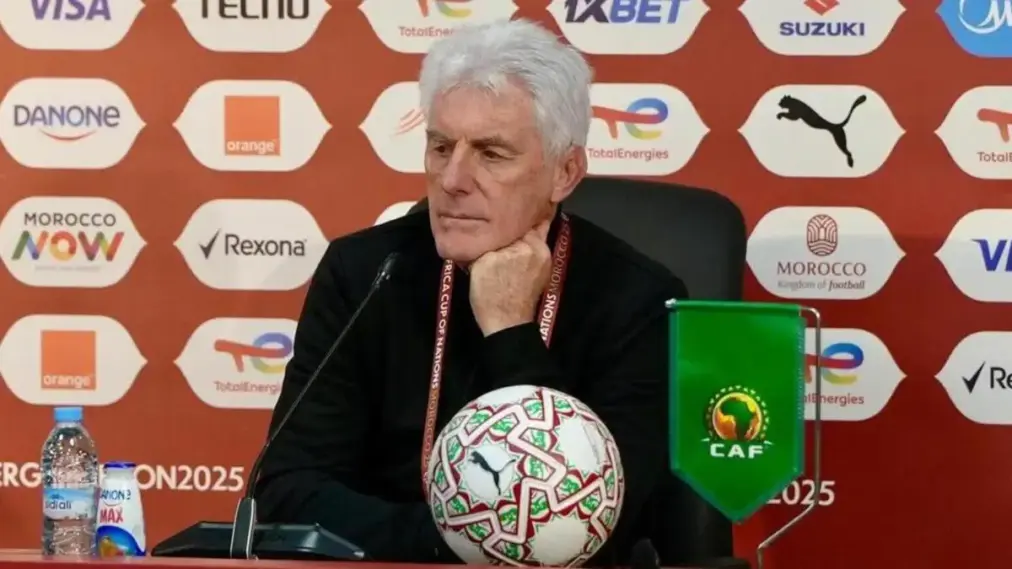
With the clock ticking down to the 2026 FIFA World Cup, South Africa appear set to fine-tune their preparations against opponents that, on paper at least, offer limited resistance.
Head coach Hugo Broos has confirmed that negotiations are advanced for two international friendlies against Nicaragua national football team and Puerto Rico national football team, fixtures that are unlikely to excite supporters but could serve a functional role in the team’s final build-up.
The proposed matches, scheduled for late May and early June, will come just before Bafana set up base in Mexico for a crucial high-altitude training camp in Pachuca.
Yet while the timing aligns with physical preparation needs, the calibre of opposition has sparked debate about whether South Africa are being sufficiently tested ahead of the global showpiece.
Broos has made no secret of the need for structured preparation, revealing that the technical team is carefully balancing logistics, fitness demands and tactical work.
However, after underwhelming results against Panama in March, where South Africa failed to secure a win, questions linger over whether softer opposition will provide the sharpness required for World Cup competition.
If confirmed, the fixtures would also mark new territory, with Bafana having never faced either side in international football. These encounters would become the 97th and 98th different national teams South Africa have met since their readmission to global competition.
Nicaragua: Modest pedigree with occasional bite
Ranked 131st in the world, Nicaragua represent a side that has struggled to establish itself on the international stage. Their historical peak of 92nd offers a clear indication of their ceiling, and their current squad profile reinforces that perception.
The Central American nation relies heavily on domestically based players, with only a handful plying their trade abroad, mostly outside Europe’s elite leagues. Their attacking threat is led by Jaime Moreno, a forward with experience in Finland, while veteran winger Juan Barrera provides leadership and continuity.
Recent competitive results suggest a team capable of occasional surprises but lacking consistency. They finished bottom of their World Cup qualifying group, collecting just four points from six matches.
Yet within that disappointing campaign was a notable 2-0 victory over Honduras, a result that underlined their ability to disrupt stronger sides on their day.
A recent friendly defeat to Russia further highlighted the gap in class when facing higher-ranked opposition. For South Africa, Nicaragua may offer moments of resistance, but anything other than a controlled performance would raise concerns.
Puerto Rico: Developmental side still finding its level
If Nicaragua represent a modest challenge, Puerto Rico appear an even more straightforward assignment. Ranked 156th globally, they remain one of the lowest-ranked teams South Africa could realistically face in this window.
Their footballing infrastructure is still developing, reflected in a squad largely composed of players competing in lower divisions in the United States and Spain. There is little exposure to top-tier European football, and the team has yet to make a meaningful impact on the international stage.
Recent results underline the disparity. A heavy 6-0 defeat to Argentina in a friendly exposed defensive frailties, while victories over Guam and the U.S. Virgin Islands came against opposition ranked outside the top 200.
Even their more competitive outings, such as a 1-1 draw with Nicaragua, point to a side operating at a similar, limited level. For Bafana, the fixture is expected to function more as a controlled training exercise than a genuine contest.
Preparation versus competitiveness
Broos’ approach reflects a broader strategic dilemma faced by many national teams ahead of major tournaments: prioritise manageable fixtures that allow tactical refinement, or seek high-level opposition that tests resilience under pressure.
The Belgian coach appears to favour the former, particularly given the logistical challenges of assembling players and adapting to altitude conditions in Mexico. A carefully managed build-up, including lighter opposition, may reduce injury risk and allow for focused tactical implementation.
However, critics argue that South Africa’s recent performances suggest a need for sterner examinations. Matches against Panama exposed inconsistencies, and with group-stage clashes against stronger opponents looming, the margin for error is slim.
The decision to face Nicaragua and Puerto Rico could therefore be interpreted as a calculated gamble. On one hand, it offers an opportunity to build confidence, integrate fringe players and fine-tune systems. On the other, it risks leaving the team underprepared for the intensity of World Cup football.
The bigger picture for Bafana Bafana
South Africa’s return to the World Cup stage carries significant expectations. Broos has rebuilt belief within the squad and restored a sense of identity, but translating that progress into results on the global stage remains the ultimate challenge.
The upcoming friendlies, regardless of their perceived ease, will play a role in shaping the team’s readiness. Training at altitude, refining tactical patterns and managing player fitness are all essential components of a successful campaign.
Yet the nature of the opposition ensures that scrutiny will remain. Supporters and analysts alike will be watching not just for results, but for signs of cohesion, intensity and adaptability.
In the end, whether these “easy hits” prove beneficial or detrimental will only become clear once Bafana step onto the World Cup stage. For now, the focus remains on preparation, even if the path chosen raises as many questions as it answers.
-
 CAF announces dates for Champions League and Confederation Cup group stage draw Oct 26, 2026
 -
RS Berkane set for $700,000 CAF reward after reaching Champions League group stage Oct 26, 2026
-
Ethiopia Bunna 0-1 Mebrat Hayl: visitors claim narrow win in Ethiopia Premier League Round 4 Oct 26, 2026
-
Mbappe double gives Real Madrid victory over Barcelona in thrilling Clasico Oct 26, 2026




-
AFCON 2025: Fixtures, Results, Scores and Standings Jan 18, 2026
-
Match hero Taiwo Awoniyi reflects on team effort after Chelsea triumph May 5, 2026
-
Leadership and long-term vision key to rescuing Zamalek and inspiring Egyptian football – Hany Abou Rida Nov 5, 2025
-
South African giants Orlando Pirates set to lose influential forward Monnapule Saleng Mar 19, 2025




-
Barcelona v Real Madrid: Catalans backed at 1.65 to win October Clasico Oct 23, 2026
-
Barcelona and Real Madrid meet in pivotal 265th Clasico Oct 23, 2026
-
Champions League: PSG beat Barcelona as Liverpool complete comeback against Villarreal Oct 20, 2026
-
Inter Milan v Fiorentina: probable line-ups for San Siro clash Oct 24, 2026