Game-changing decision: FIFA considers bold yellow card rule change for 2026 World Cup
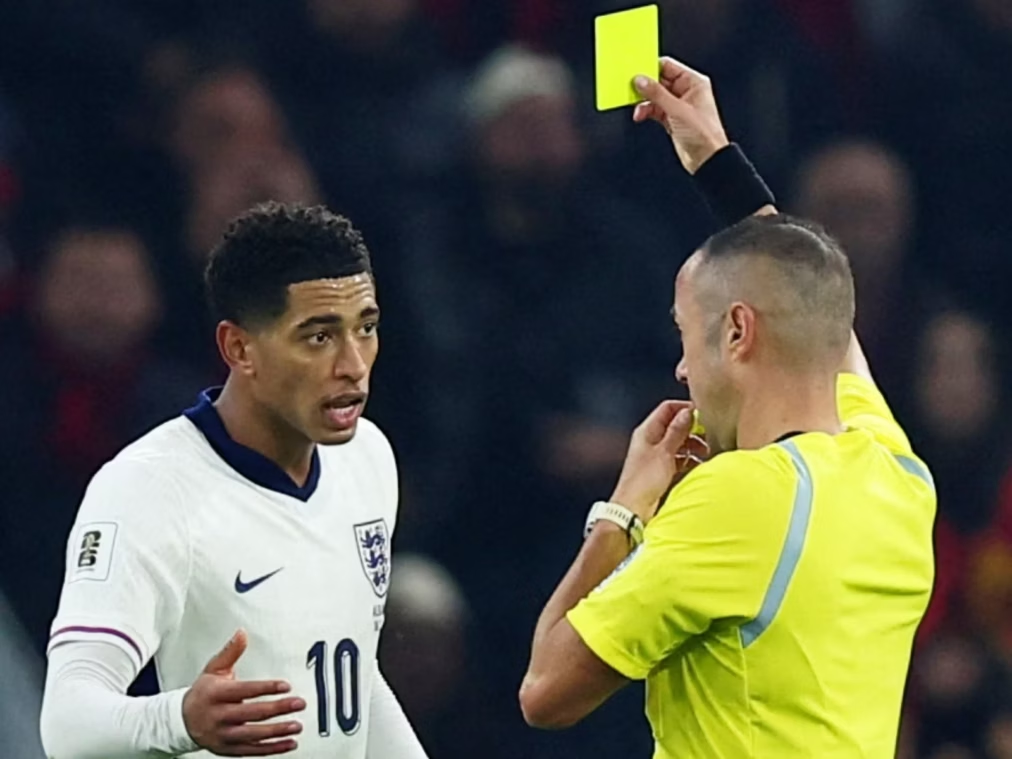
FIFA is considering a significant change to the disciplinary rules for the 2026 World Cup that would ease the impact of yellow card suspensions and potentially allow more key players to feature in the tournament’s knockout stages.
The proposal, which is expected to be discussed at an upcoming FIFA Council meeting, would involve resetting accumulated yellow cards at two key points during the competition: after the group stage and again following the quarter-finals.
The move is aimed at reducing the likelihood of players missing crucial matches due to earlier cautions.
If approved, the reform would mark a notable shift in how disciplinary records are managed at football’s biggest tournament, which will be held across the United States, Canada and Mexico.
Focus on knockout-stage availability
Under current regulations, players who receive two yellow cards in separate matches before the quarter-finals are automatically suspended for the next game.
This system has been in place to discourage repeated offences and maintain discipline throughout the competition.
However, FIFA is now considering adjustments that would reduce the impact of early bookings on later stages of the tournament.
The intention is to ensure that players are not ruled out of decisive knockout matches because of cautions accumulated in earlier, less critical fixtures.
The proposed system would effectively wipe clean yellow card records at two stages of the tournament, limiting the risk of suspension in the latter rounds where stakes are highest.
Impact of an expanded World Cup format
The potential rule change is closely linked to the expanded format of the 2026 World Cup, which will feature 48 teams for the first time.
The new structure introduces an additional knockout round, the round of 32, extending the length and complexity of the competition.
FIFA believes that with more matches being played, the chances of players accumulating bookings and facing suspension increase significantly.
Officials are concerned that this could lead to some of the tournament’s biggest names being absent from key fixtures due to earlier disciplinary incidents.
By resetting cautions at defined stages, FIFA aims to strike a balance between maintaining discipline and ensuring that the latter stages of the tournament feature the strongest possible line-ups.
Balancing fairness and entertainment
According to discussions within FIFA, the motivation behind the proposal is twofold: to preserve sporting fairness while also protecting the quality of the competition as a global spectacle.
Organisers argue that fans should be able to see the world’s top players in the most important matches, particularly in the semi-finals and final.
There is concern that under the current system, accumulated yellow cards could prevent this, potentially affecting the overall appeal of the tournament.
At the same time, the proposal is expected to generate debate among football officials and stakeholders, with questions likely to be raised about whether relaxing disciplinary rules could weaken the consistency of punishments.
FIFA is expecting to agree to wipe all yellow cards at the end of the World Cup group stages and the quarter-finals to reduce danger of players missing knockout matches.
The new rules around suspensions for accumulated bookings at this year’s tournament in the United States,… pic.twitter.com/crMyQtKsBW
— The Athletic | Football (@TheAthleticFC) April 27, 2026
Some critics may argue that easing the suspension system could reduce the deterrent effect of yellow cards, potentially encouraging tactical or repeated fouls during earlier rounds of the competition.
Decision expected at FIFA Council
The proposal is set to be formally reviewed at a FIFA Council meeting scheduled to take place in Vancouver. If approved, the changes would come into effect for the 2026 World Cup.
The decision would represent one of the most notable adjustments to tournament regulations in recent years and would directly affect how teams manage player discipline throughout the competition.
For coaches and players, the outcome could have a significant impact on tactical planning, particularly in relation to squad rotation and risk management during the group stage and early knockout rounds.
As preparations continue for the expanded tournament, FIFA’s discussions reflect ongoing efforts to adapt the competition’s structure and rules to its new scale, while attempting to maintain both fairness and entertainment value on football’s biggest stage.
-
 Iaia Manco Danfa set for more minutes after making Borussia Monchengladbach debut Oct 22, 2026
 -
Rayan Ait-Nouri faces Algeria exile after failing to apologise Oct 22, 2026
-
Raja Casablanca host El Kanemi Warriors in CAF Confederation Cup second-leg decider Oct 22, 2026
-
Algeria delay appointment of Brahim Hemdani’s second assistant Oct 22, 2026


-
AFCON 2025: Fixtures, Results, Scores and Standings Jan 18, 2026
-
Match hero Taiwo Awoniyi reflects on team effort after Chelsea triumph May 5, 2026
-
Leadership and long-term vision key to rescuing Zamalek and inspiring Egyptian football – Hany Abou Rida Nov 5, 2025
-
South African giants Orlando Pirates set to lose influential forward Monnapule Saleng Mar 19, 2025




-
PSG v Barcelona: fiery attacks set up Champions League classic at Parc des Princes Oct 18, 2026
-
Champions League: PSG beat Barcelona as Liverpool complete comeback against Villarreal Oct 20, 2026
-
Real Betis v Barcelona: kick-off time, TV details and match preview Oct 16, 2026
-
PSG beat Barcelona 4-2 in Champions League thriller Oct 21, 2026