Egypt: CAF rejects Al Ahly appeals and upholds sanctions over fan misconduct
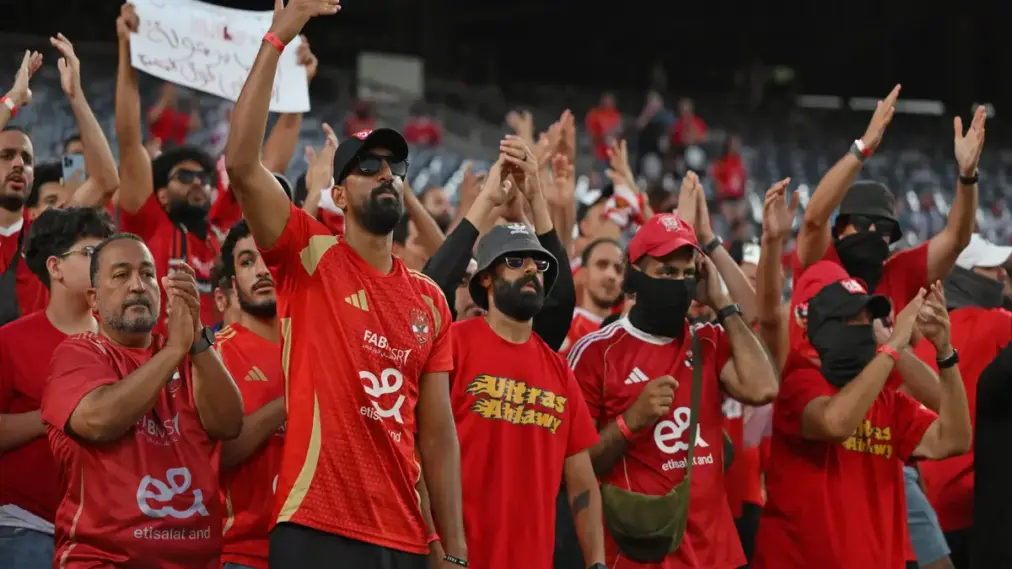
The Confederation of African Football (CAF) has rejected Al Ahly’s appeals against disciplinary sanctions, confirming both a financial penalty and a supporter ban linked to crowd incidents during a continental fixture.
An official source within CAF’s Disciplinary Committee confirmed that the governing body’s Appeals Committee dismissed the Egyptian club’s request to overturn a fine imposed after their match against Morocco’s Royal Army.
The decision means the sanctions initially handed down remain fully in force.
CAF had imposed a $60,000 fine on Al Ahly following incidents in which supporters threw water bottles during the match.
The disciplinary action also included a ban on fans attending the club’s subsequent fixture, specifically the second leg of their CAF Champions League quarter-final against Espérance of Tunisia.
Al Ahly first sought to challenge the supporter ban through an appeal, but that request was rejected by CAF.
The club then attempted to overturn the financial penalty separately, only for that appeal to also be dismissed.
The outcome confirms that CAF has upheld its original ruling in its entirety.
The decision highlights CAF’s firm stance on crowd behaviour and its willingness to enforce disciplinary measures in response to incidents involving supporters.
By rejecting both appeals, the organisation has reinforced its position that such conduct warrants strict penalties.
The sanctions had a direct impact on Al Ahly’s Champions League campaign.
The ban on supporters meant that the decisive second leg against Espérance in Cairo was played behind closed doors, removing the home advantage typically associated with one of Africa’s most prominent clubs.
Al Ahly’s continental journey ultimately came to an end following defeats in both legs of the quarter-final tie.
The Egyptian side lost the first leg in Tunisia by a single goal before suffering a 3-2 defeat at Cairo International Stadium in the return match, which was played without fans in attendance due to the CAF ruling.
The absence of supporters in Cairo marked a significant moment in the tie, as Al Ahly are known for their strong home backing.
While the results on the pitch determined the outcome, the circumstances surrounding the matches added an additional layer of difficulty for the team.
The case itself has drawn attention to the broader issue of fan conduct in African football competitions.
Incidents involving crowd behaviour have increasingly come under scrutiny, with governing bodies seeking to ensure that matches are conducted in a safe and controlled environment.
CAF’s disciplinary framework is designed to address such situations, with penalties ranging from fines to stadium bans depending on the severity of the offence.
In this instance, the throwing of objects from the stands was deemed serious enough to warrant both financial and sporting consequences.
For Al Ahly, the rejection of their appeals brings closure to the matter from a regulatory standpoint, although the repercussions have already been felt on the field.
The club’s elimination from the Champions League ends their pursuit of continental success for this season.
The sequence of events also underscores the importance of adherence to competition regulations, particularly for clubs competing at the highest level.
Disciplinary decisions can have far-reaching effects, influencing not only immediate fixtures but also overall campaign outcomes.
Despite the disappointment, the case serves as a reminder of the responsibilities shared by clubs and their supporters.
Ensuring a safe matchday environment remains a key priority for organisers, and incidents that compromise this can lead to significant sanctions.
CAF’s decision to uphold the penalties without modification suggests a consistent application of its rules.
By maintaining the original sanctions, the organisation has signalled its intent to deter similar behaviour in future competitions.
As African club football continues to grow in profile, issues of discipline and governance are likely to remain central.
Cases such as this illustrate how off-field incidents can shape the course of major tournaments, affecting clubs, players and supporters alike.
For Al Ahly, attention will now turn to domestic and future continental objectives, while the lessons from this episode may influence how such situations are managed going forward.
-
 LASK stun Sporting CP with comeback win in Portugal Oct 21, 2026
 -
Club Bruges sweep aside Lens with commanding Champions League victory Oct 21, 2026
-
Real Madrid ease past RB Leipzig as Yan Diomande makes decisive impact Oct 21, 2026
-
Arsenal rescue 2-2 draw against Bayern Munchen in Champions League Oct 21, 2026


-
AFCON 2025: Fixtures, Results, Scores and Standings Jan 18, 2026
-
Match hero Taiwo Awoniyi reflects on team effort after Chelsea triumph May 5, 2026
-
Leadership and long-term vision key to rescuing Zamalek and inspiring Egyptian football – Hany Abou Rida Nov 5, 2025
-
South African giants Orlando Pirates set to lose influential forward Monnapule Saleng Mar 19, 2025




-
PSG v Barcelona: fiery attacks set up Champions League classic at Parc des Princes Oct 18, 2026
-
Champions League: PSG beat Barcelona as Liverpool complete comeback against Villarreal Oct 20, 2026
-
Real Betis v Barcelona: kick-off time, TV details and match preview Oct 16, 2026
-
PSG beat Barcelona 4-2 in Champions League thriller Oct 21, 2026