CAF investigates Senegal coach and players after Morocco final
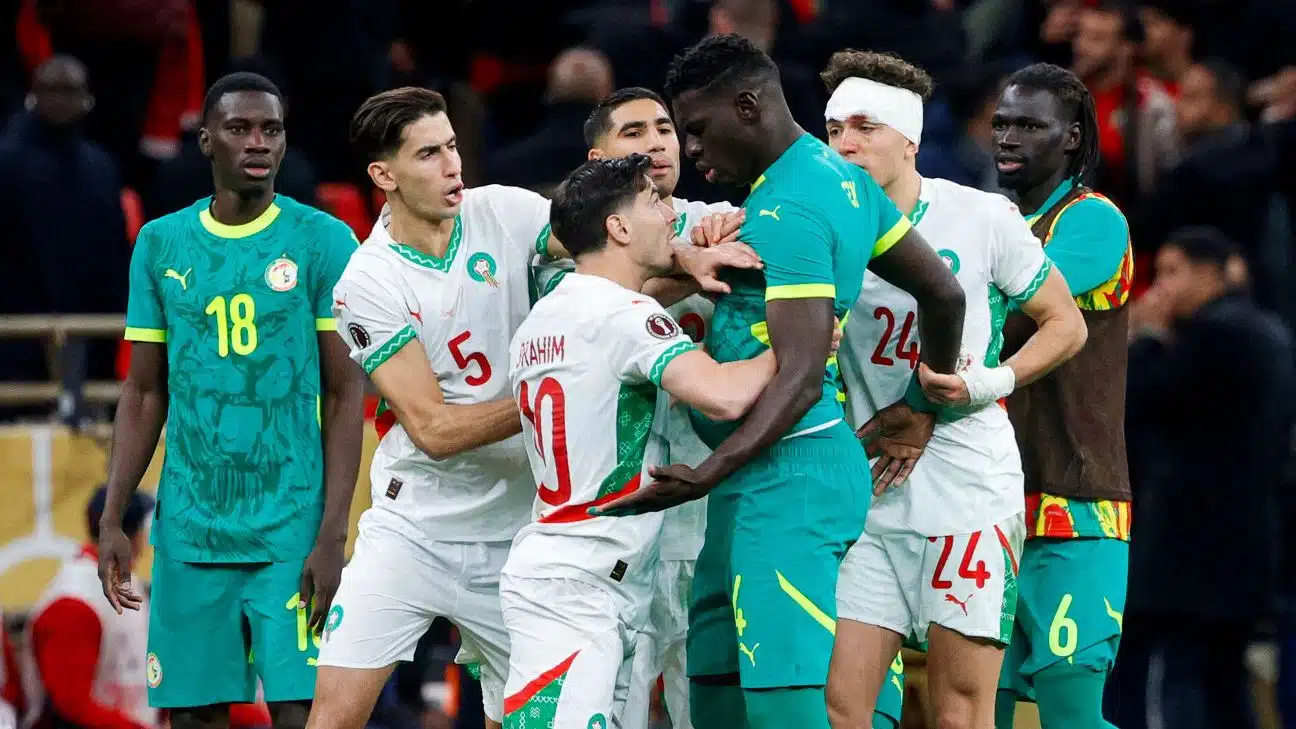
Senegal’s Africa Cup of Nations final victory over Morocco has come under intense scrutiny, with the Confederation of African Football examining the conduct of head coach Pape Thiaw and two senior players following incidents that disrupted the closing moments of the match.
CAF’s disciplinary committee held hearings on Tuesday, questioning Thiaw alongside internationals Ismaïla Sarr and Iliman Ndiaye. Officials from the Senegalese Football Federation were also summoned, including general secretary and legal adviser Seydou Diagne.
All parties now await potential sanctions as the governing body considers responsibility for the events that followed Senegal’s 1-0 win.
The hearings focused primarily on the controversial interruption near the end of the final, when Senegalese players temporarily left the pitch, forcing a halt in play.
CAF is seeking to determine whether the decision originated from the technical bench, individual players, or a combination of both.
Pape Thiaw has emerged as a central figure in the case. He is accused of encouraging his players to withdraw from the field, an allegation he rejected during the proceedings.
The coach maintained that his actions were motivated by concerns for player safety following incidents he deemed dangerous.
Beyond the on-field episode, CAF is also examining Thiaw’s remarks made before the final. His public criticism of the tournament’s organisation and a comparison involving Algeria have been viewed as particularly sensitive, especially by Moroccan officials, and are considered a significant aggravating factor in the case.
Players Ismaïla Sarr and Iliman Ndiaye are also under investigation for their alleged roles during the disruption. Their involvement could result in suspensions, as CAF appears determined to adopt a firm disciplinary stance.
Morocco has escalated the matter by formally requesting severe sanctions. The Moroccan Football Federation is seeking the stripping of Senegal’s continental title, a move widely regarded as unlikely under existing regulations.
It has also called for broader penalties, including possible exclusion from international competitions, a scenario that remains improbable under sports law.
Despite this, financial penalties and disciplinary measures are considered likely. Moroccan officials are pressing for what they believe should be strong consequences following a final played on home soil amid significant tension.
In Senegal, the reaction has been one of frustration and disbelief. Observers have questioned whether responsibility for organisational shortcomings will be shared, and whether individuals from the Moroccan side implicated in separate incidents will also face scrutiny.
Comparisons have been drawn with previous CAF sanctions, including heavy fines imposed on other nations for lesser infractions.
CAF is due to announce its verdict on Thursday. The decision is expected to resonate beyond the final itself, with the organisation’s credibility and consistency now firmly in the spotlight as African football awaits the outcome of one of its most contentious disciplinary cases.
-
 Ivorian star Yan Diomande eyes historic El Clasico milestone against Barcelona Oct 25, 2026
 -
Egypt star Mohamed Salah set for commercial project linked to Trabzon Oct 25, 2026
-
Colombe Sportive make history with maiden CAF Champions League group-stage qualification Oct 25, 2026
-
Kylian Mbappe to attend Ballon d’Or ceremony as Real Madrid star eyes historic triumph Oct 25, 2026


-
AFCON 2025: Fixtures, Results, Scores and Standings Jan 18, 2026
-
Match hero Taiwo Awoniyi reflects on team effort after Chelsea triumph May 5, 2026
-
Leadership and long-term vision key to rescuing Zamalek and inspiring Egyptian football – Hany Abou Rida Nov 5, 2025
-
South African giants Orlando Pirates set to lose influential forward Monnapule Saleng Mar 19, 2025




-
Barcelona v Real Madrid: Catalans backed at 1.65 to win October Clasico Oct 23, 2026
-
Barcelona and Real Madrid meet in pivotal 265th Clasico Oct 23, 2026
-
PSG v Barcelona: fiery attacks set up Champions League classic at Parc des Princes Oct 18, 2026
-
Champions League: PSG beat Barcelona as Liverpool complete comeback against Villarreal Oct 20, 2026