2030 World Cup final race intensifies as Barcelona, Madrid and Casablanca compete for centre stage
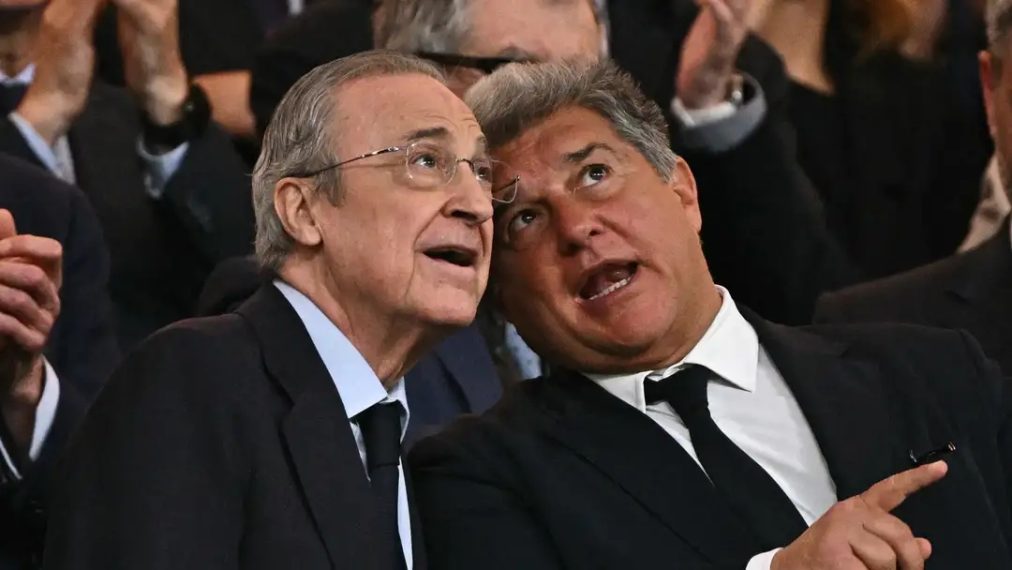
The battle to host the 2030 World Cup final has become a political and diplomatic contest between Barcelona, Madrid and Casablanca, with FIFA not expected to announce its preferred venue before 2028.
The three leading stadiums are Spotify Camp Nou in Barcelona, Santiago Bernabeu in Madrid and Hassan II Stadium in Casablanca. Spain, Portugal and Morocco submitted their joint bid in July 2024, naming all three as candidates to host both the opening match and the final.
The bid also included Malaga and La Coruna as tournament venues, but both cities later withdrew. San Sebastian and Bilbao have expressed doubts about taking part, while Valencia and Vigo are seeking to rejoin the proposal after initially being excluded.
FIFA is currently revisiting stadiums in all three countries before the final list of host venues is approved, a process expected to be completed during the first half of next year.
Over the past two weeks, FIFA officials have resumed their visits to Spanish cities, including inspections of Camp Nou and the Bernabeu. During a meeting with the Royal Spanish Football Federation, its president Rafael Louzan told representatives of FIFA president Gianni Infantino that he could not envisage the final being played outside Spain.
Spanish football authorities and political institutions have consistently acted over the past two years as though the final would be awarded to one of their cities. The Moroccan government also claimed several months ago that the decision had already been made in Casablanca’s favour, before withdrawing the statement following the controversy it caused.
It remains unclear which FIFA body will make the final decision. The organisation’s statutes state that the 37-member FIFA Council, whose members are selected by national associations, decides the dates and venues for matches at final tournaments. However, they do not explicitly clarify whether that authority includes choosing the venue for the final.
2026 decision offers little clarity
When FIFA announced in February 2024 that the 2026 World Cup final would be staged in New York and New Jersey rather than Dallas, the process provided no clear precedent.
FIFA competitions director Manuel Zubiria said the choice had been debated until roughly two days before the announcement, and possibly as late as the previous night. That suggested the FIFA Council may not have been responsible for the final decision. The prevailing belief is that Infantino made the choice with members of his inner circle.
The original Spain, Portugal and Morocco bid, led by the Spanish federation under former president Luis Rubiales, placed the Bernabeu ahead of the other options. Under Louzan, Camp Nou was elevated to an equal position, although the emphasis remained on ensuring the final was held in a Spanish city.
Spain’s government has not publicly backed either Barcelona or Madrid. In private negotiations with FIFA over the coming months, Spain and the Spanish federation are expected to settle on one candidate in an effort to prevent Casablanca from securing the match.
The choice could be influenced by the result of Spain’s general election. Although national associations formally submit tournament bids rather than governments, public institutions are essential to staging an event of this scale.
The Partido Popular has pledged in its election manifesto that Spain would not host the 2030 World Cup if the final were played at Hassan II Stadium. Louzan rejected that possibility, saying: “Spain has signed agreements with the other countries and with FIFA to organise this World Cup.”
Sumar, Podemos and Vox have also called for Spain to withdraw from the joint bid with Morocco, although parliament was dissolved before the proposal could be debated or put to a vote.
Infantino election could be significant
The FIFA presidential election in March may also affect the outcome. Javier Tebas, president of La Liga and vice-president of the Spanish federation, said: “If Infantino remains in office, Spain’s chances of hosting the 2030 World Cup final will be slim.”
Spain and Portugal have not joined the public opposition to Infantino expressed by most European associations and UEFA. Morocco, meanwhile, is regarded as one of the Swiss official’s closest allies.
Infantino has opened FIFA’s Africa office in Rabat and held a meeting there linked to a possible re-election as FIFA president.
-
 Samuel Eto’o hits back at Bill Tchato after Cameroon squad criticism Nov 14, 2026
-
Algeria face Togo in crucial 2027 Africa Cup of Nations qualifying clash Nov 14, 2026
-
Spain and England meet with Nations League top spot at stake in Madrid Nov 14, 2026
-
Mouine Chaabani demands Tunisia change after Libya defeat Nov 14, 2026


-
AFCON 2025: Fixtures, Results, Scores and Standings Jan 18, 2026
-
Match hero Taiwo Awoniyi reflects on team effort after Chelsea triumph May 5, 2026
-
Leadership and long-term vision key to rescuing Zamalek and inspiring Egyptian football – Hany Abou Rida Nov 5, 2025
-
South African giants Orlando Pirates set to lose influential forward Monnapule Saleng Mar 19, 2025




-
Ali Maher names first Egypt squad for 2027 Africa Cup of Nations qualifiers Nov 9, 2026
-
Morocco v Niger: Lions of the Atlas seek another win in CAN 2027 qualifying Nov 11, 2026
-
CAN 2027 qualifying: Cote d’Ivoire-Gambia and Mali-Rwanda headline third round Nov 9, 2026
-
FIFA U17 World Cup 2026: TV channels, streaming and full match schedule Nov 8, 2026