Zinedine Zidane’s France reshuffle: Michael Olise shines as Ousmane Dembele struggles
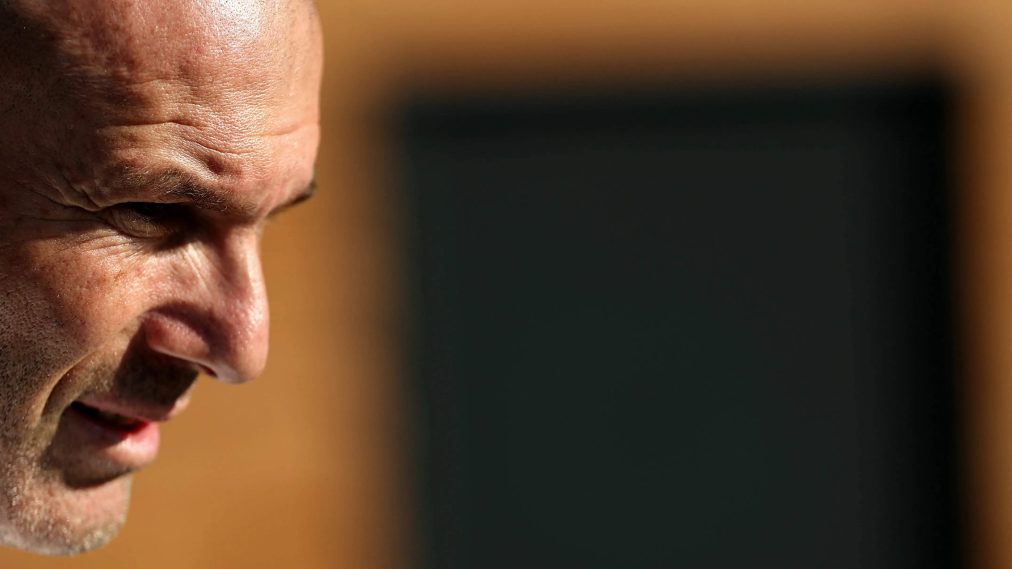
Four matches have given Zinedine Zidane an early opportunity to reshape France, with three wins, one draw and a 7-2 aggregate score providing a positive start to his tenure. More importantly, he used almost all of his 23 available players, emerging from the international camp with a clearer view of those who have strengthened their claims and those who now face a battle to remain central to his plans.
According to French outlet Foot Mercato, Zidane used more than two weeks of work to assess his squad. Only third-choice goalkeeper Jean Butez was not given a chance to play.
Olise leads the list of gains
Michael Olise was the standout performer, scoring four goals across the final three matches and establishing himself as one of the most decisive players of the new era.
His form strengthens the case for using him on the right of a 4-3-3 formation. Desire Doue also made a strong impression, excelling on the right wing against Belgium before scoring once and creating two goals in the following meeting with the Red Devils.
Rayan Cherki took time to adapt to his new role as an all-round midfielder, but rediscovered his best form against Belgium. That performance could persuade Zidane to use the experiment again.
Eduardo Camavinga returned impressively after missing the 2026 World Cup, while Lucas Da Cunha emerged as one of the period’s notable discoveries despite making an error against Italy.
There were also encouraging signs in defence. Jeremy Jacquet caught the eye with his physical strength and willingness to build play from the back, suggesting he could become a long-term option for France.
Leny Yoro took advantage of Ibrahima Konate’s late absence and delivered an impressive display in the final match, underlining his ability to compete for a starting place. Adrien Truffert was among the most consistent players at full-back, while Pierre Kalulu earned praise from the coaching staff for his energy, work-rate and tactical discipline.
Andy Diouf produced a number of good performances, although he still needs to provide further evidence of his ability at this level.
Dembele among those under pressure
The international break was less successful for Ousmane Dembele. Zidane’s intention to use the Paris Saint-Germain forward as a central striker was clear, but he failed to make the expected impact against Turkiye and Italy.
His influence did not improve significantly when he came on as a substitute against Belgium. Restored to the right wing in the fourth match, he again struggled to create space and missed chances, making him one of the main uncertainties in Zidane’s thinking.
Esteban Lepaul also found it difficult to display his technical ability at the highest level. Bradley Barcola lost ground in the contest for the left-wing position to Doue and Mbappe, while Maghnes Akliouche worked hard but lacked the boldness and finishing required in front of goal.
Mbappe could benefit
Kylian Mbappe may prove to be one of the indirect winners of the camp, despite playing only once, against Turkiye. He scored, but did not appear entirely comfortable on the left wing before leaving with an injury.
Neither Dembele nor Lepaul was able to take advantage of the central striking role in his absence. Doue, meanwhile, impressed from the wing and developed an understanding with Olise and Cherki.
That combination could allow Mbappe to return to his preferred position through the middle during the next international break in November. After four tests, Zidane’s emerging France appears to be built increasingly around Olise, Doue, Yoro and Jacquet, while Dembele, Barcola and Lepaul must work to regain their positions.
-
 Lamine Yamal backs Hamza Abdelkarim over Erling Haaland move Oct 6, 2026
 -
Ibrahim Maza overlooked for Golden Boy award despite Kopa Trophy nomination Oct 6, 2026
-
Burkina Faso claim four medals at African Laser Run Championship Oct 6, 2026
-
Argentina v Benin: How to watch Lionel Messi’s final Albiceleste appearance Oct 6, 2026




-
AFCON 2025: Fixtures, Results, Scores and Standings Jan 18, 2026
-
Match hero Taiwo Awoniyi reflects on team effort after Chelsea triumph May 5, 2026
-
Leadership and long-term vision key to rescuing Zamalek and inspiring Egyptian football – Hany Abou Rida Nov 5, 2025
-
South African giants Orlando Pirates set to lose influential forward Monnapule Saleng Mar 19, 2025




-
Denmark v Portugal: Nations League kick-off time, TV channel and match prediction Sep 29, 2026
-
France v Belgium: Probable line-ups for Nations League clash Oct 3, 2026
-
AFCON 2027 qualifiers: Manchester United injury crisis deepens as Noussair Mazraoui hobbles off in Morocco win Sep 30, 2026
-
Noussair Mazraoui leaves Morocco squad early after injury Oct 2, 2026