
World Cup may be decided in law firms if Senegal AFCON stripping stands – Counsel Crespo Perez
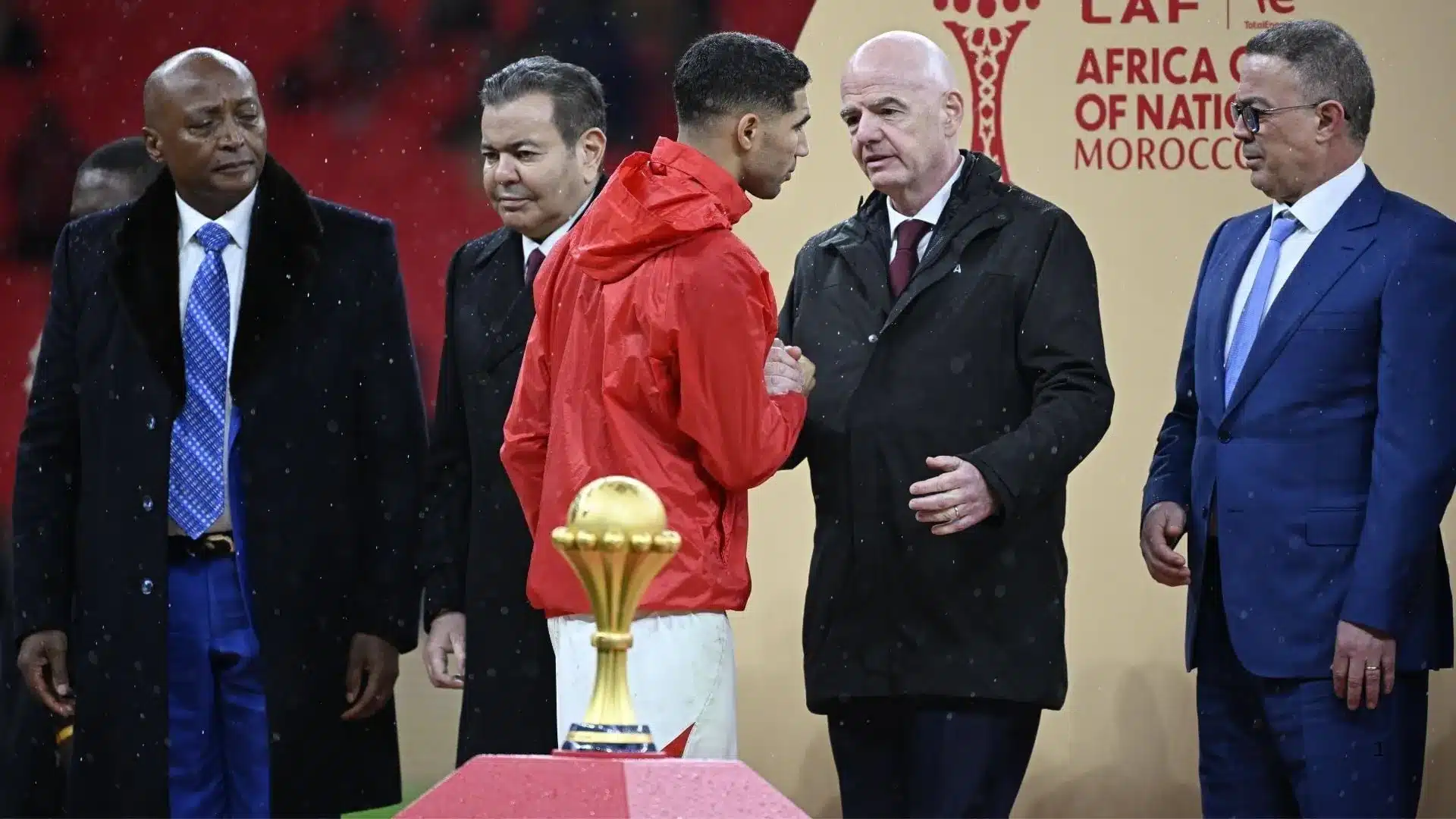
Lead counsel Juan de Dios Crespo Pérez launched a scathing critique of the Confederation of African Football (CAF), labeling the decision to strip Senegal of its 2025 Africa Cup of Nations (AFCON) title as a “crude” and “irrational” act that threatens the integrity of global football.
Speaking at a press conference in Dakar alongside officials from the Senegalese Football Federation (FSF), the Spanish sports lawyer argued that the ruling—which overturned Senegal’s 1–0 extra-time victory over Morocco—cannot be viewed as a legitimate exercise of sporting justice.
“This decision is so absurd and so irrational that it cannot even be considered a true sporting justice ruling,” Crespo Pérez told reporters.
“It openly violates the Laws of the Game and the foundational principle that refereeing decisions on the field are final.”
The legal battle stems from the AFCON final on January 18, 2026, where Senegalese players briefly left the pitch to protest a penalty awarded to Morocco.
Although the team returned and secured the win on the field, CAF’s appeals board later declared the match a forfeit, awarding Morocco a 3–0 victory.
Crespo Pérez warned that the ruling sets a “dangerous and chaotic” precedent for the sport. He argued that by allowing administrative boards to retroactively flip results based on match-day protests, the sport risks moving its final whistles from the stadium to the courtroom.
“If the Court of Arbitration for Sport (CAS) would rule against Senegal, the winners of the next World Cup could be decided in law firms rather than on the pitch,” he cautioned.
The FSF has officially filed its appeal with CAS, seeking an expedited hearing to reinstate the title.
FSF President Abdoulaye Fall echoed his lawyer’s sentiments, describing the forfeiture as “administrative robbery.”
As the case heads to Lausanne, the football world watches closely.
The final verdict is expected to clarify whether a team’s temporary protest can legally nullify a result achieved after play resumed, or if the “finality” of the pitch remains sacrosanct.
Popular News


-

AFCON 2025: Fixtures, Results, Scores and Standings
Jan 18, 2026 -

Leadership and long-term vision key to rescuing Zamalek and inspiring Egyptian football – Hany Abou Rida
Nov 5, 2025 -

South African giants Orlando Pirates set to lose influential forward Monnapule Saleng
Mar 19, 2025 -

Full schedule for 2025 Africa Cup of Nations in Morocco confirmed
Feb 12, 2025

-

Morocco vs Ecuador Friendly: Where and How to Watch
Mar 26, 2026 -

Morocco vs. Ecuador: Match details, key talking points and where to watch
Mar 27, 2026 -

Chile overturn deficit to defeat Cape Verde in FIFA Series clash
Mar 27, 2026 -

Where and how to watch Saudi Arabia vs Egypt friendly ahead of 2026 World Cup
Mar 26, 2026


