What can Morocco expect under Mohamed Ouahbi?
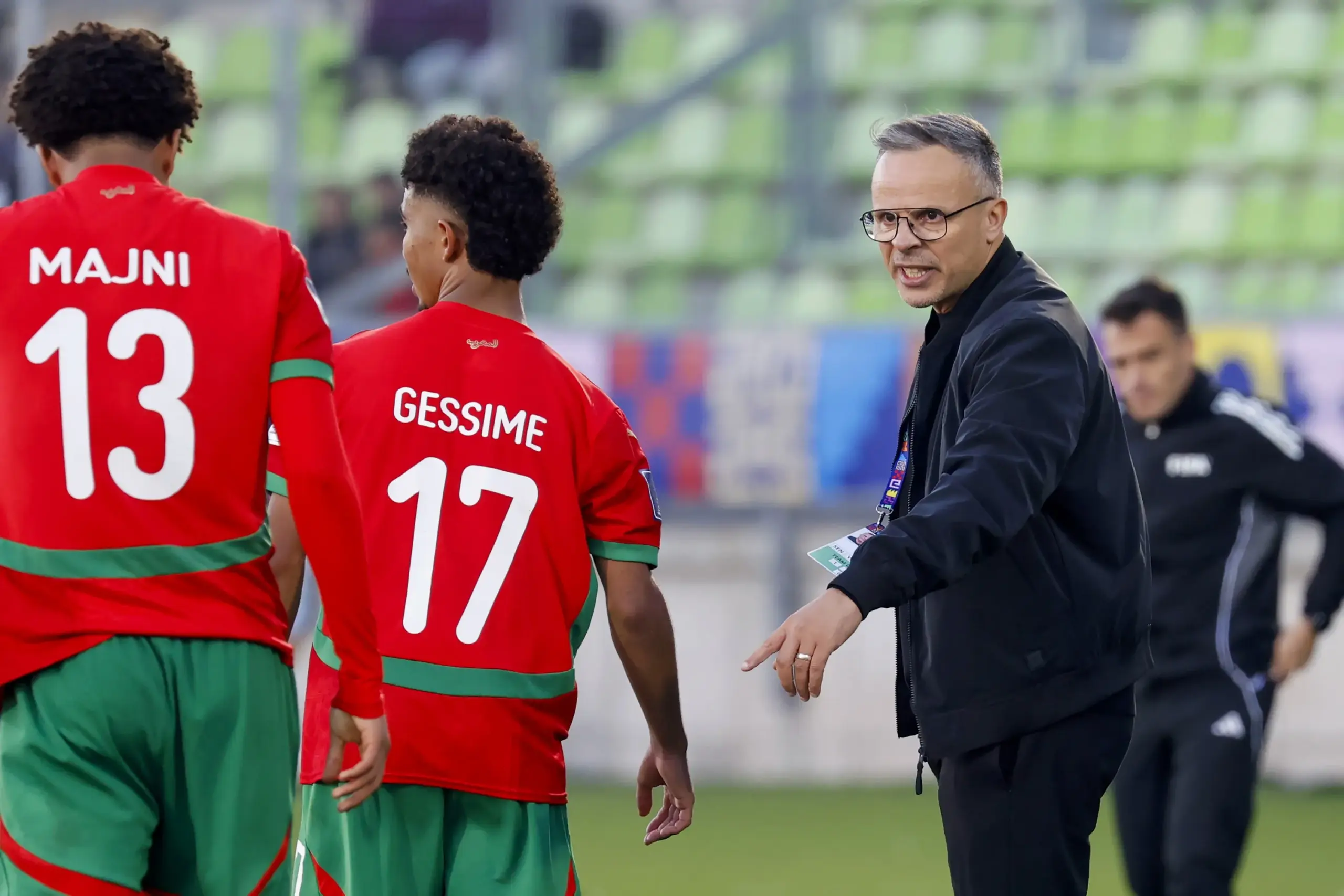
Mohamed Ouahbi is poised to usher in a new era for Morocco as he prepares to succeed Walid Regragui as head coach of the Atlas Lions ahead of the 2026 World Cup.
The Belgian-Moroccan coach arrives with a strong reputation in youth development, having won the U20 World Cup, and his anticipated appointment signals both continuity and potential change for the national side.
With friendly matches against Ecuador on 27 March and Paraguay three days later set to offer early indications of his approach, attention has already turned to what his leadership could mean.
A shift in style, not a revolution
Ouahbi is known for favouring a high-tempo, high-intensity brand of football built on tactical flexibility. Comfortable deploying formations such as 3-4-3 and 4-3-3, he has also shown adaptability by using a 4-2-3-1 system with Morocco’s U20 team.
While Regragui often leaned towards a 4-3-3, the incoming coach’s approach is viewed as more direct and rhythm-driven.
Rather than a complete overhaul, the change is expected to be subtle. With the World Cup just four months away, drastic tactical shifts appear unlikely.
Maintaining a degree of continuity may prove essential to preserving established patterns and cohesion within the squad.
Opportunities for emerging talent
Ouahbi’s background in youth football naturally raises questions about the role of younger players. Unlike perceptions that surrounded Regragui’s later tenure, Ouahbi is closely associated with nurturing emerging prospects.
Names such as Othmane Maamma and Yassir Zabiri have already surfaced in discussions. However, stepping into senior international management brings new demands.
Experience, hierarchy and competitive pressure will shape selection decisions, particularly with a major tournament approaching.
Players he has previously worked with could benefit if their club performances warrant inclusion. Abdelhamid Aït Boudlal may see an opening following Romain Saïss’s international retirement, while midfielder Samir El Mourabet’s displays with Strasbourg have strengthened his case.
An advantage with dual nationals?
Morocco’s recent success in attracting dual-national players could also receive a boost. Ouahbi reportedly played an influential role in Chemsdine Talbi’s decision to represent Morocco over Belgium, highlighting his persuasive impact at youth level.
As the Atlas Lions prepare for a pivotal year, Ouahbi’s appointment represents both trust in his developmental credentials and a calculated step towards refining the national team’s identity on the eve of the 2026 World Cup.
Popular News


-
AFCON 2025: Fixtures, Results, Scores and Standings
Jan 18, 2026 -

Leadership and long-term vision key to rescuing Zamalek and inspiring Egyptian football – Hany Abou Rida
Nov 5, 2025 -

South African giants Orlando Pirates set to lose influential forward Monnapule Saleng
Mar 19, 2025 -

Full schedule for 2025 Africa Cup of Nations in Morocco confirmed
Feb 12, 2025