
Vladimir Petkovic defends record in talks with Walid Sadi after Algeria’s World Cup qualifiers
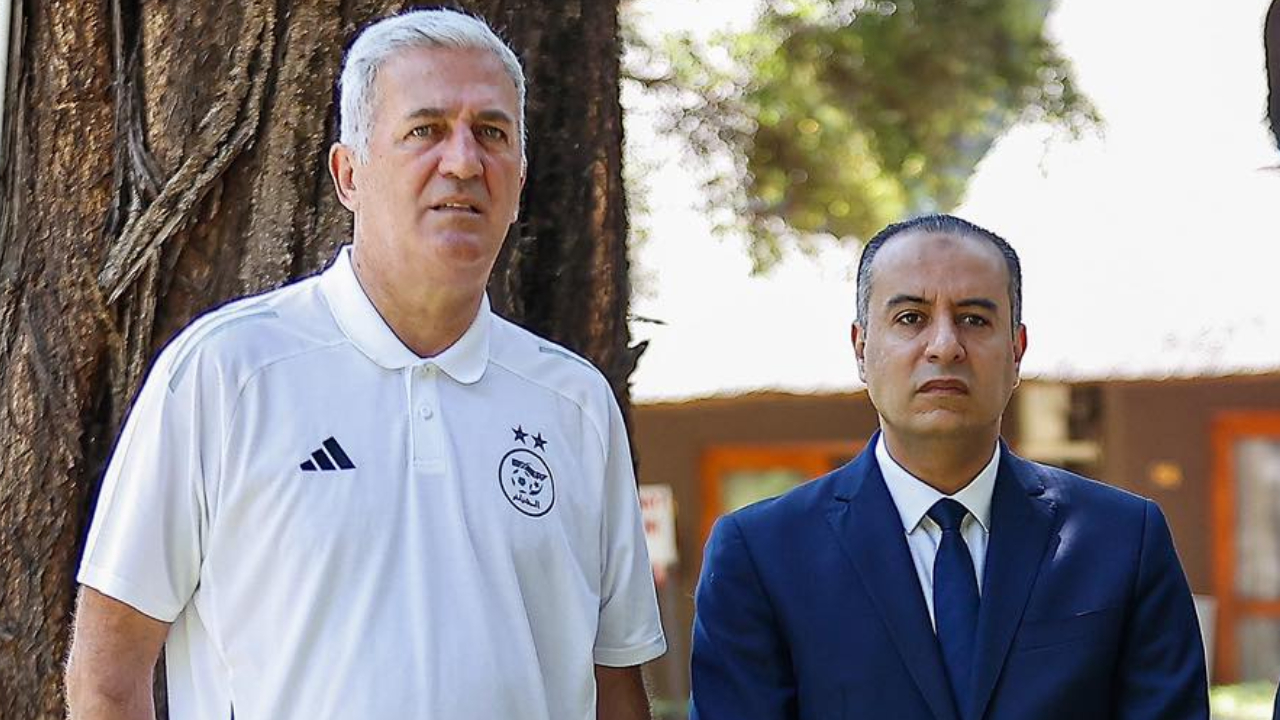
Vladimir Petkovic met Algerian Football Federation president Walid Sadi for more than two hours following the national team’s matches against Botswana and Guinea, as scrutiny over his methods continues to grow.
The Bosnian coach, who depends on his assistant to translate his remarks, has remained fully aware of the criticism surrounding him in recent weeks.
Algeria’s performances in the September qualifiers, part of the seventh and eighth rounds of the 2026 World Cup campaign, have left many observers unconvinced despite the results achieved.
In the discussions, Petkovic made clear that he was puzzled by the hostile reaction to his management.
Rather than dwelling on the team’s flat performances or his contentious tactical decisions, he expressed surprise at the tone of public opinion.
For him, the focus remains on what he considers the central measure of his success—guiding Algeria to the World Cup.
Petkovic reportedly told Sadi that he did not understand why criticism had intensified when the team had collected the necessary points and remained firmly on course for qualification.
He emphasised that his mandate was to deliver a ticket to the tournament and insisted he was fulfilling that objective.
For the coach, the manner of victory or the style of play is a secondary matter. He does not appear unsettled by the growing discontent among supporters, convinced that results alone validate his approach.
Petkovic views Algeria’s progress as proof that he is meeting his contractual obligations, regardless of external opinion.
However, the issue extends beyond mere qualification. With the Africa Cup of Nations set to begin in less than three months, expectations are considerably higher.
While advancing to the World Cup remains the priority, success in continental competition is equally essential for supporters and officials alike.
Petkovic’s stance, therefore, risks appearing dismissive of the concerns voiced by Algerian fans, many of whom feel performances have been underwhelming and decision-making questionable.
The sense of frustration lies not only in the team’s lack of fluency but also in what critics view as a rigid and unconvincing tactical setup.
Sadi listened carefully during the post-match exchange, which highlighted the tension between a coach defending his record and a leadership keenly aware of the mood among supporters.
The conversation reflected the delicate balance between short-term results and long-term ambitions.
The Greens’ passage to the World Cup may still be well within reach, yet the looming AFCON offers little room for error. For Petkovic, qualification alone will not shield him from scrutiny should
Algeria falter on the continental stage. The dialogue with Sadi served as a reminder that while the mission may be clear, the expectations are far broader than a simple tally of wins and points.
At present, Petkovic remains focused on completing the task he was brought in to deliver. But as pressure mounts ahead of the AFCON, results will not be the only factor determining his future.
Style, conviction, and the ability to inspire both players and supporters may ultimately prove just as decisive.
Popular News


-
AFCON 2025: Fixtures, Results, Scores and Standings
Jan 18, 2026 -

Leadership and long-term vision key to rescuing Zamalek and inspiring Egyptian football – Hany Abou Rida
Nov 5, 2025 -

South African giants Orlando Pirates set to lose influential forward Monnapule Saleng
Mar 19, 2025 -

Full schedule for 2025 Africa Cup of Nations in Morocco confirmed
Feb 12, 2025
-

PSG youngster Senny Mayulu switches allegiance to DR Congo as World Cup dream beckons
Apr 5, 2026 -
Seven Eritrea players reported missing in South Africa after AFCON qualification
Apr 5, 2026 -
Algeria face crucial Egypt clash as Morocco meet Libya in U17 AFCON qualifiers
Apr 4, 2026 -
Kylian Mbappé reveals Algeria vs Cameroon choice if he hadn’t played for France
Apr 3, 2026
