Seven Eritrean players seek asylum in Eswatini after AFCON qualifier
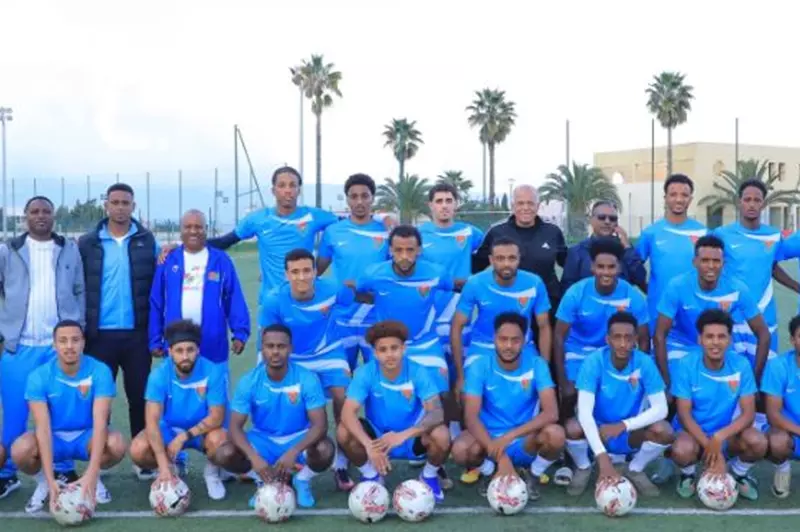
A major controversy has rocked African football after several members of the Eritrea refused to return home following an Africa Cup of Nations qualifier, choosing instead to remain in Eswatini and seek asylum.
The incident unfolded after Eritrea’s match against Eswatini in the preliminary round of the 2027 AFCON qualifiers, where the team secured a victory—only for part of the squad to disappear shortly after.
As confirmed by Eritrea’s head coach Hisham Yekan, seven players and officials vanished from the team’s camp following the match, sparking immediate concern among football authorities.
Only three out of ten locally based players returned to Eritrea as scheduled, while the rest remained behind in Eswatini.
Authorities in Eswatini have confirmed that the individuals in question have taken steps toward seeking asylum.
Police spokesperson Nosebo Mengoni disclosed that three players and four officials presented themselves at a police station in Lobamba shortly after the match.
“Going to the police is the first step for anyone seeking asylum,” she explained, confirming that the case is now being handled through official channels.
Additionally, a representative from the United Nations High Commissioner for Refugees confirmed that written asylum applications from seven Eritrean nationals have already been received.
The group is reportedly staying at a sports facility in Lobamba, located about 15 kilometers from the capital, Mbabane, as their applications are processed.
Their situation remains under close watch from both local authorities and international organizations.
This is not an isolated incident. Eritrean football has faced similar situations in the past, with players repeatedly fleeing during international assignments.
In 2019, members of the Eritrean U-20 team sought refuge in Uganda under similar circumstances. Even earlier, in 2015, ten senior national team players refused to return home after a World Cup qualifying match in Botswana.
Following such incidents, Eritrea had at one point restricted international travel for its national teams.
The latest episode raises serious questions about player welfare, governance, and the broader socio-political challenges affecting football in certain regions.
It also places the spotlight on tournament organizers and governing bodies, including the Confederation of African Football, as they navigate the complex intersection between sport and humanitarian issues.
For now, what began as a routine AFCON qualifier has turned into a deeply significant story—one that extends far beyond football and into matters of personal freedom and human rights.

Popular News
-

-

Arba Minch Kenema 2–2 Kedus Giorgis: Late Drama as Points Shared in Ethiopia Premier League Thriller
Apr 13, 2026 -

Ghanaian football mourn tragic death of forward Dominic Frimpong after robbery attack
Apr 13, 2026 -

Maghreb Fez players deserve a place in Morocco squad for World Cup – Pablo Franco
Apr 13, 2026



-

AFCON 2025: Fixtures, Results, Scores and Standings
Jan 18, 2026 -

Leadership and long-term vision key to rescuing Zamalek and inspiring Egyptian football – Hany Abou Rida
Nov 5, 2025 -

South African giants Orlando Pirates set to lose influential forward Monnapule Saleng
Mar 19, 2025 -

Full schedule for 2025 Africa Cup of Nations in Morocco confirmed
Feb 12, 2025

-

2025/26 CAF Confederation Cup: Fixtures, Results, Tables and Standings
Apr 11, 2026 -

2025/26 CAF Champions League: Fixtures, Results, Tables and Standings
Apr 12, 2026 -
FIFA president Gianni Infantino set for key trip to Algeria
Apr 7, 2026 -

CAF Champions league: How to secure tickets for AS FAR vs RS Berkane clash
Apr 7, 2026