
Serhou Guirassy and Ramy Bensebaini clash over penalty in Dortmund’s 4-4 thriller against Juventus
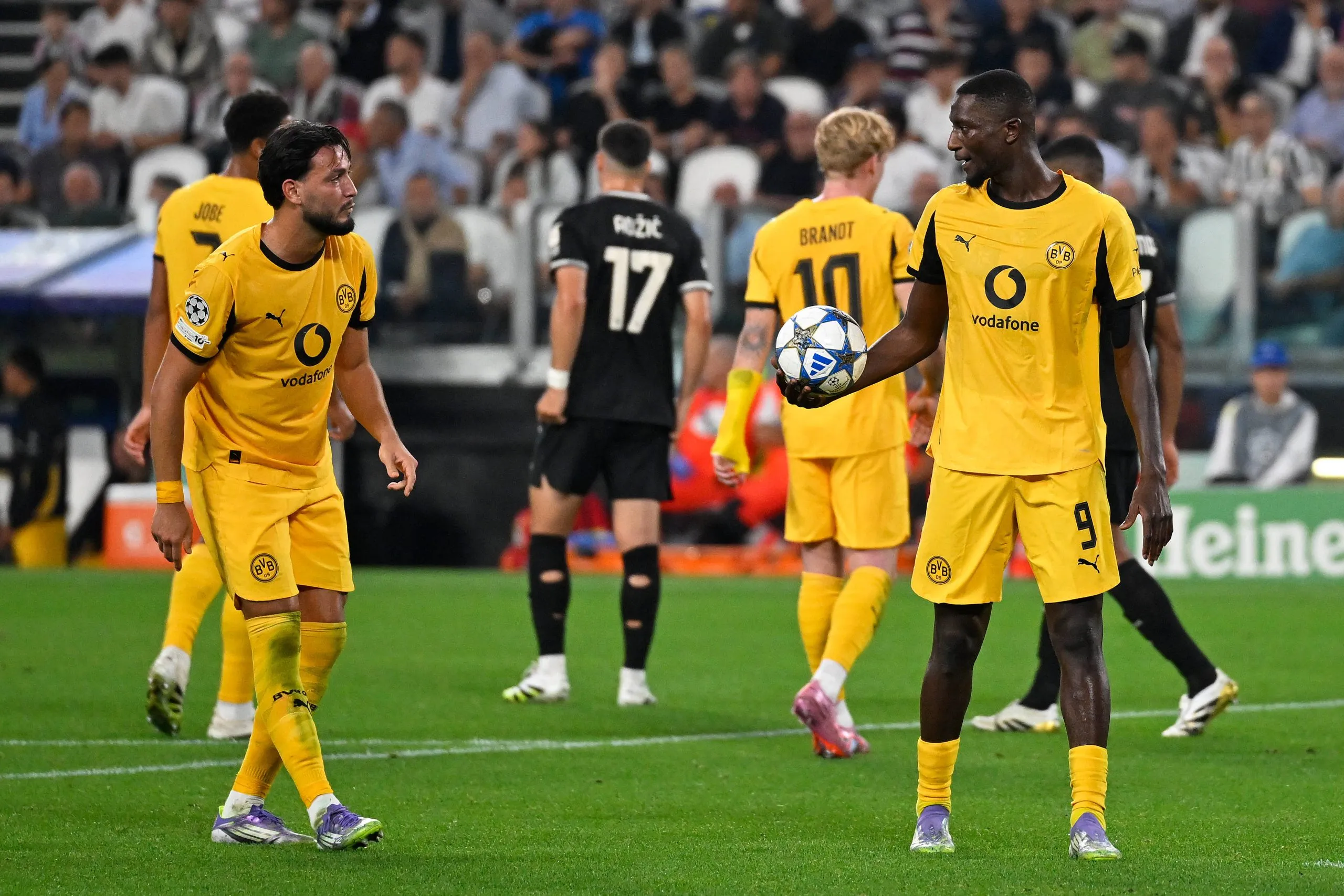
Borussia Dortmund’s Champions League opener against Juventus ended in a dramatic 4-4 draw, but the footballing spectacle was momentarily overshadowed by a heated dispute between Serhou Guirassy and Ramy Bensebaini over penalty-taking duties.
The clash occurred midway through the encounter when Dortmund were awarded a spot-kick, sparking an animated exchange between the two players.
Guinean striker Guirassy, who had won the penalty himself, was eager to step up and convert. Algerian defender Bensebaini, however, insisted on his role as the designated taker, leading to visible tension on the pitch.
Despite the brief confrontation, the incident quickly subsided, though it reignited debate over the team’s penalty-taking hierarchy.
Both players had strong claims: Guirassy boasts a record of 28 successful conversions from 34 attempts, while Bensebaini has been flawless in his career, scoring all 11 penalties taken to date.
It was this perfect record that convinced head coach Niko Kovac to formally assign penalty duties to Bensebaini this season.
Nonetheless, in the heat of the moment, Guirassy’s attacking instincts and determination to get on the scoresheet led him to push for the chance.
Eyewitnesses reported that Bensebaini, visibly frustrated, even tossed the ball aside before walking away from the spot.
Teammates Julian Brandt and Karim Adeyemi were quick to intervene, urging Guirassy to respect the established order.
Eventually, Bensebaini stepped forward to take responsibility and calmly converted, sparking relief and celebration among the Dortmund players.
Kovac addressed the matter firmly after the match, moving to dispel any suggestion of internal discord.
“There is a clear hierarchy, and Ramy is the penalty taker,” he told reporters. “Serhou wanted to score, which is natural for a striker, but the incident is over.
The only thing that matters is that the goal was scored.”
The same message was echoed by sporting director Sebastian Kehl, who stressed the importance of collective unity above individual ambition.
“Once the penalty goes in, the problem doesn’t exist anymore,” Kehl said, signalling that the club would not allow the matter to develop further.
On social media, however, the row sparked widespread debate. Fans in Guinea voiced disappointment at Bensebaini’s insistence on taking the penalty, criticising what they saw as stubbornness.
Others argued that Guirassy, as one of Europe’s most prolific strikers in the Champions League last season, had earned the right to take the opportunity.
Ultimately, the two players were quick to put the disagreement behind them. They embraced during the post-goal celebrations, sending a reassuring signal to the Dortmund faithful that harmony within the squad remained intact.
The gesture was widely welcomed, particularly given football’s history of penalty disputes leaving lasting scars, such as Ademola Lookman’s high-profile miss during his time at Atalanta.
For Dortmund, the incident was a brief distraction from what was otherwise an enthralling encounter. A chaotic match full of goals, momentum swings, and defensive lapses, it provided an early reminder of the unpredictability of this season’s Champions League campaign.
And while the penalty drama may have dominated headlines, the club’s swift response ensured the focus returned to the football itself.
As former captain voices around the club pointed out, in the end, all is well when the ball finds the net.
Voici une vidéo à vue d’oiseau où nous voyons bien Ramy Bensebaini tenir le ballon & vouloir à tout prix tirer le penalty, jusqu’a le jeter aux pieds de #Guirassy.
Vraiment dommage…. pic.twitter.com/PRfIMUsbCi
— Syli National de Guinée FR 🇬🇳 (@sylinational_FR) September 16, 2025
Popular News
-

-
‘No one knows’ – Mohamed Salah camp cools transfer speculation after Liverpool decision
Mar 25, 2026 -

FEATURE: From Senegalese roots to Tyneside Royalty: Malick Thiaw’s unshakable Premier League dream
Mar 25, 2026 -

Al Ahly sacked Pitso Mosimane after failing to defend CAF Champions League title
Mar 25, 2026
-
AFCON 2025: Fixtures, Results, Scores and Standings
Jan 18, 2026 -

Leadership and long-term vision key to rescuing Zamalek and inspiring Egyptian football – Hany Abou Rida
Nov 5, 2025 -

South African giants Orlando Pirates set to lose influential forward Monnapule Saleng
Mar 19, 2025 -

Full schedule for 2025 Africa Cup of Nations in Morocco confirmed
Feb 12, 2025
-
2025/26 CAF Confederation Cup: Fixtures, Results, Tables and Standings
Mar 21, 2026 -

2025/26 CAF Champions League: Fixtures, Results, Tables and Standings
Mar 21, 2026 -

Guinea seeks review of 1976 AFCON title after CAF’s decision to strip Senegal of title
Mar 20, 2026 -
Wayne Rooney labels South Africa 2010 ‘worst World Cup’ in history
Mar 19, 2026