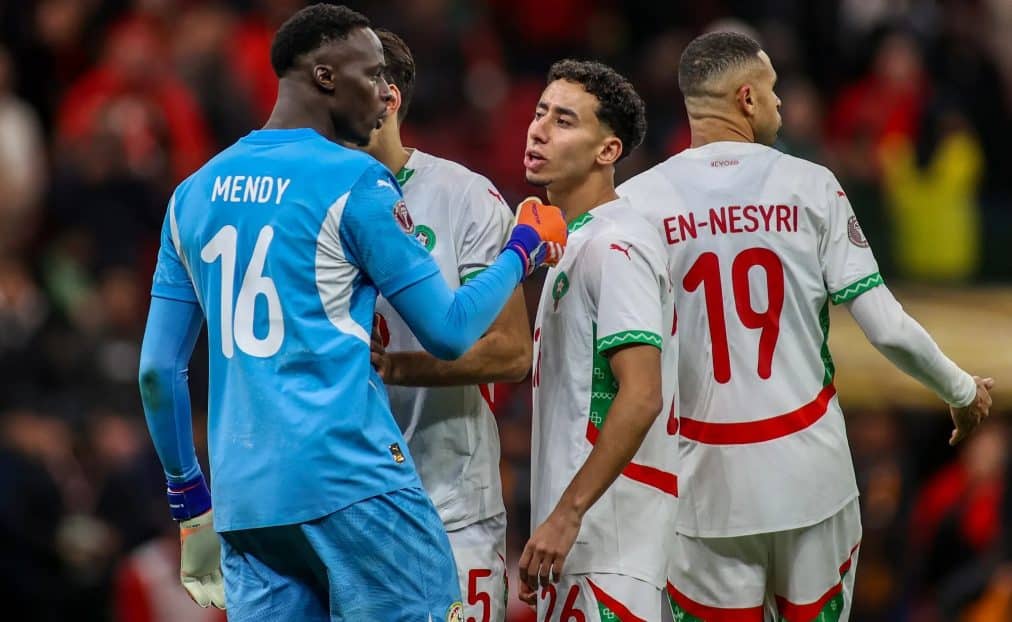
The public dispute between Senegal and Morocco has intensified while the Tribunal arbitral du sport (TAS) prepares a fully reasoned ruling on the controversy surrounding the final of the CAN 2025.
The TAS said its arbitrators had begun their deliberations after hearing representatives of the Federation senegalaise de football (FSF), the Federation royale marocaine de football (FRMF) and the Confederation africaine de football (CAF) on 8 October.
In a statement issued on 19 October, the sports tribunal said the panel had started considering the case. However, it added that the arbitrators wanted to deliver a complete decision, including the legal reasoning behind it.
“Because the arbitrators wish to issue a complete award including legal reasoning, this process will take several weeks and the TAS ruling is expected at the end of November 2026,” the tribunal said.
The wait for that verdict has prompted a fresh exchange between Moroccan and Senegalese voices on X, with the focus turning to the reasons that will accompany the TAS decision.
The latest dispute began with a post by Moroccan journalist Izem Anass. He claimed that the arbitrators had already reached their decision several days earlier, and that the additional time announced by the TAS was only being used to “clarify the decision and its clauses”.
From that, he concluded that “an appeal after the publication of the decision (…) will change nothing and will not be accepted”.
Senegalese commentator Malang Sane rejected the claim, describing it as containing several “inconsistencies”. He argued that the TAS is the highest authority in sport and that its ruling cannot be appealed.
For that reason, he said, the tribunal would have no need to search for grounds on which to prevent a possible appeal.
Sane also argued that the reasoning is an essential part of any judicial decision. In his view, judges are legally required to set out in writing the factual and legal grounds on which their ruling is based.
Those reasons, he maintained, are therefore not optional. He concluded that the TAS process is no exception, reigniting the public argument as the tribunal’s final ruling approaches.
The TAS has nevertheless issued a reminder about the source of authoritative information concerning the case. “Only information communicated through its channels is considered official,” it said.
The tribunal’s decision is now expected at the end of November 2026, following the completion of deliberations and the preparation of the full legal explanation.
-
 Senegal-Morocco dispute intensifies as TAS delays full CAN 2025 verdict Oct 21, 2026
-
Osimhen scores against Lille but pays tribute to former club in Galatasaray win Oct 21, 2026
-
Eto’o leads African Champions League assists chart as Salah and Hakimi close in Oct 21, 2026
-
Paul Pogba teases potential career announcement with cryptic social media post Oct 21, 2026




-
AFCON 2025: Fixtures, Results, Scores and Standings Jan 18, 2026
-
Match hero Taiwo Awoniyi reflects on team effort after Chelsea triumph May 5, 2026
-
Leadership and long-term vision key to rescuing Zamalek and inspiring Egyptian football – Hany Abou Rida Nov 5, 2025
-
South African giants Orlando Pirates set to lose influential forward Monnapule Saleng Mar 19, 2025




-
PSG v Barcelona: fiery attacks set up Champions League classic at Parc des Princes Oct 18, 2026
-
Champions League: PSG beat Barcelona as Liverpool complete comeback against Villarreal Oct 20, 2026
-
Real Betis v Barcelona: kick-off time, TV details and match preview Oct 16, 2026
-
PSG beat Barcelona 4-2 in Champions League thriller Oct 21, 2026