On Thursday, 8 October, the Court of Arbitration for Sport (CAS) will hear two opposing interpretations of the 2025 Africa Cup of Nations final, with Morocco relying on Articles 82 and 84 of the competition regulations and Senegal arguing that a result completed on the pitch cannot be overturned retrospectively.
The closed-door hearing centres on Senegal’s temporary withdrawal from the final in protest at the refereeing, their return to the field and referee Jean-Jacques Ndala’s decision to restart and complete the match. Senegal won 1-0 after extra time, but that result was later overturned by the CAF Appeals Committee.
Both sides believe the regulations support their case.
Senegal’s Football Federation (FSF) is expected to place IFAB Law 5 at the heart of its defence. That law establishes the referee’s authority over incidents during a match and says the referee’s decisions on facts connected with play are final.
Senegal will argue that Ndala allowed the team to return, resumed the game and blew the final whistle. Sports lawyer Pius Ndubuokwu told SABC: “They returned, the match continued and the referee blew the final whistle. The CAF Appeals Committee therefore does not have the power to overturn that decision.”
Spanish lawyer Juan de Dios Crespo-Perez, who represents Senegal, said the case could have consequences well beyond this final. Announcing the appeal to CAS in March, he said: “For a match that has finished to be refereed again is unprecedented. It could change the world of football.”
He added that the dispute was not only about “the dignity of African football”, but “all football”.
Senegal could also point to the hierarchy of CAF’s disciplinary regulations and the absence of a specific provision covering a team that leaves the field temporarily before returning to complete a match. Its lawyers are expected to distinguish the incident from cases where a team definitively refused to resume play, including the 2019 African Champions League second-leg final between Esperance Tunis and Wydad Casablanca.
Morocco’s case is based on a literal reading of Articles 82 and 84. They state that a team which refuses to play or leaves the field before the end of a match without the referee’s permission is deemed to have lost and may be eliminated, with a 3-0 defeat recorded.
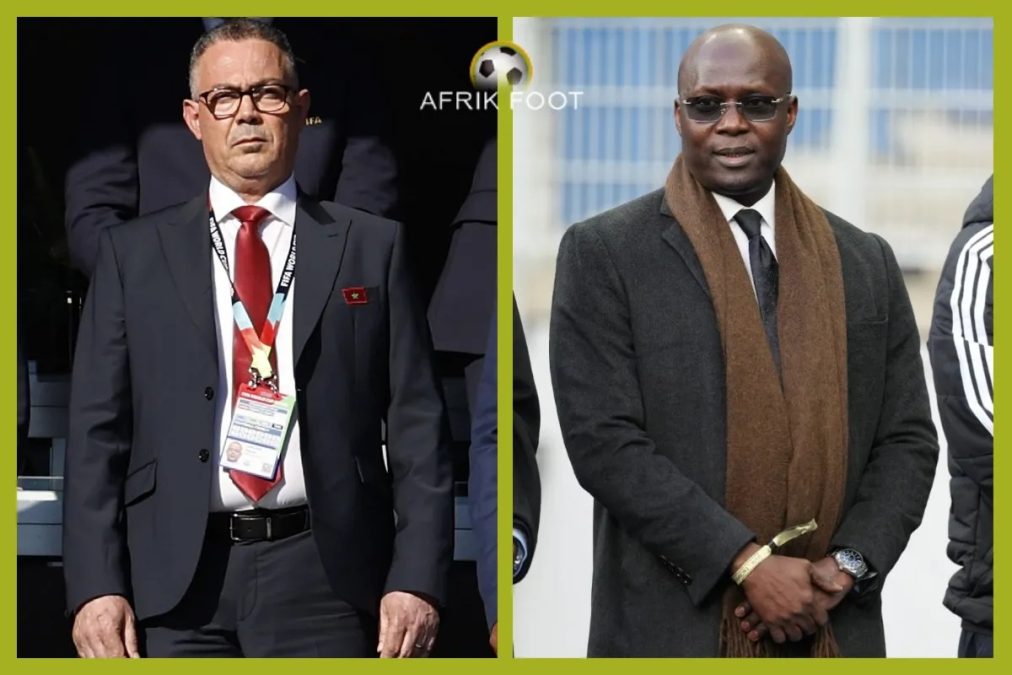
Fouzi Lekjaa, president of the Royal Moroccan Football Federation (FRMF), defended that legal interpretation in an interview with Jeune Afrique. “We believe that the rules of football, the legal rules of a football match, were obstructed and violated by our opponent,” he said.
“Football cannot have pauses of 15, 20 or 30 minutes in a match. That is not football, it has never been football and it will never be football.”
Morocco can also argue that Senegal’s departure was more than symbolic: at one stage, only three Senegal players remained on the pitch, while the Laws of the Game require at least seven players for a match to continue. Its position is that the offence had already been committed before the players returned.
CAS must now weigh the regulations against proportionality and the integrity of the sporting result. The match resumed, reached its conclusion and produced a winner. The tribunal will decide whether removing the title is proportionate, or whether lesser individual disciplinary sanctions should apply.
-
 Senegal and Morocco take Africa Cup of Nations final dispute to CAS Oct 8, 2026
 -
Africa football news: Roma Wilfried Seahet joins Vendsyssel FF as Kabaka attracts interest Oct 8, 2026
-
Mbatha says every Orlando Pirates player must shoulder MTN8 final pressure Oct 8, 2026
-
Miguel Cardoso commits future to Mamelodi Sundowns with new contract Oct 8, 2026




-
AFCON 2025: Fixtures, Results, Scores and Standings Jan 18, 2026
-
Match hero Taiwo Awoniyi reflects on team effort after Chelsea triumph May 5, 2026
-
Leadership and long-term vision key to rescuing Zamalek and inspiring Egyptian football – Hany Abou Rida Nov 5, 2025
-
South African giants Orlando Pirates set to lose influential forward Monnapule Saleng Mar 19, 2025




-
Croatia face Spain with Nations League hopes on the line in Split Oct 5, 2026
-
France v Belgium: Probable line-ups for Nations League clash Oct 3, 2026
-
Morocco coach Mohamed Ouahbi refuses to single out player after Mali draw Oct 4, 2026
-
Noussair Mazraoui leaves Morocco squad early after injury Oct 2, 2026