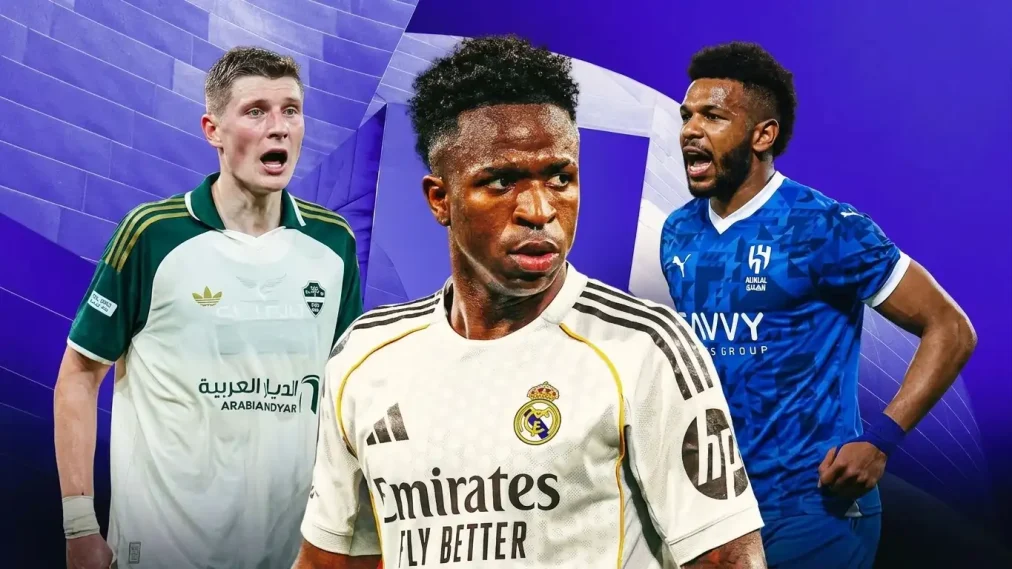
Artem Bondarenko was subjected to sustained booing by Al Ahli supporters throughout their 5-0 win over Al Riyadh, highlighting the growing influence of fan dissent in the Roshn Saudi League.
The Ukraine midfielder, who recently joined Al Ahli from Shakhtar Donetsk, endured the hostile reception during Friday evening’s match at Prince Abdullah Al Faisal Sports City Stadium in the fifth round of the competition.
The jeers began at kick-off and continued until the final whistle, despite Al Ahli recording a comprehensive victory. Bondarenko’s treatment followed an earlier campaign by supporters to prevent the club from signing him, with fans arguing that the team needed a higher-quality midfielder.
Al Ahli ultimately went ahead with the transfer, a decision that angered supporters and increased criticism of former Portuguese sporting director Rui Pedro Braz. He left his position on Thursday, one day before the match.
The reaction to Bondarenko also caused frustration within Al Ahli’s squad. Brazil defender Roger Ibanez, Senegal goalkeeper Edouard Mendy and England striker Ivan Toney were among those unhappy with the crowd’s behaviour, while Dutch manager Marino Pusic also objected.
Club legend Hussein Abdulghani was among those to call for supporters to back any player wearing the Al Ahli shirt, arguing that encouragement would give the team the best chance of getting the most from its players.
Booing players at their own stadiums is common across world football, but the practice is particularly associated with Santiago Bernabeu, the home of Real Madrid.
Last season provided a striking example. Real Madrid failed to win a trophy and endured a difficult run of results, prompting supporters to target their own players both collectively and individually.
Vinicius Junior was one of the principal targets, while France internationals Kylian Mbappe and Aurelien Tchouameni were also booed. Real Madrid president Florentino Perez expressed his anger at the reaction, describing it as illogical and urging the supporters to stop. The criticism had also been directed at Perez personally.
The same pattern has appeared in Saudi football in recent years, although it was previously unusual in the country’s league.
Ali Al-Bulaihi, now with Al Shabab, was one of the first prominent examples. He faced jeers while playing for Al Hilal at the start of last year, during a period when the club’s results declined under manager Jorge Jesus and the defender was not performing at his best.
Al-Bulaihi had been with Al Hilal for eight years and was one of the team’s leaders, but that status did not protect him from the crowd’s anger. Supporters booed him in several matches, leading Jesus and former Al Hilal captain Sami Al-Jaber to ask the fans to stop and support the players instead.
The issue resurfaced at Al Nassr at the start of last season, again with Jesus involved after he had taken charge of the club.
This time, the target was Saudi defender Abdulelah Al-Amri. Supporters were angry because of his determination to leave for Saudi rivals Al-Ittihad before the beginning of the campaign. Their frustration intensified when Al-Amri refused to celebrate goals scored by the team, appearing to signal his reluctance to remain at the club.
Al-Nassr fans responded by booing him, prompting a strong reaction from Jesus. The manager turned towards the crowd and demanded that the behaviour end, and the jeers subsequently stopped.
Al-Amri’s relationship with the supporters changed dramatically. He began the season as a target of their anger but later became one of the team’s leaders and a popular figure after showing commitment to the shirt. He also helped Al Nassr win the Roshn Saudi League title.
The cases of Al-Bulaihi and Al-Amri suggest that the boos were not simply a response to poor performances. Al Hilal supporters only turned on Al-Bulaihi after a run of serious mistakes that contributed to several goals conceded by the team.
During that period, fans launched campaigns calling for Hassan Al-Tambakti to start alongside Kalidou Koulibaly instead of Al-Bulaihi, particularly after Al-Tambakti impressed in limited appearances. Jesus initially ignored those demands, but the continued errors eventually led supporters to use booing as a means of pressuring the manager to change his decision.
The same applied to Al-Amri. The hostility intensified after supporters believed he was refusing to celebrate with the team and showing that he did not want to represent them. Once he changed his stance and apologised to the Al Nassr fans, the tension eased. He later became one of the club’s most influential players.
Bondarenko, however, was not responsible for the dispute surrounding his arrival. Like the earlier cases, the central issue was the feeling among supporters that their views had been ignored.
Al Ahli’s management pressed ahead with the signing despite the opposition, leaving fans with few ways to express their anger. Bondarenko consequently became the visible victim of a conflict in which he had played no part.
-
 Football betting tips: Kane, Haaland and PSG corners among Saturday’s best picks Oct 17, 2026
 -
Ghana appoint Kim Lars Björkegren to lead Black Stars interim technical team Oct 17, 2026
-
Ghana’s Black Starlets secure top spot after powerful unbeaten run at WAFU B U17 Championship Oct 17, 2026
-
Elyaz Zidane opens up on pressure of living in father Zinédine’s shadow Oct 17, 2026




-
AFCON 2025: Fixtures, Results, Scores and Standings Jan 18, 2026
-
Match hero Taiwo Awoniyi reflects on team effort after Chelsea triumph May 5, 2026
-
Leadership and long-term vision key to rescuing Zamalek and inspiring Egyptian football – Hany Abou Rida Nov 5, 2025
-
South African giants Orlando Pirates set to lose influential forward Monnapule Saleng Mar 19, 2025




-
Real Betis v Barcelona: kick-off time, TV details and match preview Oct 16, 2026
-
Roma v Real Madrid: home side tipped to score first in Champions League clash Oct 12, 2026
-
Atletico Madrid v Manchester United: probable line-ups for Champions League clash Oct 12, 2026
-
Celta Vigo v Juventus: Probable line-ups for Europa League encounter Oct 14, 2026