
Sanction fears hang over Senegal despite Africa Cup of Nations glory
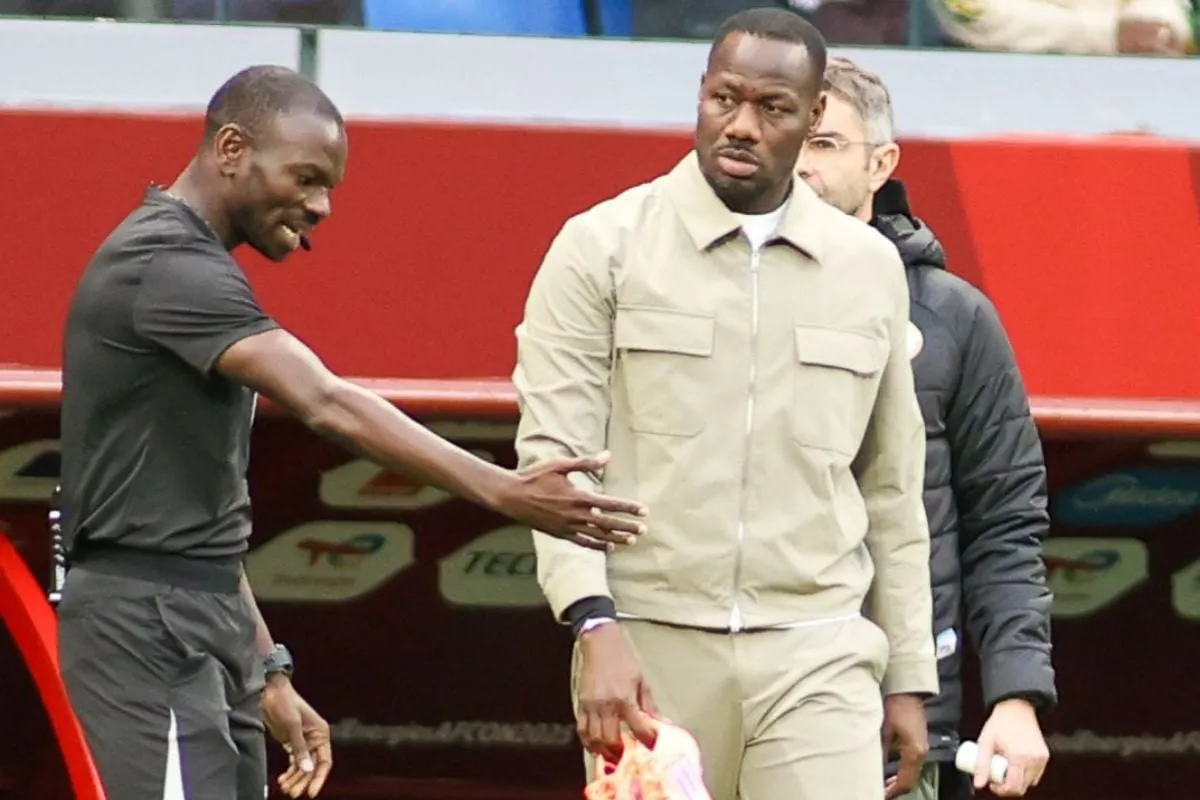
Senegal’s dramatic Africa Cup of Nations triumph could yet carry serious consequences, with the newly crowned champions facing the prospect of heavy disciplinary sanctions that may stretch well beyond financial penalties.
The Lions of Teranga lifted the AFCON trophy last Sunday in Morocco after a final overshadowed by controversy, but celebrations have been tempered by uncertainty over possible punishment linked to the late interruption of the match.
Senegalese players and coaching staff briefly left the pitch at a crucial moment, an action that has since drawn the attention of African football authorities.
According to a source close to the Confederation of African Football (CAF), the Senegalese Football Federation (FSF) could be fined up to $300,000, while head coach Pape Thiaw may face a four-match suspension.
Those sanctions, while significant, may not represent the full extent of the disciplinary response under consideration.
Reports circulating in parts of the African sports media suggest the situation could escalate further.
Soccer212 has claimed that Senegal could be docked up to six points in the context of the 2026 World Cup or even excluded entirely from the 2027 Africa Cup of Nations.
Such measures would represent some of the most severe sanctions ever imposed on a reigning continental champion.
However, these claims remain unconfirmed and should be treated with caution. RMC Sport has reported that FIFA, which oversees the World Cup, is not expected at this stage to impose disciplinary measures, despite retaining the right to open its own proceedings independently. If that position holds, Senegal would likely avoid any sanctions linked directly to the 2026 World Cup.
The possibility of punishment at CAF level, however, appears more tangible. Under AFCON regulations, particularly articles 82, 83 and 84, the abandonment or interruption of a match can lead to severe consequences, including forfeiture.
These provisions are reinforced by article 148 of the CAF disciplinary code, which outlines sanctions for behaviour deemed to undermine the integrity of competition.
In that context, exclusion from the 2027 Africa Cup of Nations cannot be entirely ruled out, even if such a decision would be unprecedented for a defending champion. CAF has yet to make any official announcement, and the FSF has not publicly commented on the reports.
For now, Senegal’s historic success remains intact, but the shadow of potential punishment lingers. As African football’s governing bodies weigh their response, the coming weeks are likely to prove decisive in determining whether the Lions of Teranga’s continental glory will be followed by one of the most controversial disciplinary episodes in AFCON history.
Popular News




-

AFCON 2025: Fixtures, Results, Scores and Standings
Jan 18, 2026 -

Leadership and long-term vision key to rescuing Zamalek and inspiring Egyptian football – Hany Abou Rida
Nov 5, 2025 -

South African giants Orlando Pirates set to lose influential forward Monnapule Saleng
Mar 19, 2025 -

Full schedule for 2025 Africa Cup of Nations in Morocco confirmed
Feb 12, 2025

-

DR Congo declares national holiday after 2026 World Cup qualification
Apr 1, 2026 -
Nigeria star Victor Boniface happy to return after three months injury absence
Apr 1, 2026 -

South African trainer Pitso Mosimane applies for vacant Ghana coaching job
Apr 1, 2026 -

DR Congo striker Cedric Bakambu hails historic World Cup return
Apr 1, 2026