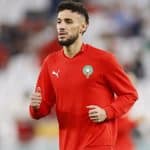
Retire footballer Chammami reflects on Morocco’s AFCON heartbreak and players’ European influence

Former Moroccan international Abdelouahed Chammami has reflected on the Atlas Lions’ recent Africa Cup of Nations campaign, the growth of Moroccan players in Europe and the increasing presence of Portuguese coaches in the domestic league.
Speaking to Hespress, Chammami asserted the current generation has become accustomed to immediate results and gratification, making patience increasingly difficult.
He also spoke passionately about his relationship with Rabat, explaining that his strong attachment to the administrative capital is largely rooted in his family ties.
Chammami revealed that he has not lived in many different cities because of his deep connection with his extended family and the close relationship he maintains with his immediate family.
Portuguese coaches making their mark
Chammami also addressed the increasing number of Portuguese coaches working in Morocco’s top flight.
The former international does not consider the trend unusual, pointing out that Portuguese coaches have been involved in Moroccan football since the 1990s.
He argued that the Portuguese coaching school has established itself as one of the influential schools in the global football market, making their growing presence in Morocco a natural development.
According to Chammami, the familiarity between Moroccan football and Portuguese coaching methods has helped create an environment where coaches from the country can continue to find opportunities in the Moroccan league.
Morocco are ‘true African champions’
Chammami also revisited Morocco’s controversial Africa Cup of Nations final, insisting that the Atlas Lions should be regarded as the true champions of Africa pending the outcome of the case before the Court of Arbitration for Sport (CAS).
The former international argued that Morocco’s failure to secure the continental title could not be attributed solely to what happened on the pitch.
He pointed to external circumstances surrounding both the final and the tournament as factors that contributed to the outcome, while also admitting that the national team failed to manage certain stages of the decisive match effectively.
His comments come amid continued discussions surrounding the circumstances of the final and the legal proceedings that could ultimately have an impact on the final outcome.
World Cup comparison
Chammami further reflected on Morocco’s participation in the last two World Cups, comparing the team’s historic run in Qatar with its campaign at the upcoming tournament in the United States, Mexico and Canada.
He noted that Morocco reached the semi-finals in Qatar after recording five victories and highlighted that the team had also accumulated five wins in the tournament hosted across the Americas.
The former international believes Morocco’s continued progress on the world stage demonstrates the strength and depth that has been built around the national team.
He also addressed Morocco’s meetings with France, warning that defeats against the European giants should not become a psychological complex for the Atlas Lions.
According to Chammami, Morocco must learn from its previous encounters with France, move beyond the disappointment and ensure that similar mistakes are not repeated in future meetings.
Growing Moroccan presence in Europe
Chammami concluded by highlighting the increasing number of Moroccan players establishing themselves in some of Europe’s strongest leagues.
He mentioned players including Brahim Díaz, Ismael Saibari, Bouaddi, Gassim and El-Zabiri as examples of the growing pool of Moroccan talent competing at a high level outside the country.
The former international believes the abundance of players performing in competitive European leagues has significantly expanded the options available to national team coach Mohamed Ouahbi and any future coach of the Atlas Lions.
He stressed that Morocco now possesses considerable depth, with players gaining valuable experience in demanding European competitions.
For Chammami, that depth represents one of Morocco’s biggest strengths and gives the national team greater flexibility when selecting squads for major international tournaments.
His reflections ultimately paint a picture of a Moroccan football system that has evolved considerably—from the financial realities of his playing generation and the challenges surrounding domestic refereeing to the increasing international profile of Moroccan players and the ambitions of the Atlas Lions on the continental and global stage.
-
 Burkina Faso take control against Equatorial Guinea in Los Angeles 2028 Olympic qualifying Oct 8, 2026
 -
Los Angeles 2028 Olympic qualifiers: Burkina Faso women take 2-0 half-time lead Oct 8, 2026
-
Burkina Faso unveils 20-team Ligue de la souverainete to strengthen football pathway Oct 8, 2026
-
Bayern prepare new Michael Olise contract Oct 8, 2026



-
AFCON 2025: Fixtures, Results, Scores and Standings Jan 18, 2026
-
Match hero Taiwo Awoniyi reflects on team effort after Chelsea triumph May 5, 2026
-
Leadership and long-term vision key to rescuing Zamalek and inspiring Egyptian football – Hany Abou Rida Nov 5, 2025
-
South African giants Orlando Pirates set to lose influential forward Monnapule Saleng Mar 19, 2025




-
Croatia face Spain with Nations League hopes on the line in Split Oct 5, 2026
-
France v Belgium: Probable line-ups for Nations League clash Oct 3, 2026
-
Morocco coach Mohamed Ouahbi refuses to single out player after Mali draw Oct 4, 2026
-
Noussair Mazraoui leaves Morocco squad early after injury Oct 2, 2026