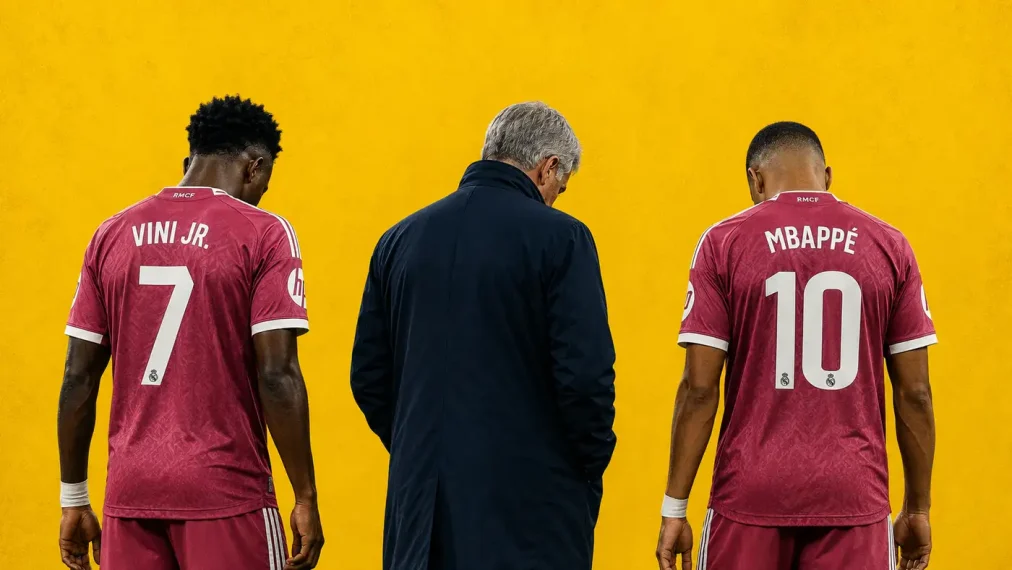
Real Madrid’s 1-0 defeat by Real Betis was more than a first dropped three points in the title race: it represented the first serious examination of Jose Mourinho’s second spell and the character of his new project.
After collecting maximum points from their opening three matches, Real Madrid were beaten in Andalusia despite enjoying long periods of possession and creating several chances. They could not find the decisive touch, while Kylian Mbappe missed a stoppage-time penalty and Troy Parrott scored the only goal of the game for Real Betis in the 81st minute.
The central issue for Mourinho is therefore not simply the loss itself, but how his side responds to its first setback.
The Portuguese manager believed Real Madrid had produced a good performance, although football does not award points for possession or chances created. That makes the response in the coming matches more significant than the result against Betis alone.
Mourinho will have little time to regroup. Real Madrid host Inter Milan in their opening UEFA Champions League match on Tuesday, 8 September, before travelling to face Rayo Vallecano in La Liga on 12 September. They then visit Elche on 15 September, followed by the Madrid derby against Atletico de Madrid at the Metropolitano on 20 September.
The defeat at Betis has therefore arrived at an especially difficult moment. The match against Inter is not an ordinary European fixture, but a meeting with one of the continent’s leading clubs and a particularly significant occasion for Mourinho, who guided the Italian side to the UEFA Champions League trophy in 2010.
Real Madrid also face four matches in 12 days, including a Champions League fixture and the capital derby.
The club’s midfield problems make that schedule even more demanding. Arda Guler, Eduardo Camavinga and Bernardo Silva are all unavailable because of suspensions carried over from last season, while Aurelien Tchouameni remains injured and has yet to begin his campaign.
According to Mourinho, Federico Valverde is now almost the only fit first-team midfielder available to him. That could force the manager to alter his system or use players in unfamiliar roles.
Jude Bellingham is among the possible solutions. Mourinho prefers to deploy him behind the striker and close to the penalty area, where his attacking and goalscoring qualities can have the greatest impact. However, the England international could be moved back into midfield, with Brahim Diaz operating as the attacking midfielder while Real Madrid retain their 4-2-3-1 formation.
Trent Alexander-Arnold is another option. Mourinho has previously used him in roles that allowed him to move into central areas, and he could be part of a midfield three alongside Valverde and Bellingham if the manager switches to a 4-3-3 system.
There is some historical encouragement for Mourinho as he attempts to judge the significance of the Betis defeat. His first loss during his initial spell at Real Madrid came in crushing fashion against Barcelona, who won 5-0 at Camp Nou on 29 November 2010.
That result could easily have been viewed as the beginning of a crisis, but Real Madrid responded with five consecutive victories. They beat Valencia 2-0, defeated Auxerre 4-0 in the Champions League, overcame Real Zaragoza 3-1 and edged past Sevilla 1-0. They then completed the run by beating Levante 8-0 in the Copa del Rey, with Karim Benzema and Cristiano Ronaldo both scoring hat-tricks.
It would be premature to pass final judgement on Mourinho’s new Real Madrid project after one defeat, even if the loss to Real Betis was painful and came at a time when there is little opportunity for calm.
The project has not been undone in Andalusia, nor have the club’s perfect opening weeks suddenly been exposed as an illusion. But the result has delivered the first clear warning that the path ahead will not be as straightforward as the early results suggested.
The next stage will reveal the personality of this new Real Madrid. Major projects are not measured only by the number of victories achieved when everything follows the plan; their strength is also shown by the ability to recover when circumstances become difficult.
Can Mourinho turn the defeat by Betis into a lesson? Can he cover the absences without disrupting the team’s balance? And can Mbappe, Vinicius Junior and the rest of Real Madrid’s star players take responsibility for leading the response? Those questions will begin to be answered in the coming days.
If Real Madrid emerge successfully from their demanding sequence of matches, the night in Andalusia may come to be regarded as no more than a brief interruption in a long season. It could even be remembered as the moment when the team demonstrated the strength of its character.
But if the same mistakes return, the problems against opponents continue and the project appears fragile under its first genuine pressure, the Betis defeat will represent more than a stumble. It would suggest that the rebuilding process is incomplete and that Mourinho’s reputation alone will not be enough to restore the prestige of Santiago Bernabeu.
For now, nobody can say whether the setback in Andalusia was a temporary slip or the beginning of a decline. One conclusion, however, is already clear: the real test of Mourinho’s project began after the final whistle against Real Betis, not before it.
Readers can discuss the issues and news in greater depth on the “Kooora” forums.
Related topics include criticism from La Liga, which claimed the Premier League is losing out and damaging football, and a review of the summer transfer window featuring record deals, major setbacks and unfulfilled ambitions.
-
 Maghreb de Fes and ASEC Mimosas reveal probable line-ups for CAF Champions League tie Oct 17, 2026
 -
Maghreb de Fes face a l’ASEC Mimosas in first-ever CAF Champions League meeting Oct 17, 2026
-
Leeds v Manchester United: Mbeumo backed at 3.4 as sides meet in Premier League derby Oct 17, 2026
-
Abongile Tom backed despite two contentious MTN8 final penalty decisions Oct 17, 2026



-
AFCON 2025: Fixtures, Results, Scores and Standings Jan 18, 2026
-
Match hero Taiwo Awoniyi reflects on team effort after Chelsea triumph May 5, 2026
-
Leadership and long-term vision key to rescuing Zamalek and inspiring Egyptian football – Hany Abou Rida Nov 5, 2025
-
South African giants Orlando Pirates set to lose influential forward Monnapule Saleng Mar 19, 2025




-
Real Betis v Barcelona: kick-off time, TV details and match preview Oct 16, 2026
-
Roma v Real Madrid: home side tipped to score first in Champions League clash Oct 12, 2026
-
Atletico Madrid v Manchester United: probable line-ups for Champions League clash Oct 12, 2026
-
Celta Vigo v Juventus: Probable line-ups for Europa League encounter Oct 14, 2026