Lamine Yamal’s argument that the Ballon d’Or should reward the world’s best individual player rather than simply the leading goalscorer has been illustrated by Barcelona’s latest victory over Sevilla.
Yamal recently questioned the criteria used to decide the award in an interview with Movistar Plus, arguing that winning the Champions League makes a team the best and earns the club its own prize. He said the Ballon d’Or should go to the best individual player, rather than automatically to someone who has scored 80 goals when the season’s leading goalscorer already receives a separate award.
Kylian Mbappe shares part of that view but places greater emphasis on goals and statistics. He considers the Ballon d’Or an individual prize, while insisting that scoring goals and winning trophies are not competing objectives. Mbappe has said he wants to achieve both and believes his numbers give him a strong claim.
At the 2026 World Cup, Mbappe scored 10 goals and finished as the tournament’s leading scorer. He also ended the season as the top scorer in La Liga and the Champions League.
The contrast was evident in Barcelona’s recent 3-1 win over Sevilla. Raphinha scored all three goals, with two assisted by Yamal, and received 35,756 of the 38,646 votes cast by supporters for player of the match – about 92.5%.
Yamal’s performance, however, offered a different measure of influence. He supplied two assists, made six key passes, created three big chances, attempted five shots and struck the post. His dribbling and combination play were central to breaking down Sevilla’s defence.
Raphinha was the decisive finisher, while Yamal was a major reason Barcelona created the opportunities that settled the match. Raphinha fully deserved the acclaim for a hat-trick that secured victory, but the game also demonstrated how the final touch can attract more visible recognition than the work that produces it.
That question extends beyond the two Barcelona players. Is the best player the one who is most clinical in front of goal, or the one who exerts the greatest influence even without scoring?
The Ballon d’Or’s recent history provides no single answer. Cristiano Ronaldo won in 2016 and 2017 after combining prolific scoring with major trophies. Luka Modric claimed the award in 2018 after helping Real Madrid and Croatia, reaching the World Cup final and winning the tournament’s best-player award. Karim Benzema in 2022 led Real Madrid to the Champions League and La Liga while ranking among Europe’s leading scorers.
Rodri won in 2024 after claiming the Premier League and Euro 2024 with Spain, where he was named player of the tournament. Lionel Messi won in 2019, 2021 and 2023; the 2022 World Cup was the main collective achievement behind his latest success, while the Champions League was not part of those victories.
In 2025, Ousmane Dembele finished ahead of Yamal after recording 35 goals, 16 assists and five trophies with Paris Saint-Germain, including the Champions League.
Under the official 2026 criteria, individual performance and decisive, impressive contribution come first, followed by team performances and trophies, then conduct and sportsmanship. Goals and titles therefore matter, but neither guarantees victory.
The award is decided by 100 specialist journalists, each representing one of the top 100 men’s FIFA-ranked nations. Every journalist selects 10 players from a 30-man shortlist, awarding different points according to position.
The result will depend on whether voters prioritise the player who scores the goal or the player who makes the winning moment possible.
-
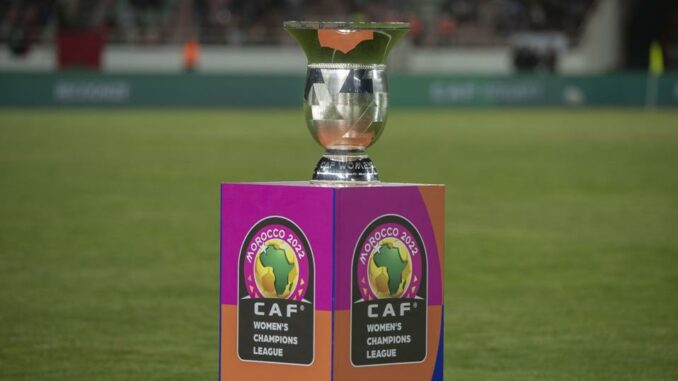
 Egypt to host CAF Women’s Champions League for second successive year Oct 19, 2026
 -
 MC Alger supporters accused of stadium damage as Enugu Rangers appeal to CAF Oct 19, 2026
 -
Morocco face Egypt in decisive Futsal AFCON semi-final Oct 19, 2026
-
Rafik Guitane scores late to rescue Estoril in Portuguese Cup Oct 19, 2026



-
AFCON 2025: Fixtures, Results, Scores and Standings Jan 18, 2026
-
Match hero Taiwo Awoniyi reflects on team effort after Chelsea triumph May 5, 2026
-
Leadership and long-term vision key to rescuing Zamalek and inspiring Egyptian football – Hany Abou Rida Nov 5, 2025
-
South African giants Orlando Pirates set to lose influential forward Monnapule Saleng Mar 19, 2025




-
PSG v Barcelona: fiery attacks set up Champions League classic at Parc des Princes Oct 18, 2026
-
Real Betis v Barcelona: kick-off time, TV details and match preview Oct 16, 2026
-
Morocco to face New Zealand as FIFA U-17 Women’s World Cup kicks off in Rabat Oct 16, 2026
-
Bryan Mbeumo scores again as Manchester United held by Leeds Oct 18, 2026