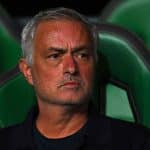
Ramadan Sobhi’s four-year ban upheld after Swiss court rejects appeal

Egypt international Ramadan Sobhi will remain banned from football until October 2029 after the Federal Supreme Court of Switzerland rejected his appeal against a four-year suspension.
The 29-year-old Pyramids FC forward challenged the sanction imposed over an anti-doping violation, but the Swiss court has upheld the decision, leaving him unable to play competitively until the end of his suspension.
Sobhi’s four-year ban is scheduled to run until 6 October 2029, meaning he will be 32 when he becomes eligible to return to football.
The case dates back to an out-of-competition doping test conducted in August 2023.
Sobhi provided a urine sample which was subsequently found to be inconsistent with normal human urine. The case was taken through the anti-doping process, with the Court of Arbitration for Sport (CAS) later ruling that the sample had been adulterated.
According to the CAS ruling, another liquid had been added to the urine sample. This was considered the use of a prohibited method under anti-doping regulations.
The finding resulted in a four-year suspension being imposed on Sobhi, who then pursued legal avenues in an attempt to overturn the sanction.
His latest appeal before Switzerland’s Federal Supreme Court has now been rejected, bringing another setback in his efforts to have the ban overturned.
Sobhi, who has been an important player for Pyramids and the Egypt national team during his career, will therefore remain ineligible to represent his club or country for the duration of the suspension.
The ban means he faces a significant period away from competitive football at a key stage of his career.
Sobhi is currently 29 and will turn 32 during the year of his planned return in 2029. Unless the suspension is reduced or otherwise altered through a further legal or regulatory development, he will not be permitted to play professional football until 6 October 2029.
The case has its origins in the August 2023 sample, with the CAS finding that the alteration of the specimen constituted an anti-doping rule violation rather than simply an irregularity with the testing process.
With the Swiss Federal Supreme Court having rejected Sobhi’s appeal, the four-year suspension remains in force.
-
 Sporting Lagos Midfielder Victor Umoh reveals emotional reason behind wearing Clifford on his shirt Oct 13, 2026
 -
Taiwo Awoniyi donates football boots to 350 young players in Kwara State Oct 13, 2026
-
Morocco international Amine Harit embraces new role at Marseille and puts team first Oct 13, 2026
-
Algeria women take 8-0 lead into Olympic qualifying second leg against Central African Republic Oct 13, 2026



-
AFCON 2025: Fixtures, Results, Scores and Standings Jan 18, 2026
-
Match hero Taiwo Awoniyi reflects on team effort after Chelsea triumph May 5, 2026
-
Leadership and long-term vision key to rescuing Zamalek and inspiring Egyptian football – Hany Abou Rida Nov 5, 2025
-
South African giants Orlando Pirates set to lose influential forward Monnapule Saleng Mar 19, 2025




-
Manchester United host winless Tottenham in Premier League clash Oct 7, 2026
-
Real Madrid fitness update: Valverde a doubt for Villarreal as Kylian Mbappe returns Oct 8, 2026
-
Lens v Lyon: Can the in-form visitors extend their unbeaten Ligue 1 run? Oct 6, 2026
-
Barcelona aim for eighth straight Liga win as Getafe visit Camp Nou Oct 7, 2026