Radhi Jaïdi backs Morocco to challenge for 2030 World Cup title after impressive football development
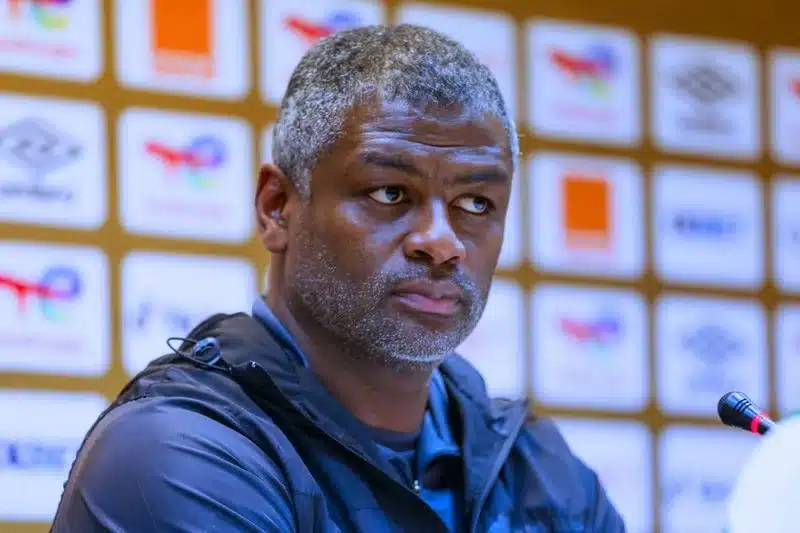
Former Tunisia international Radhi Jaïdi has praised the remarkable progress made by Moroccan football, describing the North African country’s development at both national team and club levels as a model for other football nations to emulate.
Jaïdi believes Morocco has made significant strides in recent years through sustained investment and structured development, with the country’s achievements placing it among the leading forces in African and international football.
The former defender, who represented and coached Espérance de Tunis, also expressed confidence in the Atlas Lions’ ability to compete for the 2030 FIFA World Cup title, insisting that the national team has the quality and squad depth to challenge the world’s best.
Speaking in an exclusive interview with Hesport, Jaïdi reflected on Morocco’s footballing transformation, the strength of its current national team and the growing influence of its clubs on the continental stage.
“Moroccan football has evolved tremendously—almost incredibly—over the last few years, both in terms of clubs and national teams. I am very familiar with the Moroccan national team and the clubs I faced during my playing career; the progress we see today makes the Royal Moroccan Football Federation a model for achieving development within a short span of time,” he said.
Jaïdi was equally convinced that Morocco have the potential to challenge for the biggest prize in international football when they co-host the 2030 World Cup.
He believes the Atlas Lions’ performances on the global stage have demonstrated that their historic run at the 2022 World Cup in Qatar was not a one-off achievement but the product of long-term planning and consistent work.
“Yes, absolutely. The Moroccan national team has established itself among the world’s elite. Their performance in the most recent World Cup (2026) confirms that their achievement at the 2022 Qatar World Cup was no fluke—it was the result of extensive work and sustained effort,” he added.
Although acknowledging the strength of other international contenders, Jaïdi believes Morocco possess the necessary qualities to compete for major honours, particularly given the calibre of players available to the national team.
He highlighted the presence of Moroccan footballers at some of Europe’s biggest clubs, arguing that their experience at the highest level has strengthened the country’s status as a major force in world football.
“What can be said is that Morocco has become a world-class national team, featuring players who compete for major clubs—such as Real Madrid, Manchester United, Manchester City, and Bayern Munich—as well as other prominent European teams in Italy and various other leagues. What more could you ask for in football? When you possess a squad of such global caliber, it is only natural to be considered a contender for major titles,” he stated.
The former Tunisia defender also recalled his memorable encounter with Morocco in the final of the 2004 Africa Cup of Nations, where Tunisia defeated the Atlas Lions to lift their first continental title.
Jaïdi described the final as one of the defining moments of his playing career, particularly because Morocco had assembled a talented side widely regarded as one of the country’s golden generations.
“My most vivid memory is winning the 2004 Africa Cup of Nations—the only continental title for the Tunisian national team—on a special night against a Moroccan side that boasted a ‘golden generation’ in every sense of the term. It was a massive match, and the memory remains firmly etched in my footballing career,” he reflected.
-
 Radhi Jaïdi backs Morocco to challenge for 2030 World Cup title after impressive football development Nov 11, 2026
-
Benin coach Gernot Rohr impressed by 16-year-old Parfait Faton Nov 11, 2026
-
Senny Mayulu receives first France call-up as DR Congo hopes end Nov 11, 2026
-
RS Berkane dealt injury blow as Mounir Chouiar faces four weeks on sidelines Nov 11, 2026




-
AFCON 2025: Fixtures, Results, Scores and Standings Jan 18, 2026
-
Match hero Taiwo Awoniyi reflects on team effort after Chelsea triumph May 5, 2026
-
Leadership and long-term vision key to rescuing Zamalek and inspiring Egyptian football – Hany Abou Rida Nov 5, 2025
-
South African giants Orlando Pirates set to lose influential forward Monnapule Saleng Mar 19, 2025




-
Manchester United host Aston Villa as both sides seek a Premier League lift Nov 6, 2026
-
Atletico Madrid host Barcelona in Liga summit clash with history at stake Nov 6, 2026
-
Ali Maher names first Egypt squad for 2027 Africa Cup of Nations qualifiers Nov 9, 2026
-
Nottingham Forest v Manchester City: City Ground hosts clash at opposite ends of the table Nov 6, 2026