Numbers set the tone as Morocco and Nigeria brace for heavyweight AFCON 2025 semi-final
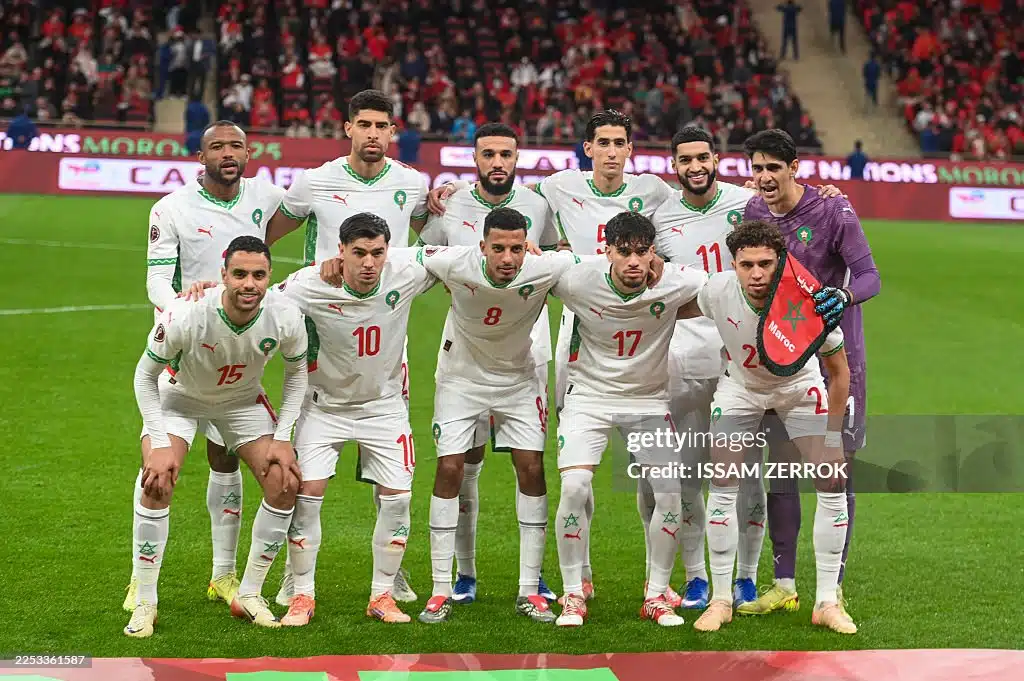
Cold statistics are rarely the full story in football, but ahead of the AFCON 2025 semi-final between Morocco and Nigeria, the numbers offer a compelling preview of a finely balanced contest.
From goals scored to passes completed and discipline records, the data underlines why this meeting is regarded as one of the tournament’s defining fixtures.
Nigeria arrive with proven firepower. Victor Osimhen has emerged as one of the competition’s most productive forwards, scoring four goals, a tally matched by Ademola Lookman.
Their combined output highlights the Super Eagles’ attacking depth and efficiency, with both players consistently influencing games in the final third.
Morocco, however, boast the tournament’s leading scorer. Brahim Díaz has found the net five times, establishing himself as the Atlas Lions’ most decisive attacking outlet and a constant threat to opposing defences.
Beyond goals, the creative numbers reflect two well-structured sides. Osimhen’s contribution has extended beyond finishing, with 21 influential passes and 10 key passes to his name, while Lookman has added 14 more, underlining Nigeria’s collective approach to chance creation.
Morocco’s creativity has been more evenly spread. Achraf Hakimi and Abdessamad Ezzalzouli jointly lead the team with eight chances created each, while Díaz has also tested goalkeepers regularly, registering eight shots on target.
Shooting volume further illustrates Morocco’s attacking intent. Díaz leads the team with 15 attempts, a figure that points to his confidence and central role in the attacking scheme.
Midfield influence has also been evident, with Azzedine Ounahi providing an assist before being ruled out of the remainder of the tournament, leaving a notable gap in Morocco’s engine room.
In possession-based metrics, defensive leaders have stood out. Nayef Aguerd has completed 341 passes, making him Morocco’s most active distributor and a key figure in building play from deep.
Nigeria’s Calvin Bassey has performed a similar role with 319 completed passes, anchoring his side’s defensive structure and initiating transitions from the back.
Discipline may also play a role. Nigeria have accumulated 12 yellow cards across five matches, compared to Morocco’s eight, a statistic that reflects the Super Eagles’ aggressive pressing style and physical intensity.
Taken together, the numbers paint a picture of two evenly matched teams, each blending attacking quality with tactical organisation, setting the stage for a semi-final where fine margins are likely to decide the outcome.
Popular News




-

AFCON 2025: Fixtures, Results, Scores and Standings
Jan 18, 2026 -

Leadership and long-term vision key to rescuing Zamalek and inspiring Egyptian football – Hany Abou Rida
Nov 5, 2025 -

South African giants Orlando Pirates set to lose influential forward Monnapule Saleng
Mar 19, 2025 -

Full schedule for 2025 Africa Cup of Nations in Morocco confirmed
Feb 12, 2025

-

LIVE UPDATES: D.R Congo 1-0 Jamaica – 2026 FIFA World Cup Playoffs
Mar 31, 2026 -

Cameroon defeat China 2-0 in FIFA Series clash
Mar 31, 2026 -

Africa’s 2026 World Cup Teams: Fixtures and Results for March friendly games
Apr 1, 2026 -

Zimbabwe defender Teenage Hadebe dropped after code of conduct breach
Mar 30, 2026