
No hunger strike among detained Senegalese, says King’s Prosecutor
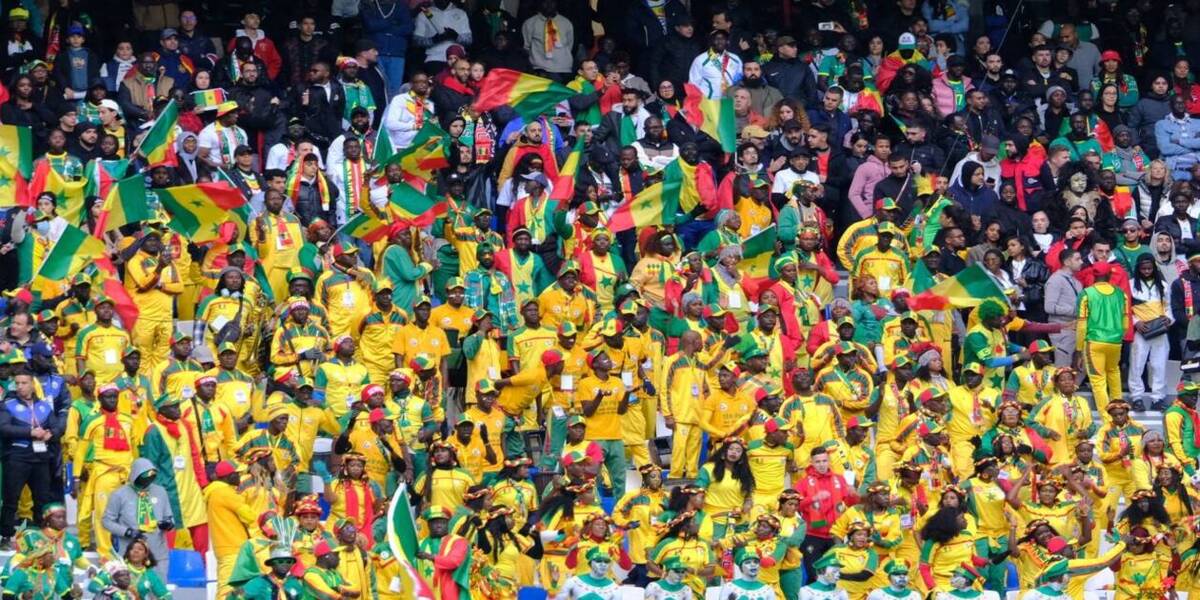
Morocco’s King’s Prosecutor has firmly denied reports that Senegalese nationals detained after disturbances at the Africa Cup of Nations final have gone on hunger strike, describing the claims as unfounded and misleading.
In a statement issued by the King’s Prosecutor at the Court of First Instance in Rabat, allegations published by a foreign news agency were rejected in their entirety.
The report had suggested that the detained Senegalese were refusing food in protest at delays in legal proceedings and the alleged absence of an interpreter during hearings.
The prosecutor said there was no truth to the claim of a hunger strike, stressing that the detainees were receiving meals normally and on a regular basis within the detention facility.
According to the statement, this fact directly contradicts assertions made by the defence and demonstrates an attempt to influence the course of the judicial process through inaccurate information.
The statement also addressed claims regarding delays in the handling of the case. The prosecutor explained that proceedings were initially scheduled for a hearing on 22 January 2026, but were postponed to 29 January at the request of the defendants, who sought additional time to prepare their defence.
Following that hearing date, the case was adjourned again after the defendants insisted on being represented by their chosen lawyer.
The court then postponed the matter to 5 February 2026, when a lawyer registered with the French bar appeared, though the lawyer with a correspondent office in Morocco was not present.
The case was subsequently referred to a hearing on 12 February 2026, once again following a unanimous request by the defendants to be assisted by their defence counsel and to be granted further time for that purpose.
The prosecutor said this sequence of events shows clearly that all postponements occurred at the request of the defendants themselves.
Addressing concerns about language and interpretation, the statement said a sworn court-appointed interpreter was present throughout the hearings to translate all exchanges into French, a language spoken and understood by all the detainees.
The prosecutor added that the defence lawyer communicated directly with the detainees in French and informed them of the scheduled hearing dates.
Claims that hearing transcripts were drawn up without the use of an interpreter were also rejected.
The prosecutor cited Article 21 of the Code of Criminal Procedure, which does not require an interpreter when the judicial police officer conducting the interview is fluent in the language spoken by the individual concerned.
The statement concluded that official records confirm the content of each hearing was read and translated to the detainees in line with legal requirements.
Popular News
-

-

Chibuike Nwaiwu credits Nigerian coaches for shaping his versatility at Trabzonspor
Mar 5, 2026 -

Mekelle Kenema vs Dire Dawa Kenema 1-2, 2026-03-05: Dire Dawa Edge Mekelle in Ethiopia Premier League Clash
Mar 5, 2026 -

Finidi George excited as Rivers United cruise past El Kanemi to claim top spot of Nigerian league
Mar 5, 2026
-

AFCON 2025: Fixtures, Results, Scores and Standings
Jan 18, 2026 -

South African giants Orlando Pirates set to lose influential forward Monnapule Saleng
Mar 19, 2025 -

Full schedule for 2025 Africa Cup of Nations in Morocco confirmed
Feb 12, 2025 -

Leadership and long-term vision key to rescuing Zamalek and inspiring Egyptian football – Hany Abou Rida
Nov 5, 2025
-

CAF postpones 2026 Women’s Africa Cup of Nations amid growing uncertainty
Feb 27, 2026 -

Achraf Dari denied contract exit as Al Ahly SC settle dues
Feb 28, 2026 -

Hannibal Mejbri’s double assist not enough as Burnley fall to late Brentford winner
Feb 28, 2026 -

Brahim Diaz reportedly converts to Islam
Mar 2, 2026