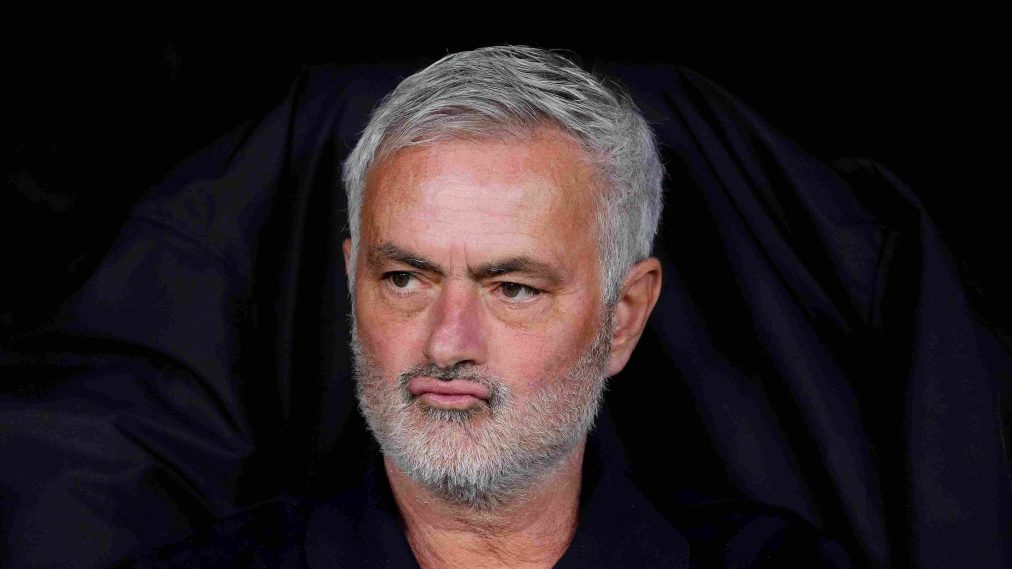
Real Madrid’s renewed relationship with Jose Mourinho will be tested on Sunday when they face Barcelona at Camp Nou, with the Portuguese manager seeking to rebuild the club’s daily culture through communication and discipline rather than sweeping changes.
According to The Athletic, Mourinho has taken a notably measured approach since returning to the club this summer, despite being appointed to address a series of problems that previous managers had failed to solve.
The decision to bring him back was led largely by Real Madrid president Florentino Perez, 79, who has retained great respect for Mourinho since his first spell at the club between 2010 and 2013. Real Madrid also paid Benfica 15m euros (£12.5m; $16.8m) to end the manager’s contract, underlining his standing within the club.
Mourinho officially took charge in June, becoming Real Madrid’s fourth manager since May 2025 after Carlo Ancelotti, Xabi Alonso and Alvaro Arbeloa. His work began the previous month, when he started planning how to restore the team’s direction, identify transfer targets and revive its competitive culture.
Sunday’s match will offer an early measure of that progress. Barcelona, the Spanish league leaders, are six points ahead of third-placed Real Madrid after nine rounds.
Several sources familiar with the club told The Athletic that Mourinho had not imposed an authoritarian regime. One source at Real Madrid’s Valdebebas training complex said: “There has been no hard-line approach or radical changes.”
Another person close to the dressing room added: “The main difference is that Mourinho has authority because he is Mourinho. The players who play less are not all happy, but there are no tense situations or accusations, as happened last year. If Mourinho says things will be done this way, they will be.”
Before taking the job, Mourinho contacted people he knew from his first spell and requested detailed reports from every department. “He asked us a lot of questions, but he did not impose anything,” one specialist said. “He followed almost every area closely and wants to know about anything that could affect the players.”
He also contacted members of the squad individually, mostly through messages because several were away with their national teams at the World Cup. Sources say his accessibility has been a defining feature of the new regime. “He knows how to speak to them, and that is essential in a dressing room with so many strong personalities,” said one person close to a senior player.
The approach has not solved every issue. The on-field relationship between Kylian Mbappe and Vinicius Junior remains a concern, although Arda Guler’s greater involvement and Federico Valverde’s move to right-back have improved performances. Inside the dressing room, there is an acknowledgement that the team still has significant room to improve.
The medical department was restructured during the summer. Dr Niko Mihic returned as its head after resuming duties in January, two staff members departed and Dr Aleksandar Kruz joined from Monaco. Real Madrid have increased preventive work, gym sessions and post-match recovery programmes. Mourinho said earlier this month that, for the “first time in the last 10 years”, the club had reached the middle of October without “any player” suffering an injury.
Training sessions are shorter, lasting between one hour and 75 minutes, but are intense and centred on the ball. Players must arrive 90 minutes to two hours before training and eat breakfast together. Video meetings normally take place only before matches, with extra sessions arranged for selected players.
Mourinho has also requested reports on academy players from the Under-19s through to Real Madrid Castilla, the reserve side competing in Spain’s third tier. His assistant Joao Tralhao acts as the main link with the academy, while Mourinho now chooses which youngsters train with the first team or are selected for matches.
As Xabi Alonso did, Mourinho has reduced the number of staff travelling to away games. He is nevertheless comfortable announcing his starting line-up the day before a match, believing it helps players prepare mentally and avoids tension on match day.
One source familiar with his routine said: “He sleeps there most days.” Mourinho is understood to recognise that creating a new culture at Valdebebas will take time. The Clasico will be his toughest test so far.
-
 FIFA U15 World Cup & Festival: DR Congo edged out by El Salvador in five-goal opener Oct 24, 2026
-
Azam FC v ZED FC: Predicted line-ups for CAF Confederation Cup tie Oct 24, 2026
-
CAF Confederation Cup: ZED FC target historic group-stage qualification against Azam FC Oct 24, 2026
-
CAF Confederation Cup: Club Sportif Sfaxien and Al-Ahli Tripoli target group-stage places Oct 24, 2026



-
AFCON 2025: Fixtures, Results, Scores and Standings Jan 18, 2026
-
Match hero Taiwo Awoniyi reflects on team effort after Chelsea triumph May 5, 2026
-
Leadership and long-term vision key to rescuing Zamalek and inspiring Egyptian football – Hany Abou Rida Nov 5, 2025
-
South African giants Orlando Pirates set to lose influential forward Monnapule Saleng Mar 19, 2025




-
Barcelona v Real Madrid: Catalans backed at 1.65 to win October Clasico Oct 23, 2026
-
PSG v Barcelona: fiery attacks set up Champions League classic at Parc des Princes Oct 18, 2026
-
Barcelona and Real Madrid meet in pivotal 265th Clasico Oct 23, 2026
-
Champions League: PSG beat Barcelona as Liverpool complete comeback against Villarreal Oct 20, 2026